
The key to repeat flowering on a windowsill is getting light, watering and temperature quietly right for months, not days. If your orchid gave one lovely flush and now sits with bare stems and leathery leaves on a bright UK sill, you are not alone.
The conditions orchids actually want on a sill
Most windowsill orchids are moth orchids (Phalaenopsis). They like bright, indirect light, steady warmth and roots that are moist but airy.
On a typical UK windowsill:
- A south-facing sill can scorch leaves behind glass, especially in summer.
- A north-facing sill is usually too dim to trigger new flower spikes.
- Radiators under the window dry roots and buds.
- Cold night draughts from old frames can shock the plant.
Aim for bright but softened light: an east or west window is ideal, or a sheer curtain on a south window. If the glass feels hot to your hand at midday, move the orchid 30–60 cm back.
Keep them away from direct radiator heat and cold draughts. If the leaves feel cool and slightly clammy in winter, they are probably too close to a cold pane.
Watering, feeding and what to do with old flower spikes
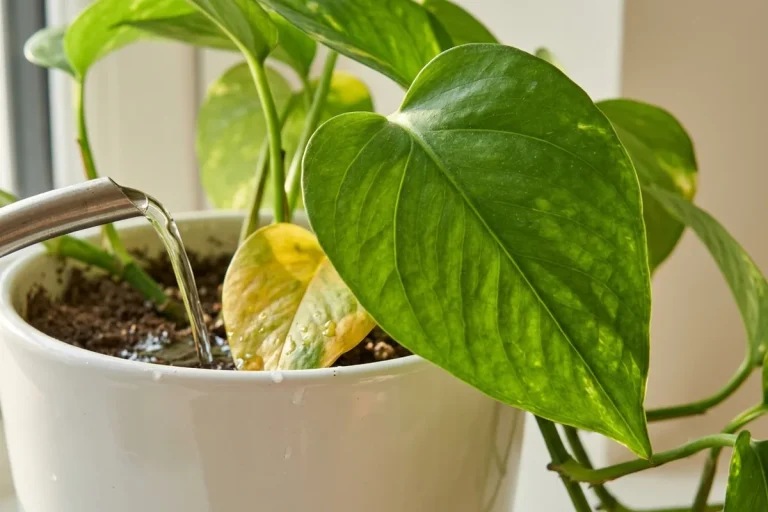
If the top of the bark looks dry but the pot still feels heavy, watering again can quietly rot the roots. A clear plastic inner pot makes this easier: healthy roots look green when wet, silvery when dry.
Use this simple rhythm:
- Check the pot, not the calendar. Lift it. If it still feels surprisingly heavy, wait.
- Water about every 7–14 days in most UK homes, a bit more often in warm, bright rooms, less in winter.
- Water at the sink, soaking the bark thoroughly, then let it drain fully. Do not leave the pot standing in a saucer of water the next morning.
- Use tepid tap water, not cold from the tap.
Feed lightly with a balanced orchid fertiliser at half strength every 2–3 weeks in spring and summer, less often in winter. Always follow the product label.
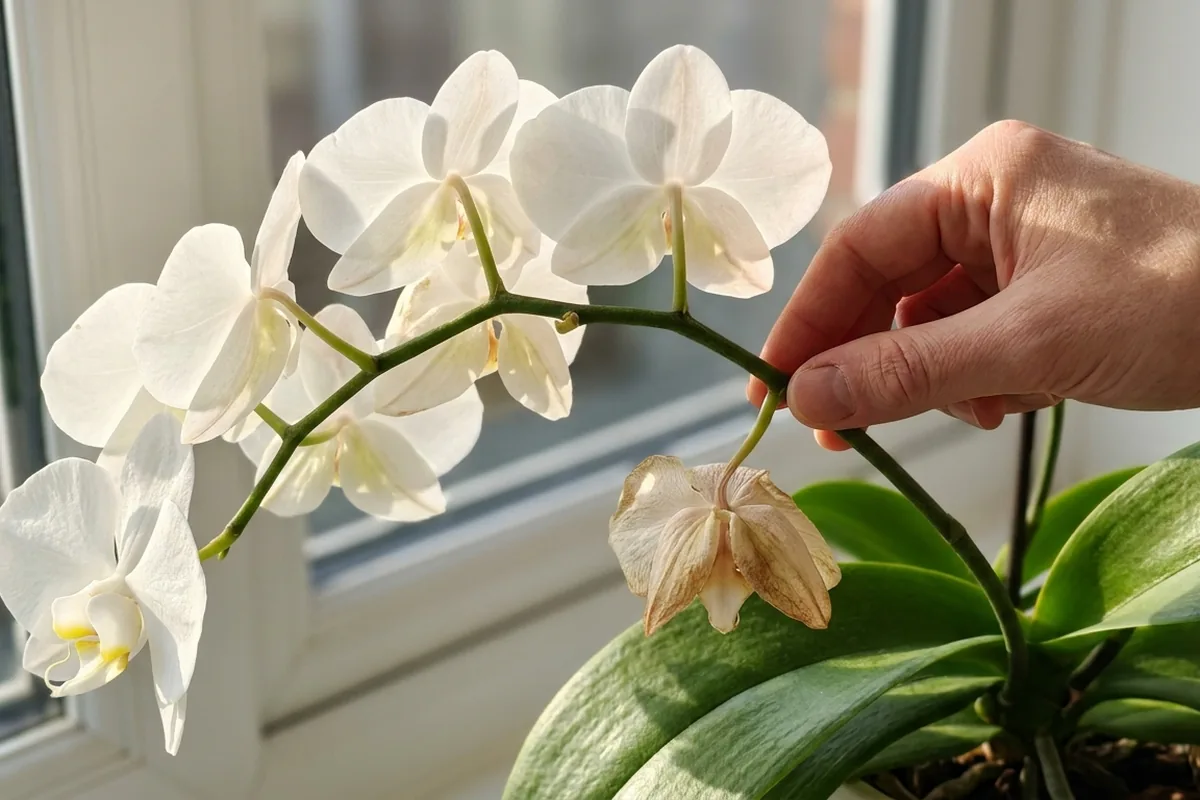
When flowers fade, you have two options with the old flower spike:
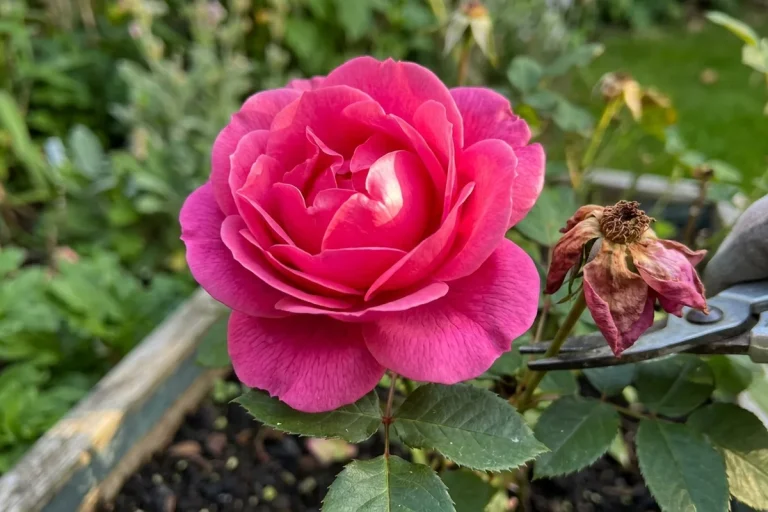
- If the spike is still green, you can cut just above a fat node halfway down. This sometimes prompts a side branch with more flowers.
- If it has turned brown and dry, cut it right down to the base. This often encourages the plant to rest, then grow a fresh, stronger spike.
Do not cut green leaves or healthy roots that wander over the pot edge; they are doing useful work.
Encouraging new flower spikes
To keep orchids flowering year after year, think in seasons rather than quick fixes.
New spikes usually appear from autumn into early spring, when there is a slight drop in night temperature. On a windowsill, simply moving the plant a little closer to the glass in autumn (while avoiding actual cold draughts) can give that gentle difference between day and night.
Look for:
- Firm, green leaves with no spreading yellow pattern.
- Plump roots visible through the pot.
- A small horn-like bump emerging from between the leaves – this is often the start of a new spike.
If the leaves look worse after every “fix”, stop changing several things at once. First get the watering steady. Then adjust light. Only then think about feed.
A congested orchid with roots circling tightly and bark breaking down into fine compost may need repotting into fresh orchid bark in spring. Use a pot only slightly larger and a specialist orchid mix from a garden centre or the RHS.
Once you have the balance of light, water and temperature roughly right, flowering tends to follow. Before you buy another orchid, spend a week simply watching how quickly the bark dries on your sill – that small habit usually makes the biggest difference.
Reader note
The Flower Expert is an independent gardening publication. Your support helps us keep creating practical plant care guides for everyday UK readers.
This article was created with the assistance of AI and reviewed by an editor. It is intended as general gardening information, not personalised professional advice.
If you still have a question, or if something looks unclear or inaccurate, you can contact us through our contact form.
If you found this article helpful, please consider sharing it on social media or leaving a comment below with your own experience. It helps other readers too.