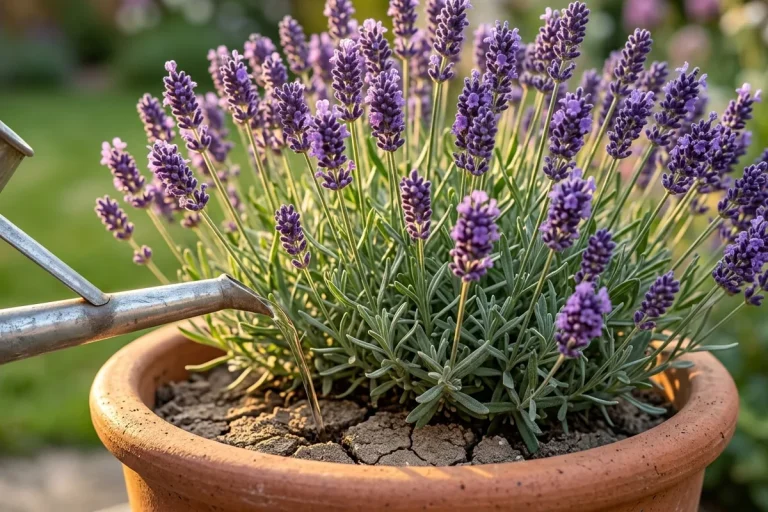

Lavender will flower for longer if you keep it growing steadily and avoid shocking it with heavy pruning at the wrong time. If your plant gives one good flush of bloom and then sits there with tired brown flower stalks and greyish foliage, you can usually coax more flowers with lighter, well‑timed attention.
The simple routine that keeps flowers coming
The aim is to deadhead and shape gently, not to hack back into bare wood.
Through the flowering season (usually June to August, sometimes into September in a warm year):
- Regular deadheading:
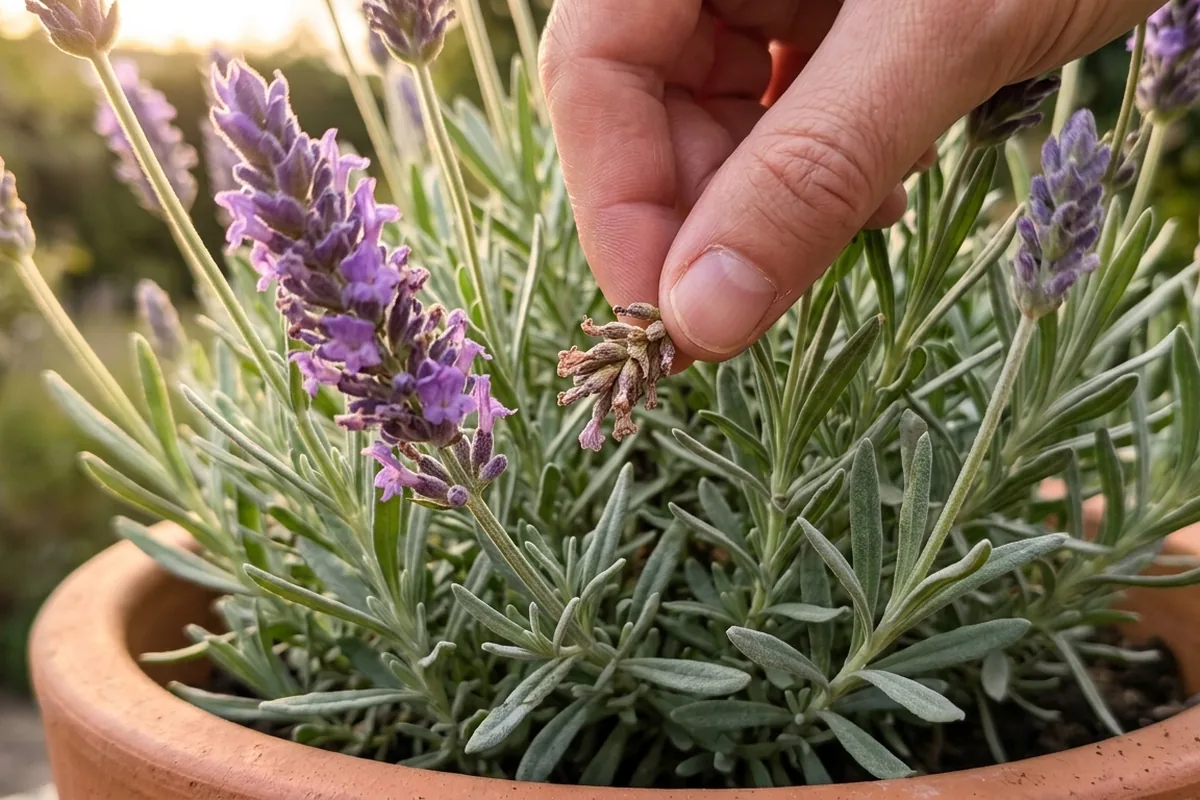
As soon as most of a flower spike has faded, cut that stem back by about a third to a half, down to just above a set of healthy leaves. Use sharp scissors or secateurs. This tidies the plant and often encourages new side shoots with more buds.
- Leave the woody framework alone in summer:
Do not cut back into the old, leafless wood while it is flowering. Lavender is reluctant to shoot from hard, bare stems; this is how many plants end up leggy or half‑dead the following year.
- Light overall trim once or twice:
After the first big flush of flowers, you can give the whole plant a soft haircut, taking off the spent flower stalks and just a little of the leafy growth to restore a neat mound. Think “shearing a cushion”, not “reducing a shrub”.
- Main prune saved for late summer:
The harder shaping cut belongs in late August or early September, while the plant is still active. Even then, only cut back to where you still see plenty of green leaves. Stop well above the old, grey wood.
If you are unsure how far to go, stop as soon as you see only short leaves on the stems rather than long, lush ones. This is the point where many people go one cut too far.
Light, warmth and water: what really affects flowering
Lavender will not keep blooming well if its basic conditions are wrong, however carefully you prune.
- Sun: It needs full sun, ideally six hours or more. A bright but shaded patio or a north‑facing wall will always give fewer flowers. If your plant is in a pot, simply moving it to the sunniest spot you have can make a visible difference within a few weeks.
- Drainage: Lavender hates sitting in wet compost. In a pot, check the drainage holes and make sure there’s no saucer holding water the next morning. In the ground, a bed that stays soggy after rain will shorten the flowering season.
- Watering: In a typical UK summer, established plants in the border often manage with very little extra water. Potted lavender dries out faster. Before you water again, lift the pot – if it still feels heavy, wait. Water thoroughly, then let the top few centimetres dry before the next drink.
- Feeding: Too much feed, especially high‑nitrogen fertiliser, encourages leaves over flowers. A light spring feed of a balanced or slightly high‑potash fertiliser is usually enough; do not keep feeding through summer hoping for more blooms.
When to stop cutting and what to leave
Towards the end of the season, it helps to slow down with the secateurs.
If you’d like a few extra weeks of interest and food for pollinators, let some of the later flowers fade naturally. You can still trim lightly in early autumn to keep a good shape, but avoid repeated cutting once nights turn cold and damp.
On older, leggy plants with lots of woody stems, focus on:
- Removing old flower stalks.
- Shortening this year’s leafy growth by up to a third.
- Leaving any very old, bare stems in place rather than chopping them hard; replace the whole plant next spring if it has lost its shape.
If the leaves look worse after every “fix”, stop changing several things at once. Check sun, drainage and pot size first, then return to gentle, regular deadheading.
With a light hand and a bit of timing, your lavender should give you a longer, neater display, without the risk of cutting it back so hard that it sulks or fails the following year. Next time you pass the plant, start with one small job: remove the brownest flower stalks and see how much fresher it already looks.
Reader note
The Flower Expert is an independent gardening publication. Your support helps us keep creating practical plant care guides for everyday UK readers.
This article was created with the assistance of AI and reviewed by an editor. It is intended as general gardening information, not personalised professional advice.
If you still have a question, or if something looks unclear or inaccurate, you can contact us through our contact form.
If you found this article helpful, please consider sharing it on social media or leaving a comment below with your own experience. It helps other readers too.