
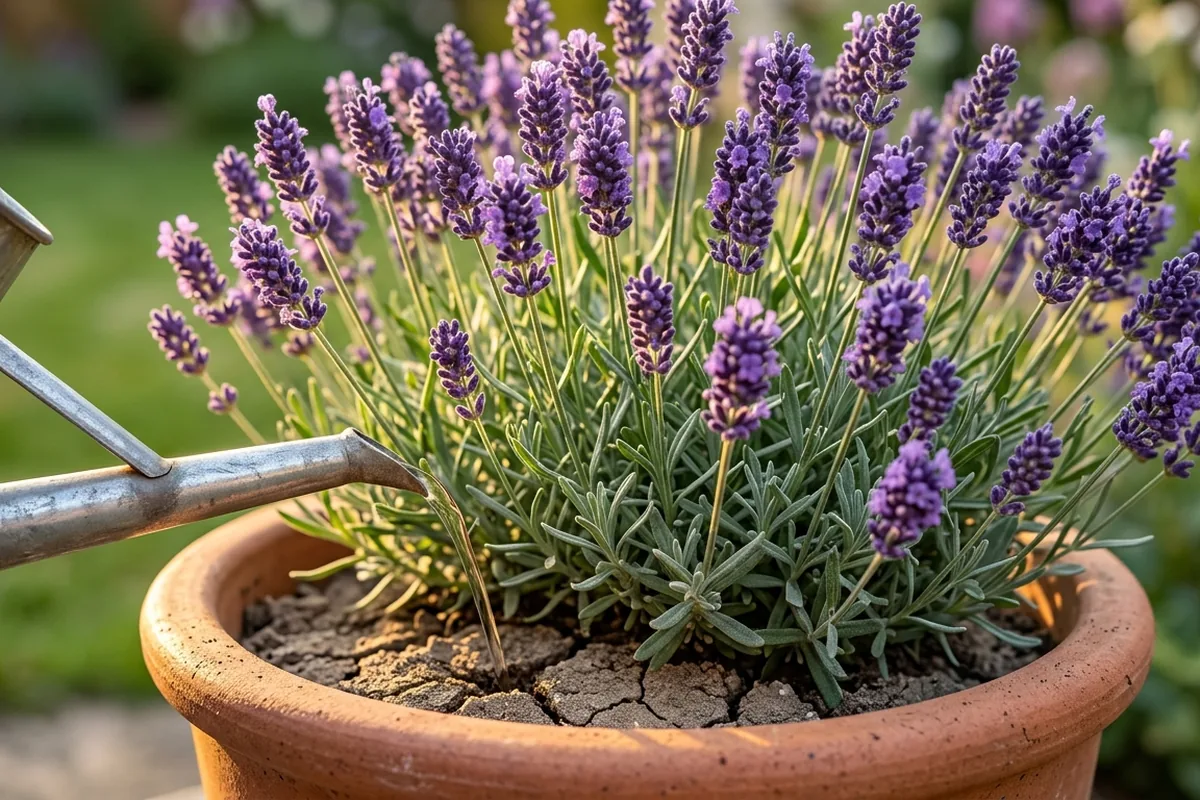
Lavender actually enjoys dry weather, but long hot spells can still shorten the flowering season if the plant is stressed. If your lavender flowers well in June then sulks, with brown, twiggy stems and few new buds, it usually means something about water, pruning or position is slightly off.
The key to long, repeat flowering
To keep lavender throwing out fresh spikes through a dry summer, focus on three things: sun, drainage and timely trimming.
- Full sun: Lavender needs at least 6 hours of direct sun. A bright but shaded corner will give foliage, not flowers. If your plant is stretching towards the light, or leaning after rain, it probably wants a sunnier spot.
- Sharp drainage: In pots, use a gritty, low-peat compost and a pot with large drainage holes. In borders, mix in horticultural grit if your soil is heavy. If you lift the pot and it still feels heavy the day after rain, the roots are sitting too wet for summer comfort.
- The right watering rhythm: In the ground, established lavender in most UK gardens rarely needs watering, even in a dry spell, unless the soil is very sandy. In pots, water deeply, then let the top 3–4 cm of compost dry before you water again. A quick finger check tells you more than the surface, which often looks dusty while the compost below is still damp.
When lavender has what it wants at root and leaf level, it keeps putting energy into new buds instead of just surviving the heat.
Pruning and deadheading that keep blooms coming
The big mistake that stops flowers forming is either never pruning, or cutting back too hard at the wrong time.
- Main prune: In late summer, as the first main flush of flowers fades, shear the plant back lightly, taking off the spent stems and a couple of centimetres of soft green growth. Do not cut into old, brown wood.
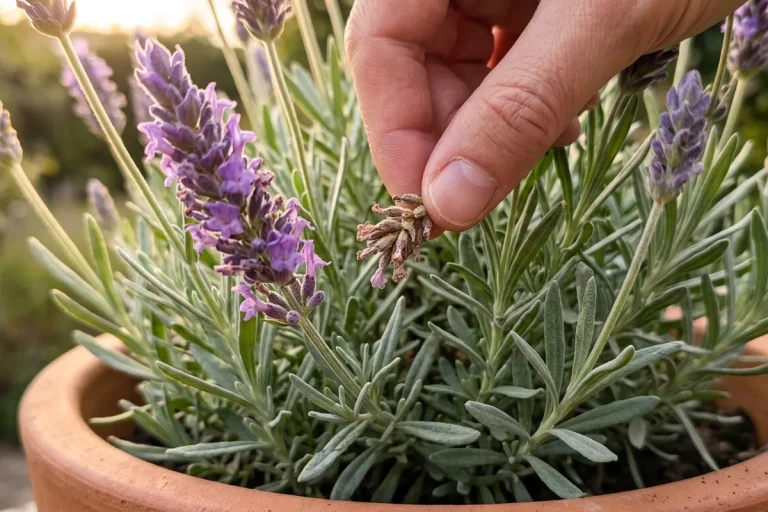
- Deadhead through summer: During a dry spell, snip off faded flower spikes every week or so. Cut just above a little mound of leaves. This often prompts a second, lighter flush later in summer.
- Avoid late hard cuts: Do not do a strong prune in autumn or winter. Lavender resents being forced into lots of soft growth before cold weather; that stress often shows up the following summer as fewer flowers.
If this is happening on your plant – flowers all at once, then nothing – start with regular deadheading and a better-timed light prune.
Helping lavender cope with heat in pots and borders
Dry summers are hardest on potted lavender and plants in very free‑draining, sandy soils.
For pots, check:
- The pot is at least 25–30 cm wide for a mature plant.
- There’s no saucer left full of water the next morning.
- The compost isn’t slumped well below the rim; top up with a gritty mix if roots are exposed.
A light feed in late spring with a low‑nitrogen, high‑potash fertiliser can help flowering, but avoid rich, general feeds that push soft leafy growth. Always follow the packet instructions.
In borders, mulch with light gravel rather than bark. Gravel keeps the neck of the plant dry and warm, which lavender prefers. If your plant is sitting too low and water pools around the base after rain, gently replant it a little higher so the crown stays dry.
If the leaves look worse after every “fix”, stop changing several things at once. Give the plant a few weeks with good sun, sharp drainage and gentle deadheading, then judge.
A small check today – where the water goes, how you trim, how much sun it gets – can mean a much longer, more fragrant show of flowers right through a dry UK summer.
Reader note
The Flower Expert is an independent gardening publication. Your support helps us keep creating practical plant care guides for everyday UK readers.
This article was created with the assistance of AI and reviewed by an editor. It is intended as general gardening information, not personalised professional advice.
If you still have a question, or if something looks unclear or inaccurate, you can contact us through our contact form.
If you found this article helpful, please consider sharing it on social media or leaving a comment below with your own experience. It helps other readers too.