
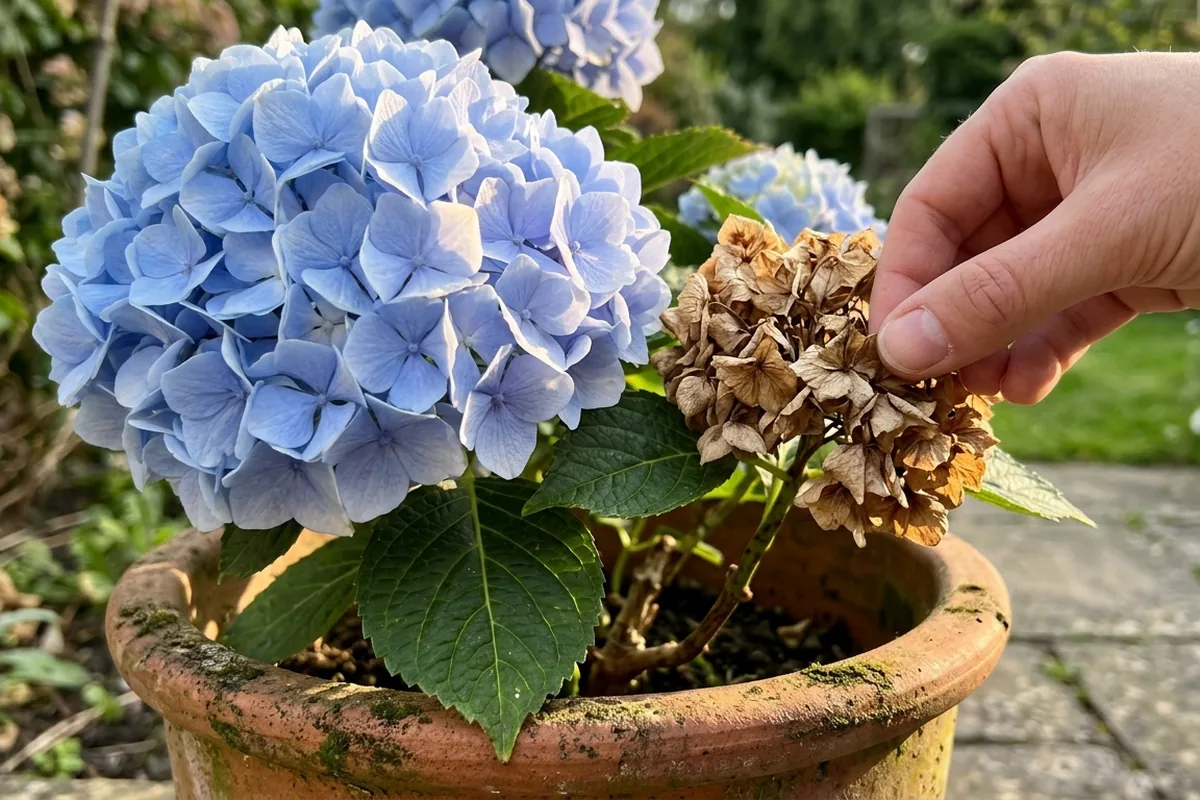
Hydrangeas are generous flowerers, but they shut down quickly if pushed too hard with feed or allowed to dry out between soakings. If your shrub gives a big first flush of blooms and then seems to stall, or the flower heads brown off sooner than you expect, it’s usually about water, light and deadheading rather than more fertiliser.
The simple routine that keeps flowers coming
To keep hydrangeas blooming for longer, focus on steady moisture, gentle feeding and regular deadheading.
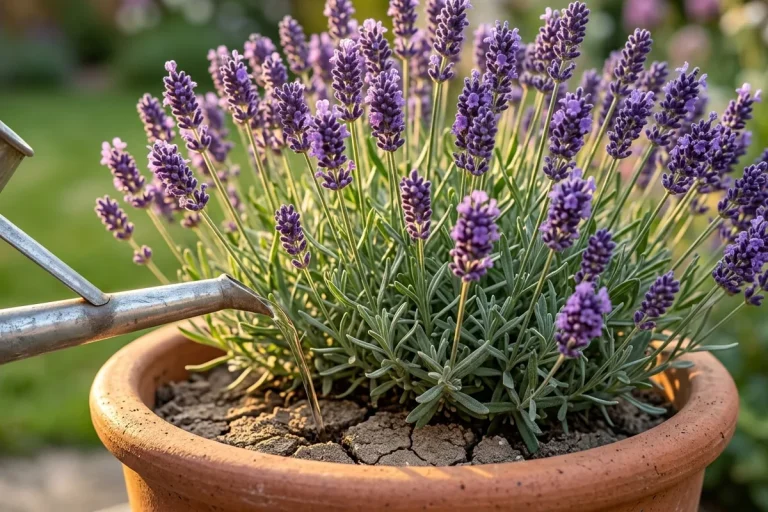
- Water deeply, not constantly. In borders, give a thorough soak once or twice a week in dry spells, aiming the rose of the can at the base. In pots, water until it runs from the drainage holes, then stop. If you lift the pot and it still feels heavy the next day, wait.
- Keep the compost just moist. Hydrangeas hate swinging from bone-dry to sodden. Before you water again, push a finger 3–4 cm into the compost. If it’s cool and damp below a dry crust, leave it.
- Feed lightly, and not too often. One spring application of a slow‑release, balanced fertiliser is usually enough in the ground. In pots, a half‑strength liquid feed every 3–4 weeks from late spring to mid‑summer is plenty. If leaves are lush and very green but flowers are few, cut back the feed.
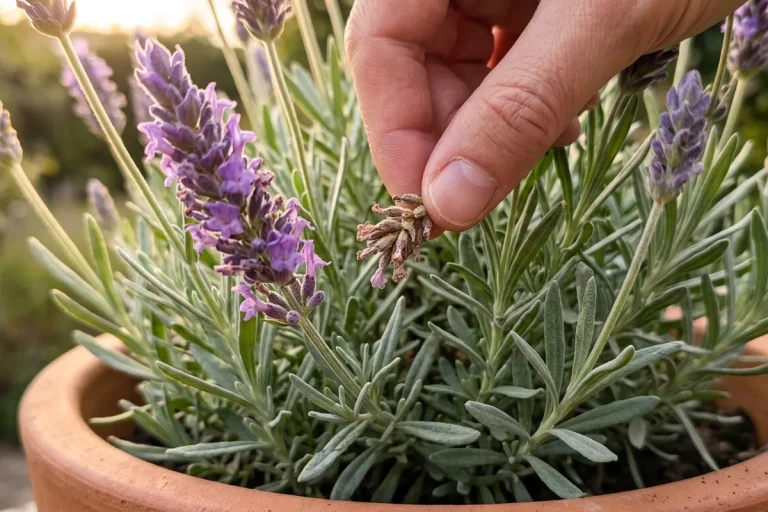
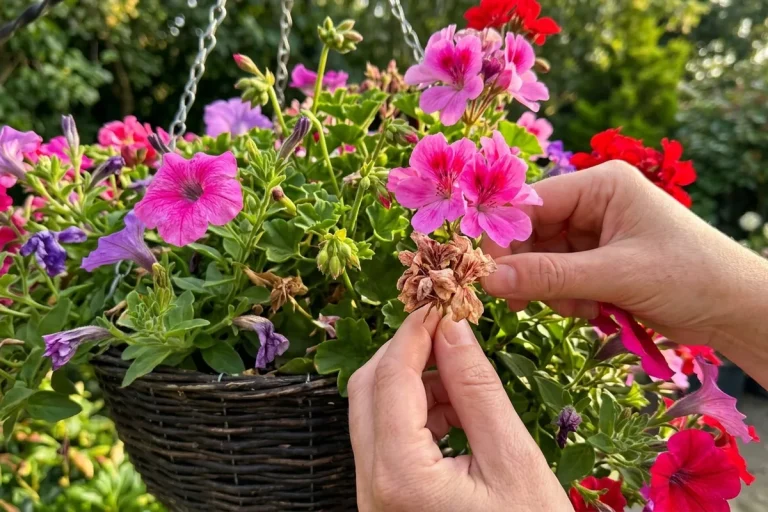
- Deadhead to redirect energy. As soon as flower heads fade and feel papery, cut back to a pair of strong buds below the bloom. This is the point where many people leave spent heads on for weeks and the plant simply stops trying.
If you’re growing mophead or lacecap types, don’t cut into old wood in summer or you’ll remove next year’s buds.
How to avoid overfeeding while still supporting flowering
Overfeeding hydrangeas often leads to soft, sappy growth, fewer flowers and brown-edged leaves if salts build up in pots.
Watch for these signs:
- Lots of leaf, few flowers: too much nitrogen-rich feed.
- Crisp brown tips on pot-grown plants: possible fertiliser build-up or irregular watering.
- White crust on the compost surface: salts from fertiliser or hard tap water.
If this is happening on your plant, flush the pot through with plain water once, let it drain well, then stop feeding for 4–6 weeks and keep watering steady. In borders, simply stop feeding and mulch with garden compost or leaf mould instead of adding more fertiliser.
A light mulch in spring – a few centimetres of compost around, but not touching, the stems – gives a slow, natural feed and helps the soil hold moisture without overdoing nutrients.
Light, position and small tweaks that extend the show
Hydrangea flowers last longer when they’re bright but not baked.
On a UK patio or balcony, aim for morning sun and afternoon shade, or dappled light under a tree. Flower heads scorch and fade quickly in full, hot afternoon sun, especially in dark pots that heat up.
Check:
- pots that dry faster than borders, especially in wind
- a windowsill or doorstep that is bright but cold in spring
- saucers still holding water the next morning – empty them to protect roots
If the leaves look worse after every “fix”, stop changing several things at once. Go back to basics: good light, consistent moisture, and no extra feed for a while. Most hydrangeas settle and start to put their energy back into buds.
A quick walk round with a watering can, sharp secateurs and your finger in the compost is usually enough to keep them flowering well into late summer without reaching for more fertiliser.
Reader note
The Flower Expert is an independent gardening publication. Your support helps us keep creating practical plant care guides for everyday UK readers.
This article was created with the assistance of AI and reviewed by an editor. It is intended as general gardening information, not personalised professional advice.
If you still have a question, or if something looks unclear or inaccurate, you can contact us through our contact form.
If you found this article helpful, please consider sharing it on social media or leaving a comment below with your own experience. It helps other readers too.