
Stronger tulips start underground, long before you see a single bud. If your spring display has been a bit half-hearted – short stems, small flowers, or gaps where bulbs simply never appeared – the way you plant them is usually the quiet reason.
The simple planting rules that make tulips stronger
Tulips are planted in autumn, once the soil has cooled but before it’s frozen solid. In most of the UK that’s late October to December. Planting into warm, wet soil in early autumn often encourages disease and weak growth.
For stronger flowers, focus on three basics: depth, spacing and drainage.
- Depth: Aim for roughly three times the bulb’s height. Most tulips do best at about 15–20 cm deep from soil surface to bulb tip. Shallow planting often leads to short, wobbly stems.
- Spacing: Allow 8–10 cm between bulbs. Closer than this and they compete; wider and the display looks thin.
- Drainage: Tulips hate sitting in cold, wet soil. Choose a free-draining spot in sun or light shade. If water lingers in a puddle after rain, do not plant tulips there.
When you dig the hole or trench, look at the soil. If it’s claggy and sticky, mix in garden compost and a little grit to open it up. If it’s very sandy, compost helps it hold enough moisture for roots to establish.
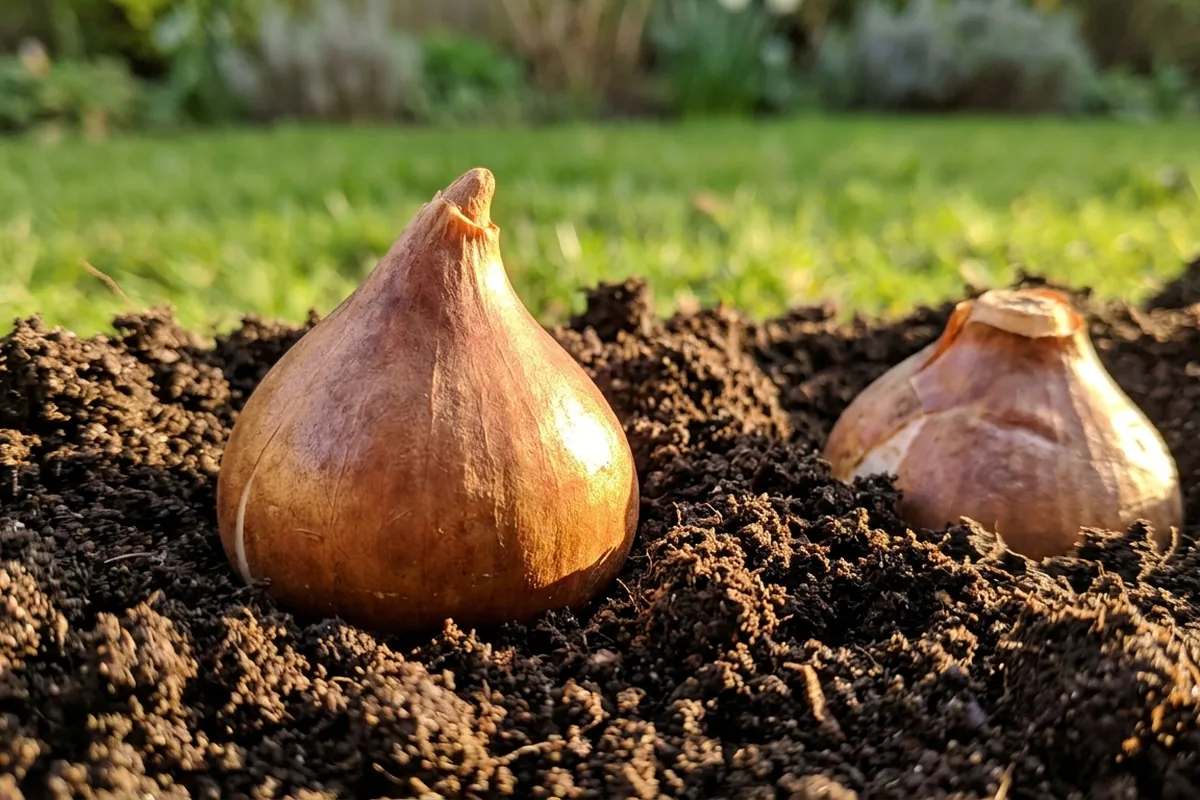
Place bulbs pointed end up, flat base down. If one looks a bit sideways, take a second to straighten it; a bulb leaning too much can produce a bent stem later.
Firm the soil gently back over, then water once to settle everything. After that, leave them. This is the point where many people keep watering and end up with rotting bulbs.
Planting in borders, pots and small spaces
In borders, tulips sit well behind winter bedding or in gaps between perennials that die back. Avoid spots right on top of big, greedy roots from shrubs or trees.
For pots on a patio or balcony:
- Choose a deep container with drainage holes.
- Add a layer of crocks or coarse gravel over the holes.
- Use a peat‑free, multi‑purpose compost mixed with about a third grit for drainage.
- Plant bulbs in a close grid, still keeping that 8 cm or so between them.
If you lift the pot and it still feels heavy the morning after rain, wait before watering again. Saucers under pots are fine in summer, but in winter they often keep bulbs sitting in cold water, so empty them or remove them altogether.
For a longer show, you can layer bulbs: larger, later tulips deeper down, with earlier bulbs (like crocus or small narcissus) above, still keeping each layer at its proper depth.
Looking after tulips after planting
Once planted, tulips are largely hands-off until spring.
- Cold is useful: Tulips need a period of cold to form strong flowers, so do not worry if the bed feels chilly and bare.
- Watch for waterlogging: After prolonged winter rain, check for areas where water stands. If bulbs are in a boggy patch, you may lose a few; make a note to improve drainage or move them next year.
- Spring growth: When shoots appear, you can give a light feed with a balanced, slow‑release fertiliser if you wish – follow the packet instructions. Strong bulbs in decent soil often manage without.
After flowering, deadhead the spent blooms so energy goes back into the bulb, not into seed. Leave the foliage until it has yellowed and flopped; this is when the bulb is quietly refuelling for next year. Cutting leaves too early is one of the main reasons tulips weaken over time.
If your soil is very heavy or you garden in a wet area, consider treating tulips more like annuals – enjoy a strong display for one season, then replant fresh bulbs each autumn. It’s a common approach in many UK gardens and often gives the best results.
Planting tulip bulbs well once in autumn sets you up for spring with taller stems, fuller flowers and fewer gaps. Choose a dry day, test how deep your trowel goes, and get a small batch in the ground – even one well‑planted pot can transform a dull April corner.
Reader note
The Flower Expert is an independent gardening publication. Your support helps us keep creating practical plant care guides for everyday UK readers.
This article was created with the assistance of AI and reviewed by an editor. It is intended as general gardening information, not personalised professional advice.
If you still have a question, or if something looks unclear or inaccurate, you can contact us through our contact form.
If you found this article helpful, please consider sharing it on social media or leaving a comment below with your own experience. It helps other readers too.