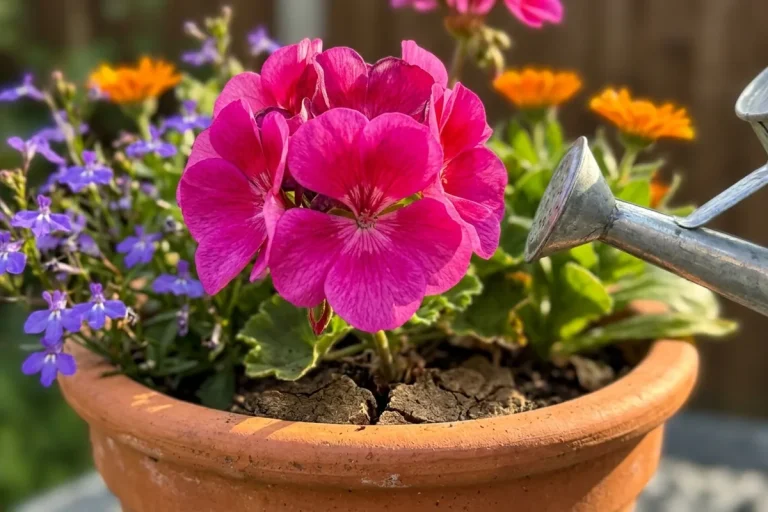

The shock often comes on the first hot spell: compost that was fine yesterday is bone dry today, flowers are drooping by lunchtime and patio pots seem to need watering twice a day.
What actually makes pots dry out so fast
Potted plants dry out quickly in warm weather because everything that keeps moisture in the ground is missing in a container.
In a border, roots can travel deeper to find cooler, damper soil. In a pot, roots are trapped in a small volume of compost that heats up and dries from all sides – top, sides and bottom.
A few things speed this up:
- Small pots and thin plastic warm quickly, so moisture is lost faster.
- Full sun on dark containers bakes the compost, especially on a balcony or south-facing patio.
- Wind and warm air pull moisture from leaves and the compost surface, even when it does not feel scorching.
- Root-filled compost (when roots circle the pot) holds less water because there is simply less compost left.
- Peat‑free composts can dry sharply on the surface; they are good, but once dry they sometimes repel water until you soak them properly.
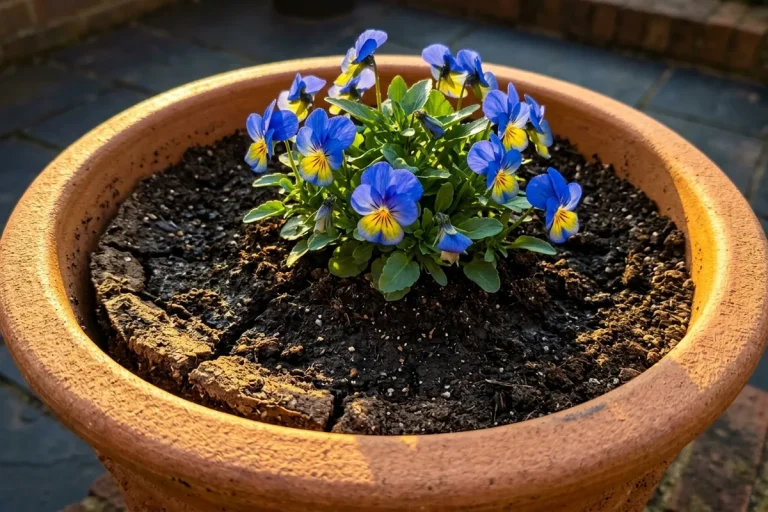
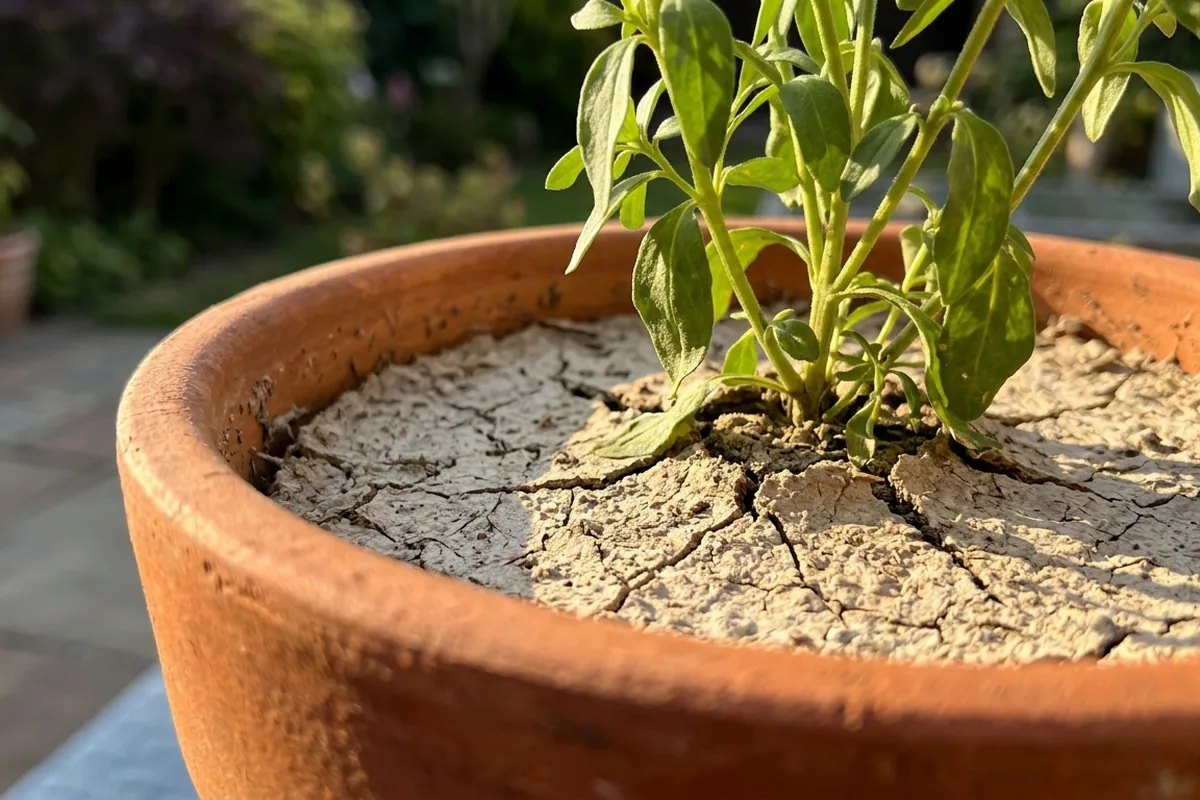
If your pot feels light, the compost is pulling away from the sides, and water runs straight out of the drainage holes, it is not just dry – it is very dry.
The checks to make before you reach for the watering can
Before you assume you must water twice a day, check what is really happening inside the pot.
- Lift the pot. If it still feels surprisingly heavy, wait. The top can look dry while the middle is still damp.
- Do a finger test. Push a finger 3–4 cm into the compost. If it is cool and damp, do not rush to water again.
- Look at the roots. If they are circling the bottom or poking out of drainage holes, the plant is likely using water faster than the pot can hold it.
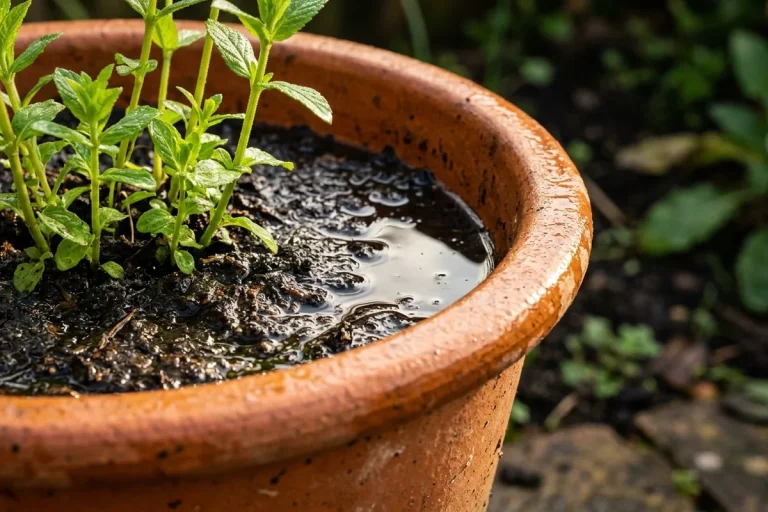
- Check saucers the next morning. If they are still full, you may be overwatering even in hot weather, which can cause yellowing leaves and limp growth.
This is the point where many people water again too soon, so plants sit in wet roots and hot air – a combination that stresses them almost as much as drought.
How to keep pots from drying out so quickly
Once you know why they dry, you can slow it down:
- Upsize the pot slightly. Moving a thirsty plant one or two sizes up gives more compost and more moisture reserve.
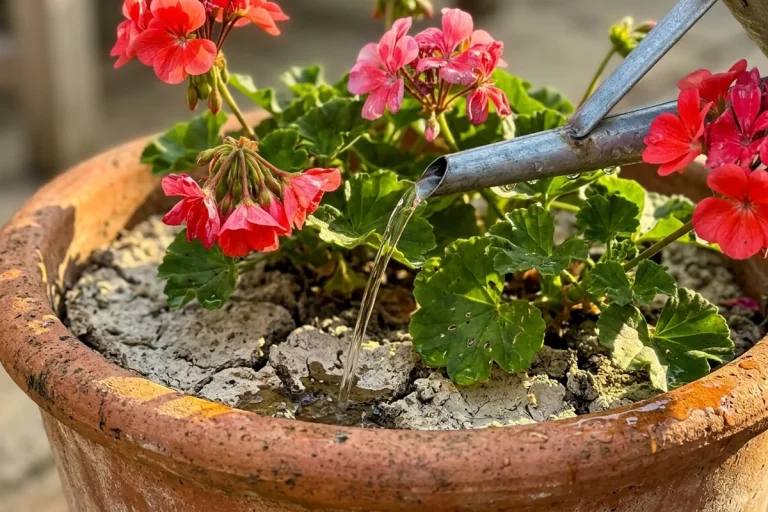
- Water thoroughly, but less often. Water until it runs from the drainage holes, then let the top few centimetres dry before watering again.
- Shade the pot, not always the plant. Sliding containers a little out of the fiercest afternoon sun, or grouping them together, keeps the sides cooler.
- Mulch the surface. A thin layer of fine gravel, bark, or even decorative pebbles helps reduce evaporation from the top.
- Use a water-retentive compost. Many peat‑free mixes or moisture-control composts (check the bag at the garden centre) hold water more evenly.
- Consider self-watering pots or trays. These can help on balconies or for weekend breaks, but still check that the reservoir is not left empty.
In a heatwave, expect to water most containers daily, and small pots in full sun possibly twice, especially on a bright UK windowsill over a radiator or on a paved patio that stores heat.
If your plants are flagging every warm afternoon, start with the simple checks: pot size, compost moisture below the surface, and how exposed the container is to sun and wind. A few quiet adjustments usually mean less crisis watering – and much happier pots – for the rest of the summer.
Reader note
The Flower Expert is an independent gardening publication. Your support helps us keep creating practical plant care guides for everyday UK readers.
This article was created with the assistance of AI and reviewed by an editor. It is intended as general gardening information, not personalised professional advice.
If you still have a question, or if something looks unclear or inaccurate, you can contact us through our contact form.
If you found this article helpful, please consider sharing it on social media or leaving a comment below with your own experience. It helps other readers too.