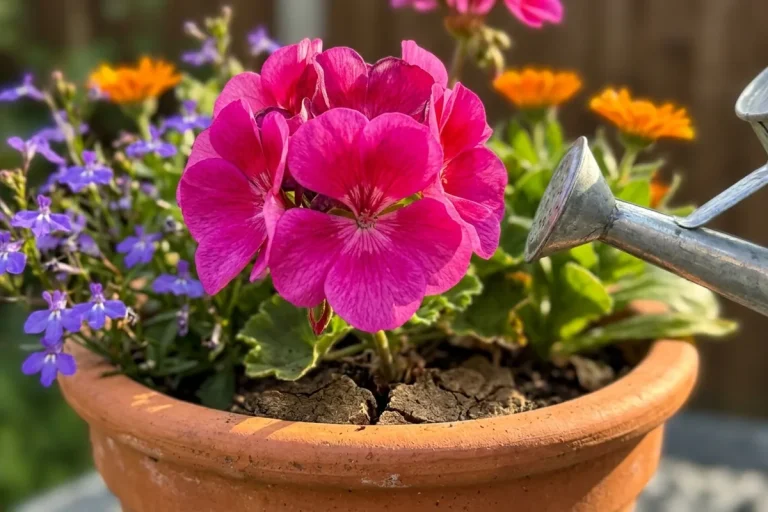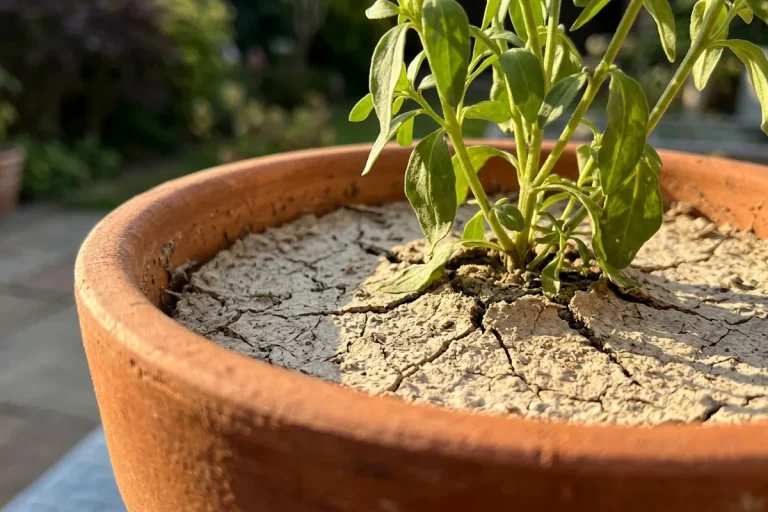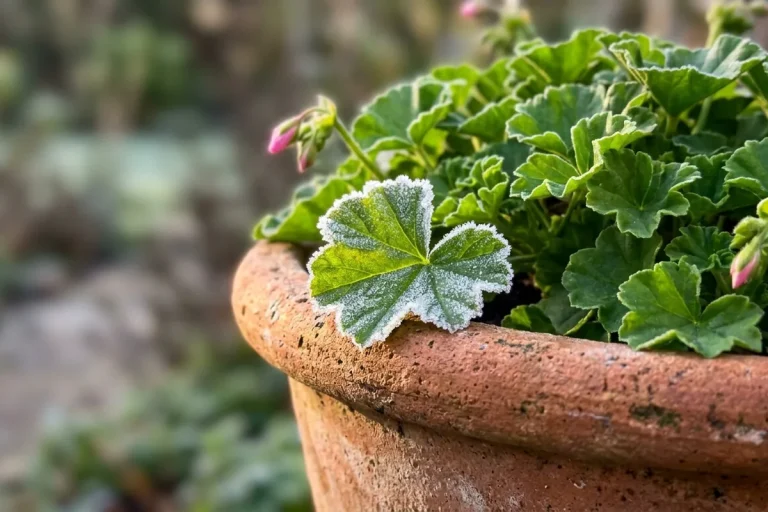

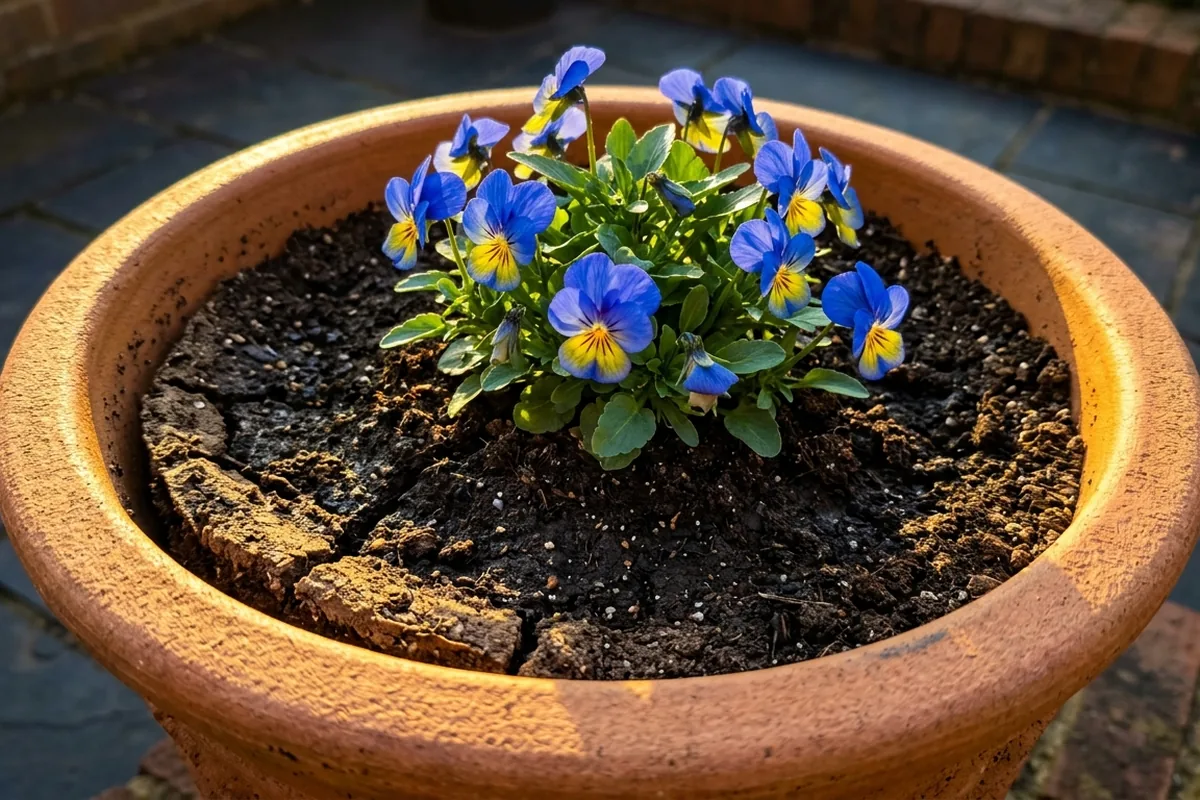
Before a cold spring night, the most useful thing you can do for patio pots is not to rush out with fleece, but to check one simple detail: how wet the compost is. If the top looks dry but the pot still feels heavy when you lift it, that moisture can turn icy cold and shock tender roots.
The one check that makes the difference
Cold on its own is one stress. Cold and wet together is what really sets back many spring containers – especially pots of bedding, herbs, pelargoniums, young dahlias and anything just planted from the garden centre.
A couple of hours before dusk, do this:
- Lift the pot slightly from one side. If it feels surprisingly heavy for its size, it is still holding a lot of water.
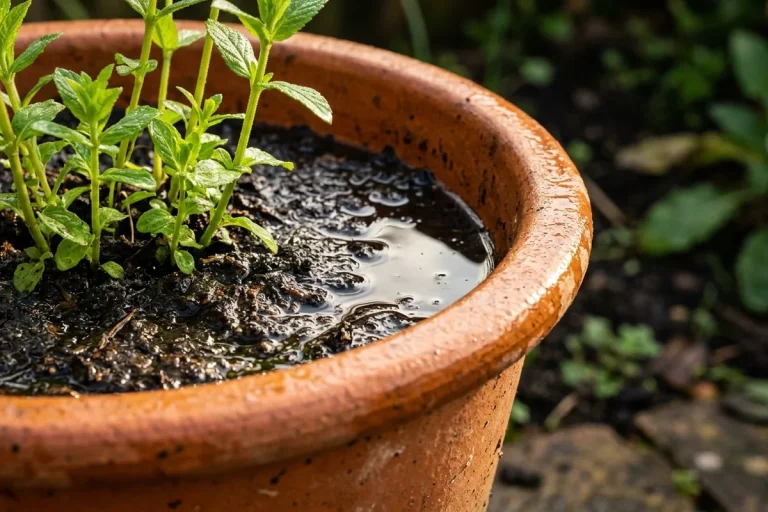
- Look at the drainage holes. If they are blocked with roots, compost or a saucer full of water, the roots are sitting in a cold bath.
- Feel the compost a few centimetres down. If it is cool and soggy rather than just damp, the plant will feel the cold more sharply.
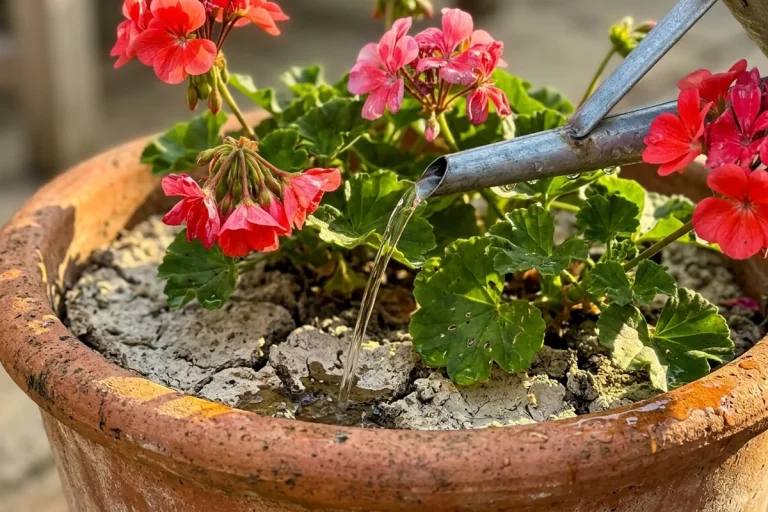
If the pot is very wet and a cold night is forecast, do not water again “to be safe”. This is the point where many people water again too soon and the plant then sits saturated through a chilly night.
Instead, move very wet pots against a house wall, under a porch, or into a shed or garage for the night if you can still lift them. Even a bright but cold windowsill indoors is kinder than an exposed, wet patio for one night.
What to do with pots you cannot move
Large containers and half-barrels are not easy to drag into shelter, so the aim is to keep the root zone from staying saturated and exposed.
For big, heavy pots:
- Tilt the pot slightly by propping one side on a stone or small pot so excess water can drain away.
- Remove any saucers or decorative outer pots that are holding water. If there is still water in the saucer the next morning, it was too much for the night before.
- Pull mulch or decorative gravel back from soft young stems so they are not pressed against icy, wet material.
- Use fleece or newspaper around the pot, not tightly over the foliage, to take the edge off the cold at root level.
If the compost is only lightly moist and the pot feels reasonably light, you can be calmer about a cold night. Dryish compost cools down and warms up more quickly than a waterlogged mass.
How this small habit protects your plants
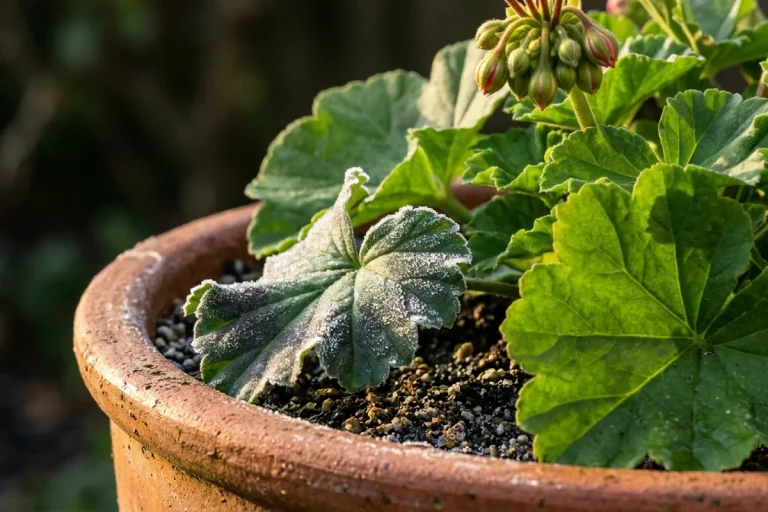
The useful clue is not one leaf, but the pattern across the pot. If new growth looks limp and dull after a cold, wet spell, or if flowers on the windward side brown off first, roots may have been chilled in soggy compost.
By getting into the habit of checking weight, drainage and moisture before a chilly night, you:
- reduce the risk of soft roots rotting in cold, airless compost
- help tender plants like fuchsias, petunias and basil keep growing steadily
- avoid the stop–start growth that leaves plants weak and slow to flower
On the next cold spring forecast, do not rush for the watering can. Lift a couple of pots, look underneath, feel the compost, then decide. That quiet check on the patio often matters more than any last-minute fleece.
Reader note
The Flower Expert is an independent gardening publication. Your support helps us keep creating practical plant care guides for everyday UK readers.
This article was created with the assistance of AI and reviewed by an editor. It is intended as general gardening information, not personalised professional advice.
If you still have a question, or if something looks unclear or inaccurate, you can contact us through our contact form.
If you found this article helpful, please consider sharing it on social media or leaving a comment below with your own experience. It helps other readers too.