
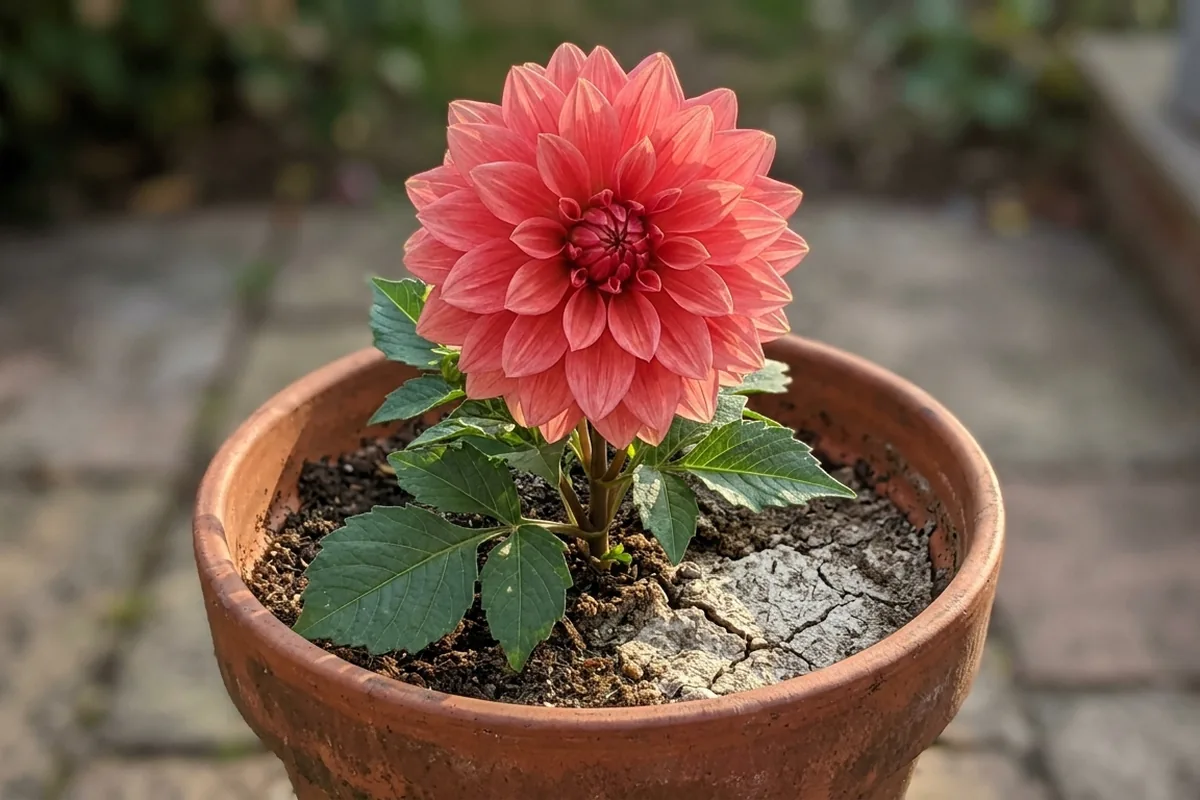
Dahlias are ideal for pots when you want bold colour but only have a patio, balcony or small garden. If you have a sunny corner and space for a medium-sized container, you can have flowers from midsummer to the first frost.
If your reality is a couple of pots by the back door, a narrow yard or a small terrace, dahlias will still perform well as long as you give them enough depth, good compost and regular water.
The basics: pot, compost and position
For most varieties, choose a pot at least 30–35 cm wide and deep, with plenty of drainage holes. Larger “dinner-plate” dahlias are happier in 40 cm pots. A small tuber in a tiny decorative pot will look fine in May, then struggle by August.
Use a peat‑free, multi-purpose compost with some added garden compost or well-rotted manure if you have it. Mixing in a bit of grit or perlite helps drainage, especially for a damp spring.
Place pots where they’ll get at least 6 hours of sun: a bright patio, south or west-facing balcony, or a sunny front step. Avoid a very windy spot where tall stems will rock in the pot.
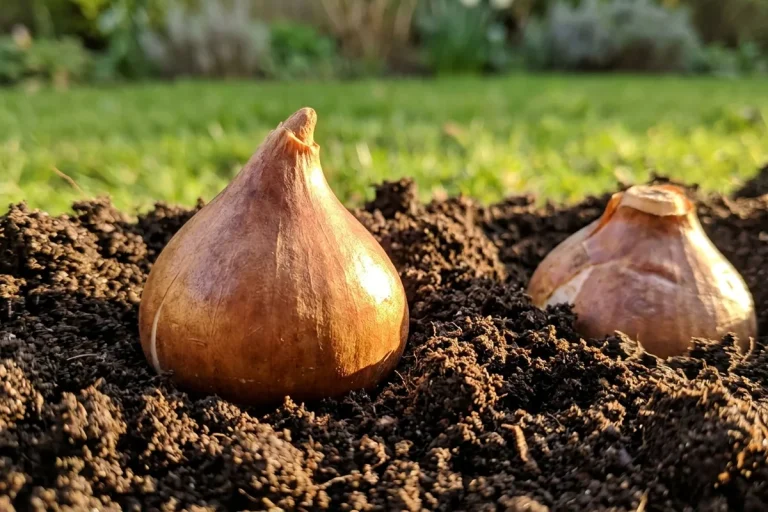
Plant tubers in April–May. Set each tuber horizontally, with the old stem (the little “knob”) just below the surface, then cover with 5–8 cm of compost. If the tuber is sitting right at the top, add more compost – exposed tubers dry out and sprout poorly.
Water lightly after planting and keep just moist. If the top looks dry but the pot still feels heavy, wait; buried tubers rot easily in cold, wet compost.
Watering, feeding and keeping them upright
Once growth starts and days warm up, dahlias in pots need consistent moisture. In summer, expect to water every day or two. Before you water again, push a finger 3–4 cm into the compost. If it feels cool and damp, wait. If it’s dry and the pot feels unexpectedly light, water thoroughly until it runs from the drainage holes, then empty any saucer.
From the first strong shoots, start feeding every 10–14 days with a balanced or tomato fertiliser, following the label. Overfeeding with high nitrogen can give lots of leaf and fewer flowers, so do not double the dose.
Most dahlias in pots benefit from staking. Push a cane in close to the tuber early, tie stems loosely as they grow, and check after wind or rain – if a stem is leaning, add a second tie before it snaps.
Deadhead regularly. The useful clue is the shape: spent flowers become pointed seed heads, while new buds stay rounded. Snip off old blooms down to a leaf joint to keep fresh flowers coming.
Choosing varieties and getting them through winter
For smaller spaces, compact or “border” dahlias are easier to manage and less likely to topple. Look for words like “dwarf”, “patio” or “border” on labels at the garden centre. Single-flowered types are especially good for bees.
In late autumn, once frost has blackened the foliage, cut stems back to 10–15 cm. For a sheltered, free-draining patio in the milder parts of the UK, you can often leave pots outside, moving them against a wall and covering the surface with a thick mulch to help protect the tubers.
If your patio is exposed, or you’re in a colder area, lift the tubers from the pot once the compost is just damp, not soggy. Brush off most of the compost, dry them for a few days somewhere frost-free, then store in barely moist compost or dry bark in a box, ready to pot up again in spring.
If the leaves look worse after every “fix”, stop changing several things at once. Check: is the compost soggy, is the pot too small, or is the plant simply at the end of its season?
With the right pot, sun and a steady watering routine, dahlias will turn even a small patio into a long-lasting display. Start with one or two tubs this year, learn how quickly they dry out in your space, and you’ll know exactly how many more you can enjoy next summer.
Reader note
The Flower Expert is an independent gardening publication. Your support helps us keep creating practical plant care guides for everyday UK readers.
This article was created with the assistance of AI and reviewed by an editor. It is intended as general gardening information, not personalised professional advice.
If you still have a question, or if something looks unclear or inaccurate, you can contact us through our contact form.
If you found this article helpful, please consider sharing it on social media or leaving a comment below with your own experience. It helps other readers too.