
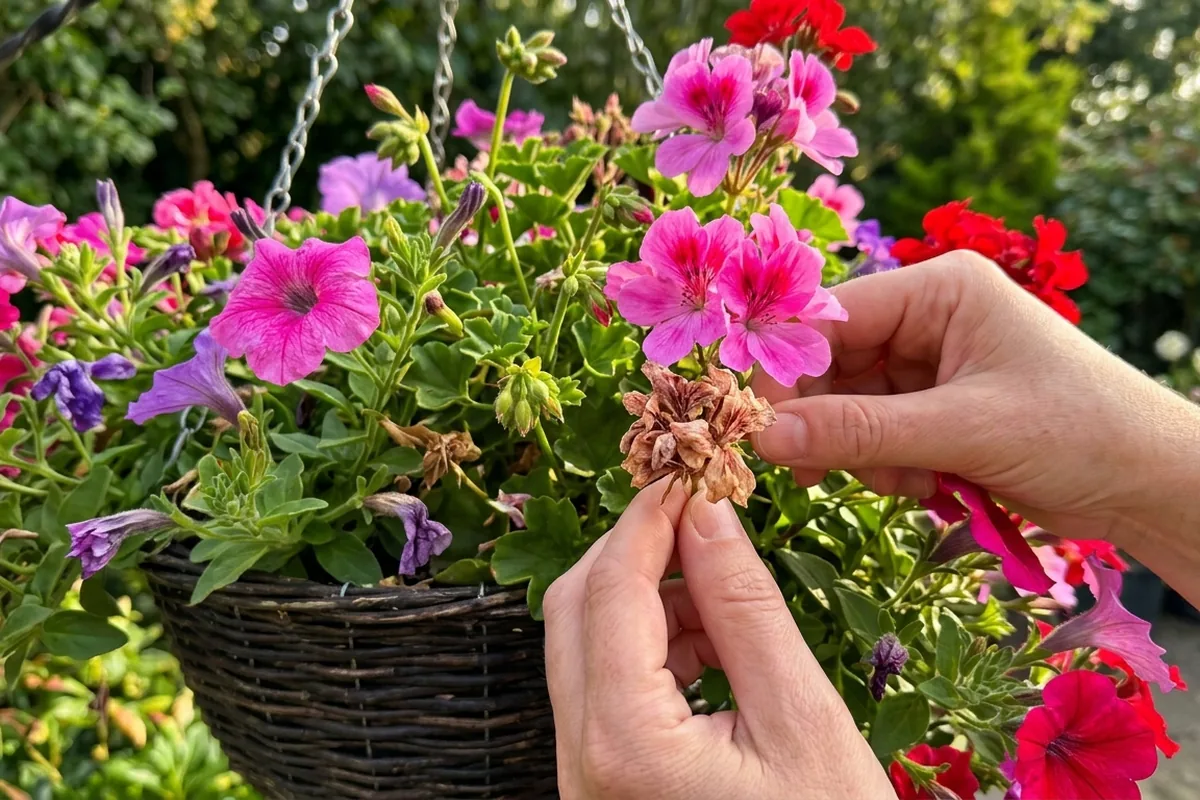
The secret to long-lasting baskets is a steady routine, not a single magic feed. If your basket looked full and frothy in May but now has gaps, crisp leaves and a few tired flowers, it’s usually down to water, food or deadheading slipping a little.
The rhythm that keeps flowers coming
For summer baskets, water and feed are everything. Small baskets dry out fast, especially on a sunny wall or balcony.
- Watering: In warm weather, expect to water once a day; in hot, windy spells, sometimes twice. Lift the basket: if it still feels unexpectedly heavy, wait. If it feels light and the compost has pulled from the sides, soak it thoroughly.
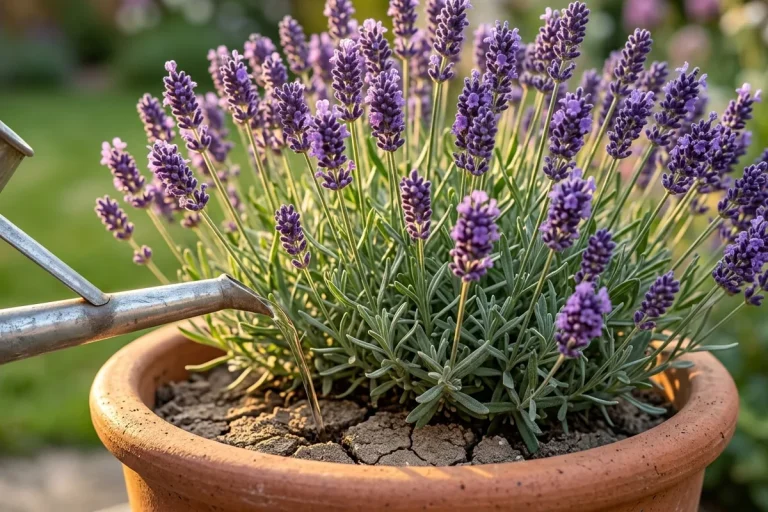
- How to water properly: Use a watering can with a rose. Water slowly until it runs from the drainage holes. If it rushes straight through, the compost may be dry and shrinking; water, wait 5 minutes, then water again so it can rehydrate.
- Feeding: After about 4–6 weeks, the slow-release fertiliser in most shop-bought baskets is fading. From early summer, feed with a high-potash liquid fertiliser (tomato feed works well) every 7–10 days. Always follow the label.
If the top of the compost looks dry but it’s still dark and damp a few centimetres down, watering again can cause sour, airless compost. A quick finger check tells you more than the surface.
Deadheading and light: the two easy wins
Most classic basket plants – petunias, calibrachoa, fuchsias, lobelia, verbena, geraniums – will stop producing new buds if they’re left to set seed.
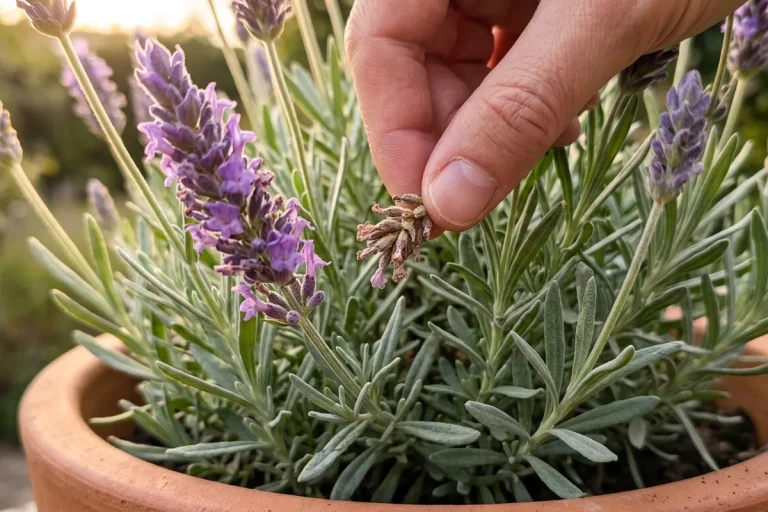
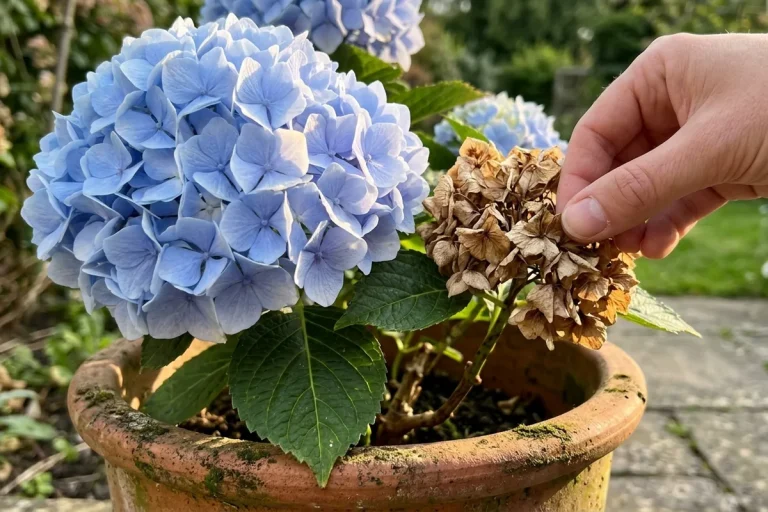
- Deadhead often: At least twice a week, pinch or snip off the whole spent flower head, not just the petals. With petunias and geraniums, remove the little seed pod behind the flower too.
- Tidy leggy growth: If stems get straggly or bare at the base, trim them back by a third. It looks brutal for a week, then fresh growth and flowers follow.
- Give them enough light: Baskets need bright light for most of the day. A north-facing wall, deep porch or a flat’s shaded recess will give you leaves but fewer flowers. If this is happening on your basket, move it to a brighter spot, even if that’s just a sunnier corner of the patio.
This is the point where many people water and feed more, when the real fix is simply more light and regular deadheading.
Keeping baskets going into late summer
By August, baskets are working hard in often-tired compost.
- Top up the compost: If you can see roots near the surface or gaps around the edges, gently tuck in a little fresh peat-free compost and water well. This helps hold moisture and nutrients.
- Check for scorch and wind: Brown, crispy edges and flowers that shatter quickly can mean strong sun or wind. Shift the basket slightly – even 1–2 feet to a less exposed hook can help.
- Look underneath: If the liner is green with algae or the base stays wet, you may be overwatering. Let it dry slightly before the next soak.
- Refresh or replace a few plants: If one or two plants have given up completely, you can replant small fresh plug plants or trailing ivy to fill gaps. Do it on a cool, cloudy day and water well afterwards.
If the leaves look worse after every “fix”, stop changing several things at once. Check water, then feed, then light, one at a time, and give each change a week.
With a steady routine of deep watering, regular feeding and quick deadheading, most hanging baskets will flower strongly right into early autumn. Before you water this evening, simply lift the basket, check the compost with a finger, and decide based on that – your flowers will repay the extra 10 seconds all summer.
Reader note
The Flower Expert is an independent gardening publication. Your support helps us keep creating practical plant care guides for everyday UK readers.
This article was created with the assistance of AI and reviewed by an editor. It is intended as general gardening information, not personalised professional advice.
If you still have a question, or if something looks unclear or inaccurate, you can contact us through our contact form.
If you found this article helpful, please consider sharing it on social media or leaving a comment below with your own experience. It helps other readers too.