
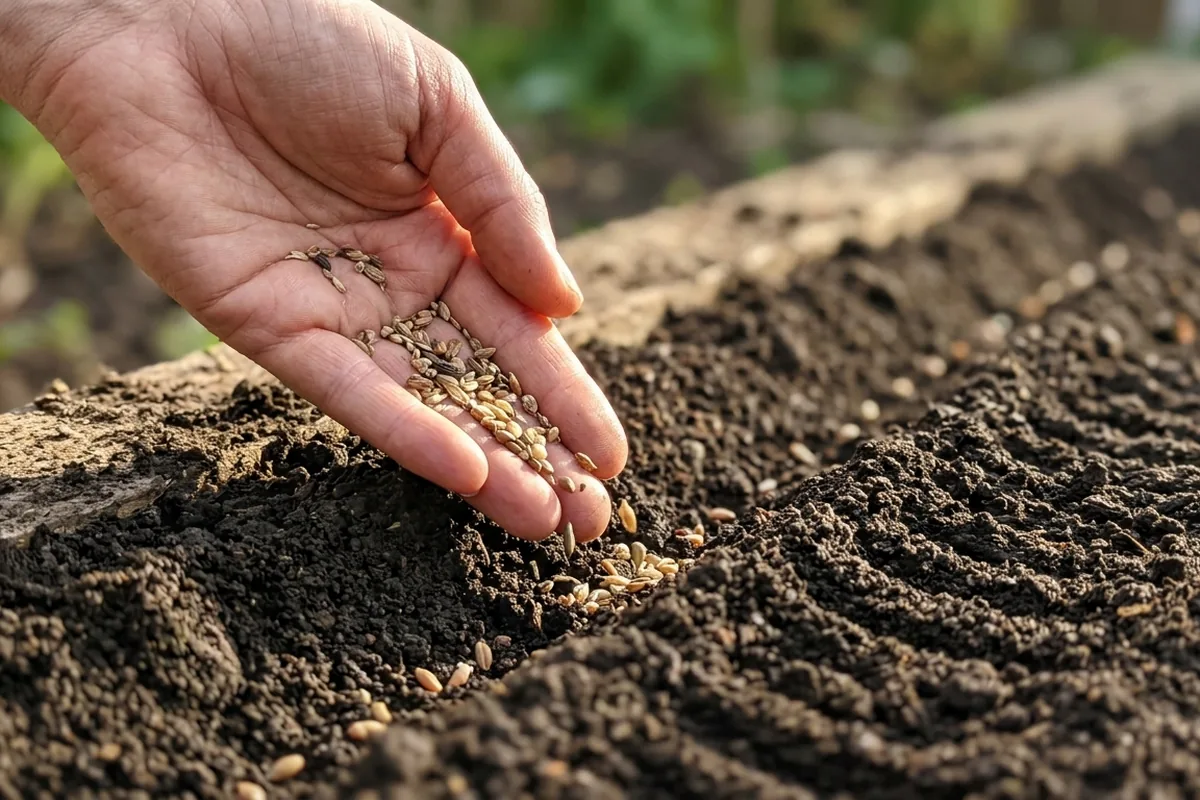
Wildflower seeds are surprisingly simple if you get two things right: the soil and the timing. If you have a patch of lawn doing very little, or a bare corner where grass never quite takes, that’s often the perfect place. Many people scatter a packet on top of existing grass and then wonder why almost nothing appears.
The simple sequence for sowing wildflowers
Aim to sow in autumn or early spring. Autumn (September–October) usually gives the best results in much of the UK, as seeds sit in cool, moist soil and germinate as temperatures rise.
1. Choose the right spot
Wildflowers need full sun for most of the day. Light shade under open trees can work, deep shade rarely does. Avoid very rich, heavily fertilised beds – wildflowers prefer poor, lean soil.
2. Strip back existing growth
Cut grass short, then remove the top layer of turf or thick thatch. You’re aiming for bare soil with about 50–70% of the surface visible. If you can still see a solid lawn, the seeds will struggle.
3. Prepare a firm, crumbly surface
Lightly fork or rake the top 2–3 cm, breaking up big clods and removing stones and roots. Then tread or gently firm the area and rake again. You want fine, but not fluffy, soil. If you walk across and sink, it’s too loose.
4. Mix and measure your seed
Wildflower seed is very light. Mix it with dry sand (about 4 parts sand to 1 part seed) so you can see where you’ve been. Check the sowing rate on the packet and do not be tempted to over-sow – crowded seedlings produce weaker plants.
5. Sow evenly in two directions
Scatter half the mix walking one way, then the rest walking at right angles. Take your time; if you see clumps of seed, spread them out with your hand.
6. Press, don’t bury
Wildflower seeds need light. Do not rake them in deeply. Instead, walk over the area or use a board to gently press them into contact with the soil. If you can still see some seed on the surface, that’s fine.
7. Water once, then wait
If the soil is dry, water with a fine rose so you do not wash the seed into patches. After that, in most UK seasons, rain will do the rest. If you lift the soil in your hand and it still feels cool and damp, do not water again yet.
Caring for your wildflower patch in year one
In the first few weeks you may see grass and “weeds” racing ahead of the wildflowers. This is normal.
- If annual weeds (like chickweed) are smothering seedlings, give the area a very light trim with shears or a high mower setting once the growth reaches 10–15 cm. This slows the weeds without harming most wildflowers.
- Keep an eye out for persistent perennial weeds such as nettles or docks. These are best dug out carefully, root and all, before they dominate.
- Resist the urge to feed. Fertiliser encourages coarse grasses, not flowers.
The useful clue is not one plant, but how the whole patch looks. If you only see lush grass and no broad-leaved seedlings by late spring, the soil may be too rich or the original grass layer was not opened up enough.
Mowing and managing in later years
For mixed perennial meadows, the main job is the yearly cut.
- Summer display: Let everything flower and set seed.
- Main cut: Usually once a year, between late July and September, depending on the mix and your region. Cut to about 5–7 cm.
- Remove all cuttings: This is vital. Leaving them in a heap on the surface feeds the soil and favours grass over flowers.
If growth surges again in autumn, a second, higher cut can help keep things tidy and stop coarse grasses taking over.
For pure annual mixes (bright cornflowers, poppies, corn marigolds), you’ll need to re-sow each year, ideally after lightly disturbing the top of the soil again.
Once you’ve done this process once, it becomes far less mysterious. Start with one modest patch rather than the whole lawn; you can always extend it when you see how the soil and seed behave in your own garden.
Reader note
The Flower Expert is an independent gardening publication. Your support helps us keep creating practical plant care guides for everyday UK readers.
This article was created with the assistance of AI and reviewed by an editor. It is intended as general gardening information, not personalised professional advice.
If you still have a question, or if something looks unclear or inaccurate, you can contact us through our contact form.
If you found this article helpful, please consider sharing it on social media or leaving a comment below with your own experience. It helps other readers too.