
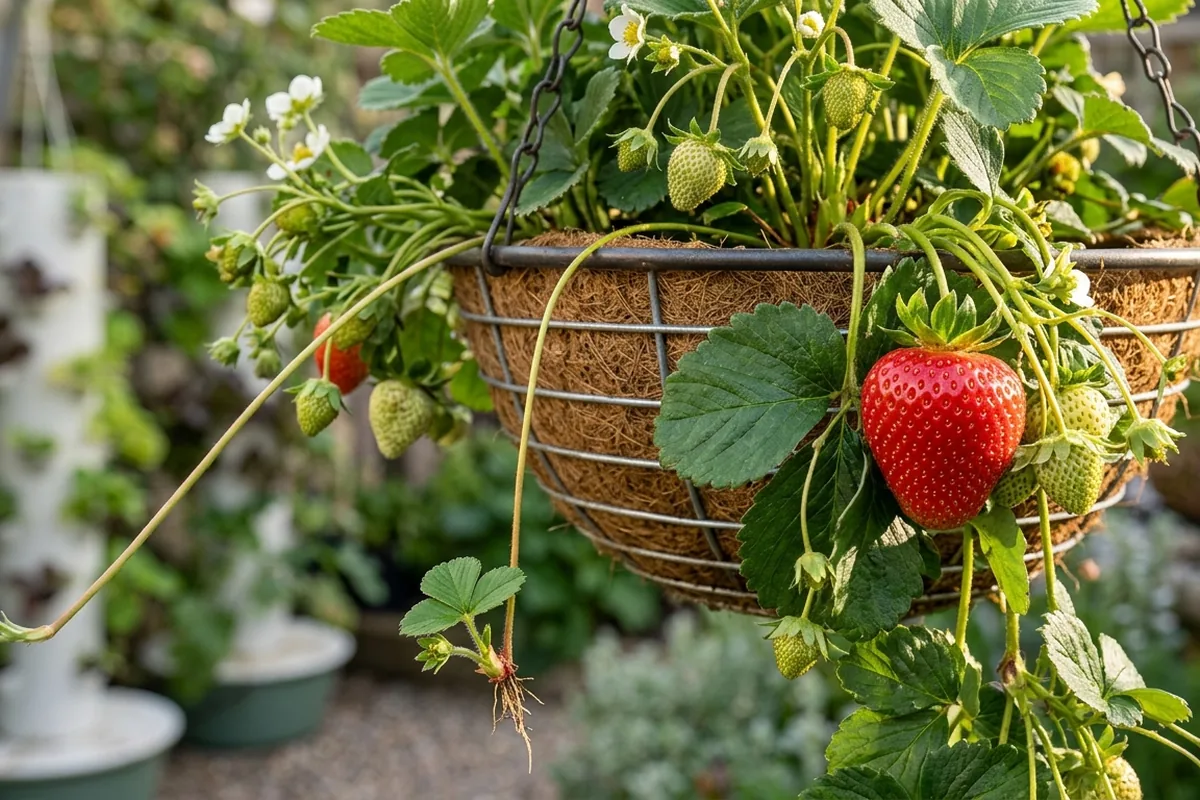
To grow good strawberries in the air rather than in a border, you need to think about roots, water and sun first, decoration second. If your current plants are giving a few small berries that dry up or rot, the set-up usually needs adjusting rather than starting again.
Setting up hanging baskets and vertical planters
Choose the right varieties. Look for compact or trailing types such as ‘Toscana’, ‘Cambridge Favourite’, ‘Mara des Bois’ or anything sold as “hanging basket” or “everbearing” strawberries. These cope better with shallow compost and keep fruiting over a long season.
Use a good peat‑free multipurpose compost with some added loam if you can; it holds moisture more evenly. Mix in slow‑release fertiliser granules at planting, following the packet.
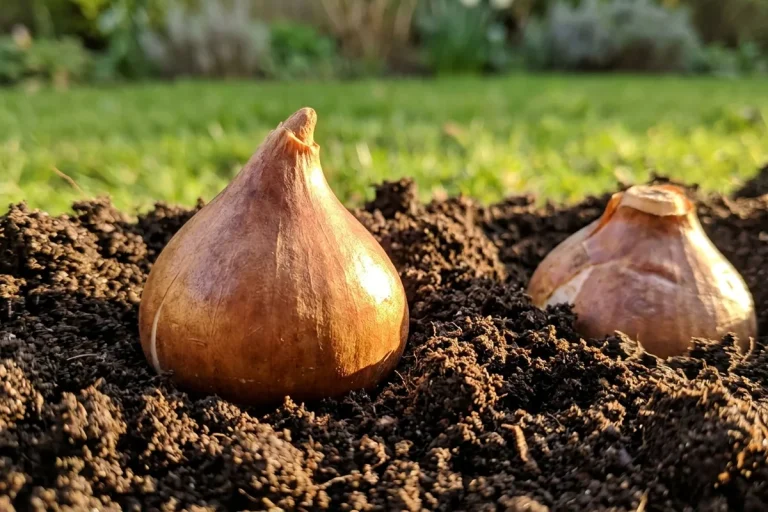
For a standard 30 cm hanging basket, 3 plants is usually enough. In vertical towers, plant the lowest pockets first, firming compost gently so there are no big air gaps. If you can see a bulb-like crown sitting too close to the surface, add a little more compost around it – but keep the central growing point just above the surface so it doesn’t rot.
Hang or stand your containers where they get at least 6 hours of sun in summer – a bright south or west-facing wall, balcony or patio is ideal. Avoid a very windy corner, which strips moisture quickly and can rock the plants.
Watering, feeding and day‑to‑day care
Strawberries in the air dry out faster than those in the ground. The key is thorough but not constant watering.
- Check before you water: push a finger 3–4 cm into the compost. If it feels cool and damp, wait. If the top looks dry but the pot still feels surprisingly heavy, do not rush to water again.
- Water until you see excess running from the drainage holes, then let it drain fully. If a saucer is still holding water the next morning, you’re overdoing it.
- In hot spells, you may be watering daily; in cooler, cloudy weather, every few days is enough.
From late spring to mid-summer, feed every 1–2 weeks with a high‑potash liquid feed (often sold for tomatoes), following the label. This supports flowers and fruit rather than just leaves.
Remove brown or mouldy fruit promptly and any leaves that are yellowing and hanging low. This improves air flow, which is important in crowded pockets of a vertical planter where damp can linger after rain.
If birds are helping themselves, drape soft netting around the basket or frame, making sure it’s secured so wildlife cannot get tangled.
Getting more fruit and keeping plants going
The useful clue is not one leaf, but the pattern across the plant. If you have plenty of flowers but small berries that shrivel, they are probably drying out between waterings. If flowers turn brown and drop without swelling, cold or lack of sun may be the issue – a bright but cold windowsill or a shaded wall can limit crops.
Pinch off the first few runners (long stems with baby plants) so the main plant puts its energy into fruit. Later in summer you can root a few runners in small pots of compost to replace tired plants.
Most hanging‑grown strawberries are at their best for 2–3 years. After that, fruit size and quantity often decline. At this point, use your rooted runners or buy fresh young plants and refresh the compost. Empty old mix into a border or onto the compost heap rather than reusing it for new strawberries.
With a sunny spot, regular watering and a bit of feeding, hanging and vertical strawberries can be surprisingly productive. Start by checking your current basket: sun, compost level, then moisture. One small adjustment there often gives you sweeter, better‑sized fruit within a few weeks.
Reader note
The Flower Expert is an independent gardening publication. Your support helps us keep creating practical plant care guides for everyday UK readers.
This article was created with the assistance of AI and reviewed by an editor. It is intended as general gardening information, not personalised professional advice.
If you still have a question, or if something looks unclear or inaccurate, you can contact us through our contact form.
If you found this article helpful, please consider sharing it on social media or leaving a comment below with your own experience. It helps other readers too.