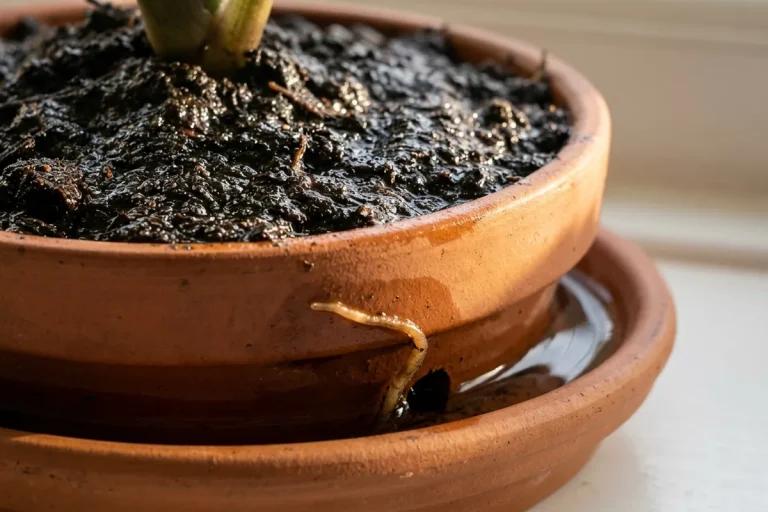

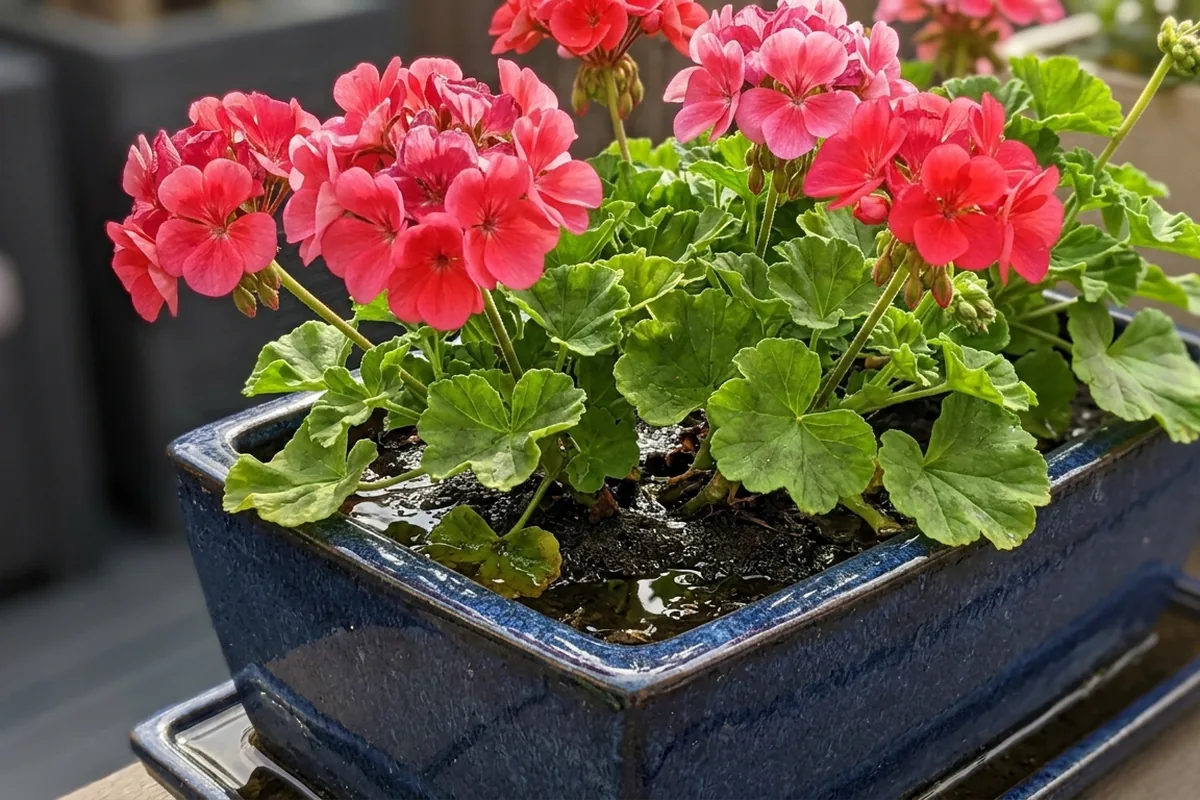
The first sign is usually not dramatic yellow leaves or a plant collapsing overnight. It is much quieter: compost that stays wet and heavy long after you have watered, while the foliage starts to look a little dull, limp or spotty. If the top of the compost looks dry but the pot still feels surprisingly weighty when you lift it, better drainage is often the missing piece.
The first sign to watch for
For most container flowers, the earliest warning is compost that stays soggy around the roots.
You may notice:
- the surface looks fine, but 3–4 cm down is still cold and wet
- a faint sour or stagnant smell when you check the pot
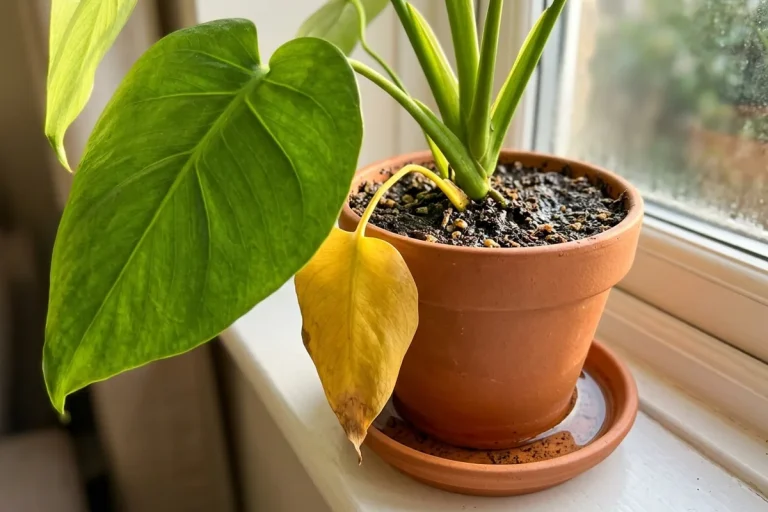
- a saucer that still has water sitting in it the next morning
- leaves that droop slightly even though the compost is clearly damp
This is the point where many people water again, assuming the plant is thirsty. In reality, the roots are short of oxygen, not water.
A quick finger check tells you more than the surface. Push a finger into the compost near the edge of the pot. If it feels wet and claggy two knuckles down, wait. If you gently tip the pot and water seeps from the drainage holes without you adding any, drainage needs attention.
Why poor drainage makes flowers sulk
Container compost needs air pockets as well as moisture. When it stays saturated:
- Roots cannot breathe, so they stop taking up water properly.
- The finest feeder roots start to rot.
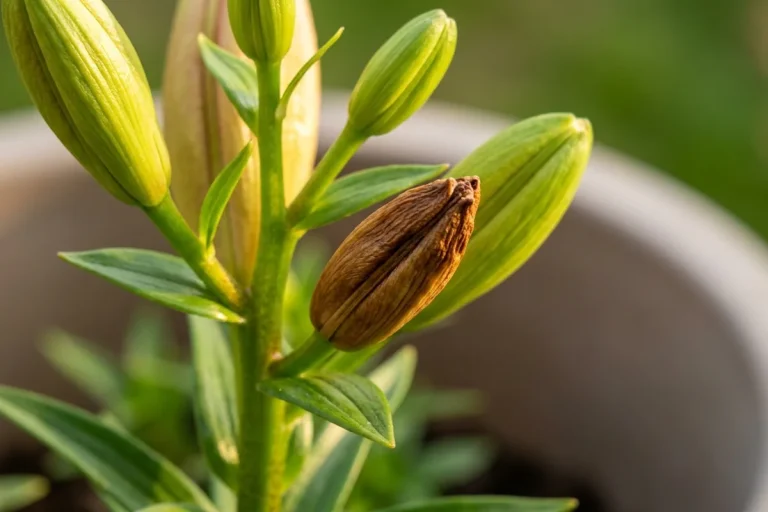
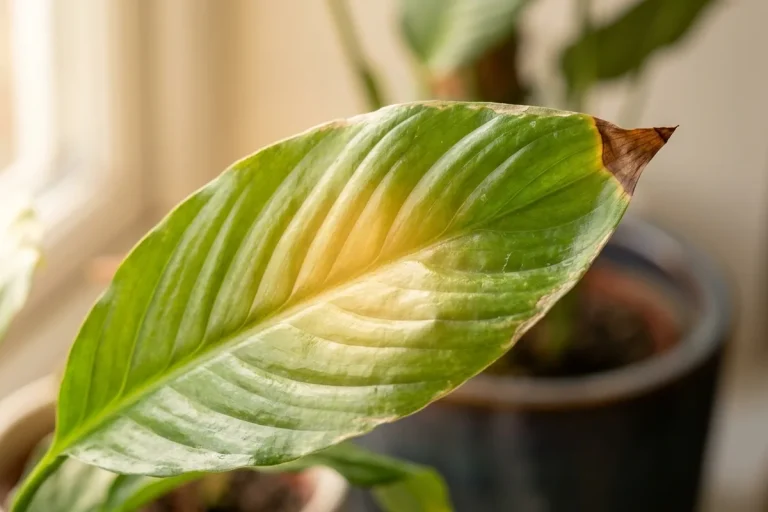
- Plants show odd mixed signals: wilting leaves on wet compost, brown edges, or buds that dry and drop.
If this is happening on your plant, look at the whole picture. The useful clue is not one leaf, but the pattern across the plant: several stems looking lacklustre, older leaves yellowing from the base, and compost that never seems to dry.
On a UK patio or balcony after a wet spell, this is especially common in:
- pots without drainage holes
- decorative outer pots with no way for excess water to escape
- containers filled with heavy garden soil rather than potting compost
Simple fixes to improve drainage quickly
You do not always need to repot everything immediately. Start with these checks:
- Empty saucers and outer pots. After watering or rain, tip away any standing water. If the saucer is still full the next day, drainage is not keeping up.
- Raise the pot slightly. Pot feet, bricks or a spare tile under the container help water escape and stop the drainage holes sitting flat on cold paving.
- Gently aerate the surface. Use a chopstick or plant label to loosen the top couple of centimetres of compost without tearing roots. This helps it dry more evenly.
- Move out of heavy rain. On a very wet week, sliding baskets or pots under a bit of shelter can prevent constant saturation.
- Plan a repot when you can. Next dry day, replant into fresh peat-free compost mixed with some grit or perlite, and always choose a pot with clear drainage holes.
Before you water again, lift the pot. If it still feels heavy and cool, wait. Letting the top few centimetres dry first protects the roots and keeps your flowers blooming for longer.
A small change in drainage often turns a sulky container around within a week or two. Start with that finger test and the saucer check; both take seconds and can save a whole summer’s display.
Reader note
The Flower Expert is an independent gardening publication. Your support helps us keep creating practical plant care guides for everyday UK readers.
This article was created with the assistance of AI and reviewed by an editor. It is intended as general gardening information, not personalised professional advice.
If you still have a question, or if something looks unclear or inaccurate, you can contact us through our contact form.
If you found this article helpful, please consider sharing it on social media or leaving a comment below with your own experience. It helps other readers too.