
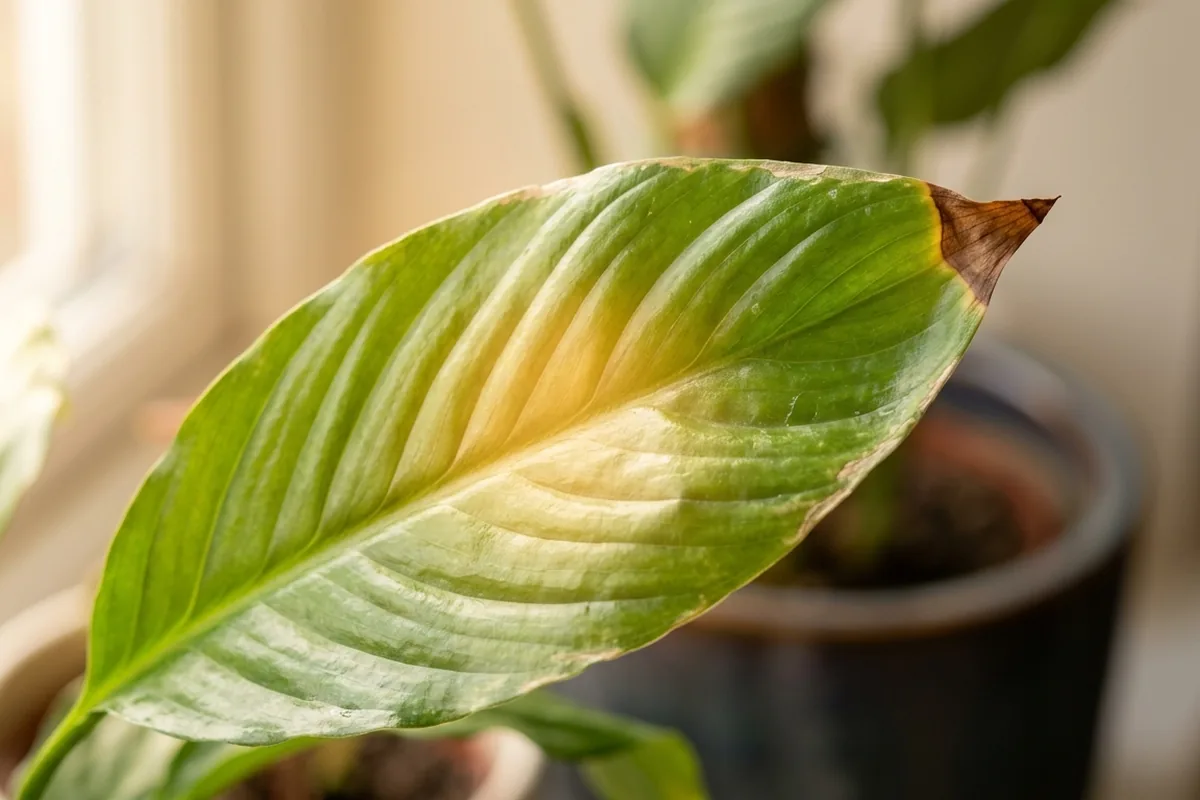
Brown, crispy leaf tips on a peace lily, spider plant, fiddle-leaf fig or even a garden shrub are easy to blame on “dry air”. Sometimes that’s true – especially in heated winter rooms – but often the plant is telling you something else is wrong. If the tips keep browning even after you move the plant or mist it, there is usually another cause.
What the leaves are really showing
Brown tips usually mean the roots or water balance are under stress. The leaf ends are where the plant struggles to supply enough water and nutrients, so they show damage first.
Look at the pattern:
- Only the very tips brown, the rest of the leaf is green: often mild stress – salts from hard tap water or feed, or slightly erratic watering.
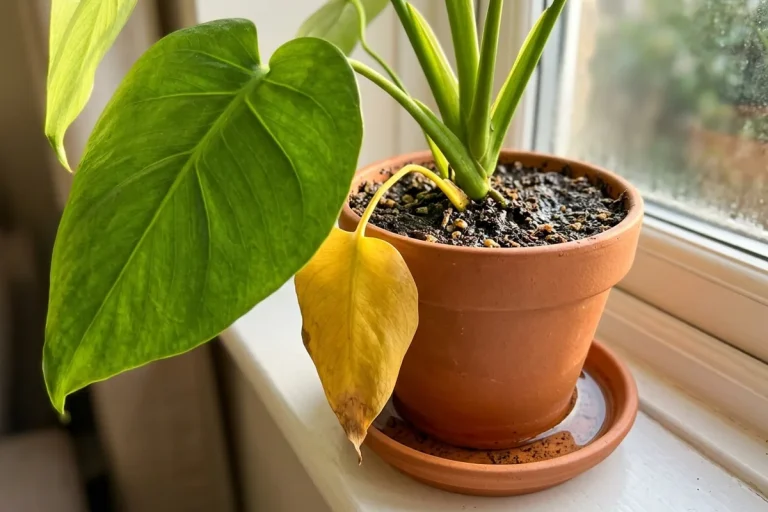
- Edges browning and crisping, sometimes with yellow just before the brown: often underwatering or compost that’s dried right through.
- Brown tips with soft, drooping leaves and compost that stays wet: often overwatering and struggling roots, not dryness at all.
- Brown, papery tips on plants near a radiator or in a draught: temperature and air movement are likely involved.
The useful clue is not one leaf, but the pattern across the plant. If every new leaf is worse than the last, something in the routine needs changing.
The checks to make before blaming dry air
Before you reach for a mister, check these in order:
- Compost moisture: push a finger 3–4 cm down. If it’s cool and damp, do not water. If the top looks dry but the pot still feels heavy, watering again can make the problem worse.
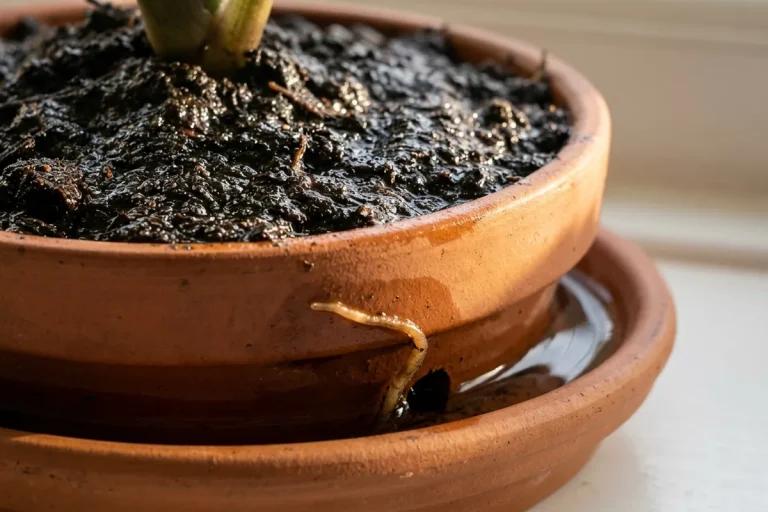
- Drainage: is there a saucer still holding water the next morning? Are there drainage holes? Constantly wet roots often lead to brown tips.
- Water quality: many houseplants dislike very hard tap water. Brown tips on spider plants, dracaenas and peace lilies can ease if you use rainwater or filtered water.
- Feeding: too much liquid feed, or pellets piled near the stem, can scorch tips. If this is happening on your plant, flush the pot through with plain water once and ease off the fertiliser for a while.
- Temperature and position: a bright but cold winter windowsill, or a plant right above a radiator, can dry leaf tips even when the compost is fine.
If the leaves look worse after every “fix”, stop changing several things at once. Adjust one thing, then give the plant a couple of weeks.
What to do next for healthier new growth
You cannot turn brown tips green again, but you can stop new leaves developing the same damage.
Trim very dry tips neatly with clean scissors, following the natural shape of the leaf so it looks tidy. Avoid cutting into healthy green tissue more than you have to.
Then:
- Set a steadier watering rhythm: let the top few centimetres dry before watering, then water thoroughly and empty the saucer.
- Improve drainage with a slightly looser compost mix when you next repot, and choose a pot only one size bigger.
- Move plants away from direct radiator heat and harsh draughts; bright, indirect light in a typical UK room suits most foliage plants.
- For hard-water areas, collect rainwater in a clean container for fussier houseplants; your local garden centre or the RHS website can help you check which plants are more sensitive.
If you lift the pot and it still feels unexpectedly heavy, wait. Giving the roots air is often kinder than another drink.
Brown tips are usually a nudge to review water, roots and position, not a disaster. Start with the compost check, adjust one or two things, and watch the next set of leaves – they’re the best sign you are back on track.
Reader note
The Flower Expert is an independent gardening publication. Your support helps us keep creating practical plant care guides for everyday UK readers.
This article was created with the assistance of AI and reviewed by an editor. It is intended as general gardening information, not personalised professional advice.
If you still have a question, or if something looks unclear or inaccurate, you can contact us through our contact form.
If you found this article helpful, please consider sharing it on social media or leaving a comment below with your own experience. It helps other readers too.