
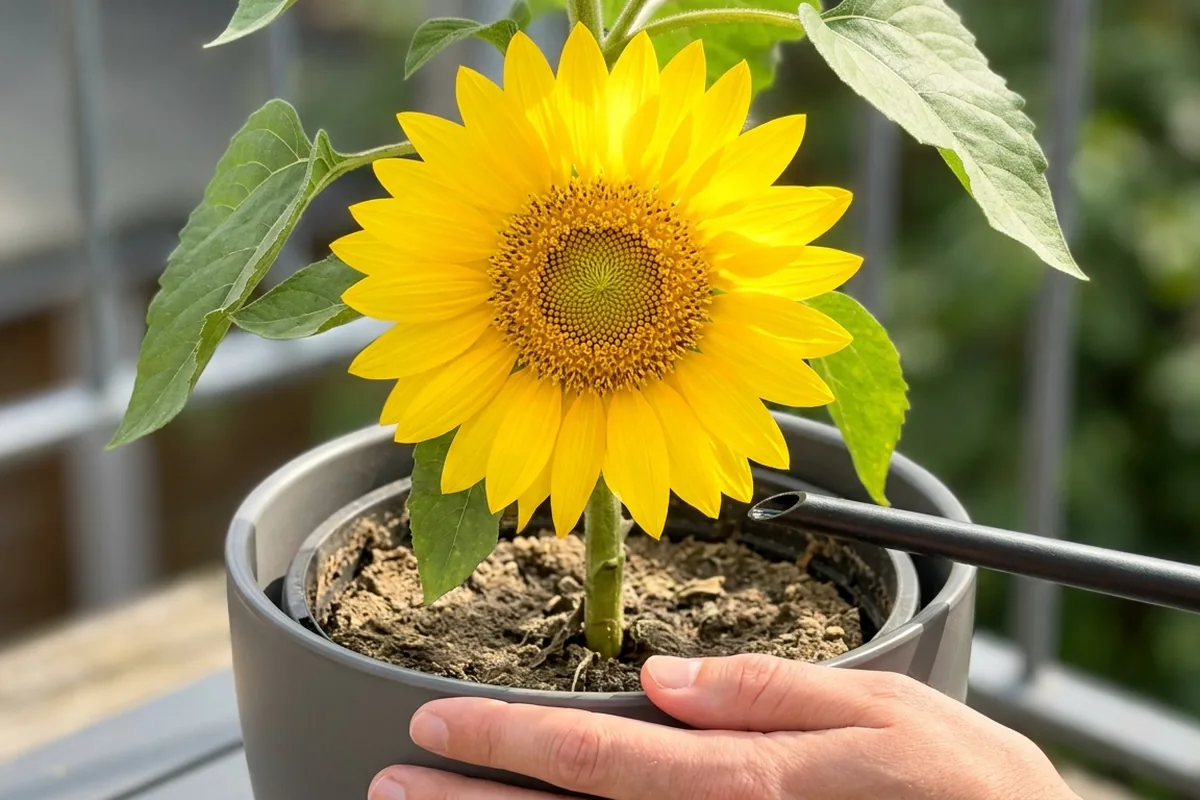
Sunflowers are perfectly happy in a pot, on a balcony or squeezed into a tiny border, as long as they have sun, depth and steady moisture. If you have a bright patio, a small front garden or a single sunny wall, you can still grow tall, cheerful flowers.
If your space is tight, the useful thing to know is this: height is not the problem, root room is. A slim, deep pot on a doorstep will grow a better sunflower than a wide, shallow trough.
The basics: pot size, compost and sun
For pots, choose at least a 25–30 cm deep container with drainage holes. Tall varieties like ‘Russian Giant’ appreciate even deeper. Dwarf or branching types such as ‘Teddy Bear’ or ‘Little Leo’ are ideal for balconies and small beds.
Use a peat‑free, multi‑purpose compost. Mix in a little garden soil or John Innes no. 2 if the pot is large, to help it hold water. Tap the pot to settle the compost, but do not ram it down.
Sunflowers need full sun – aim for 6+ hours of direct light. A south or west‑facing wall, a bright patio or the sunniest end of a small border is usually best. In a tiny garden, think vertical: against a fence, railings or a drainpipe (with support) works well.
Sow seeds from April to early June. In cooler parts of the UK, start them under cover in small pots, then move outside once frosts are over.
How to sow and support in tight spaces
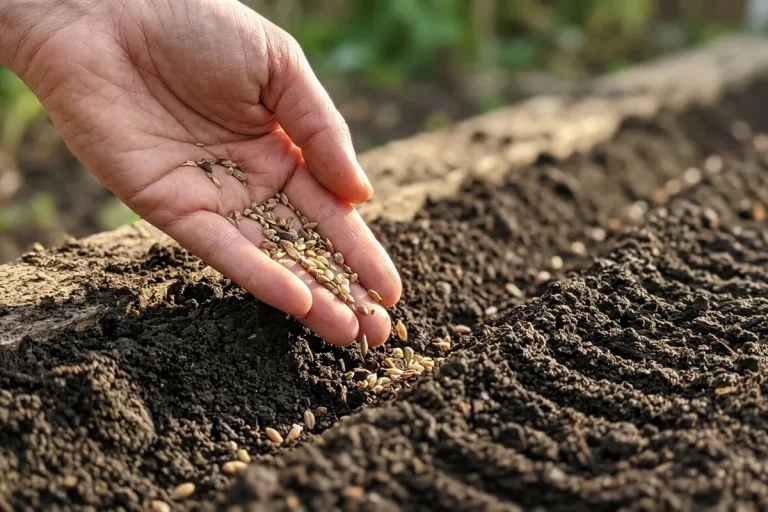
Sow one or two seeds per small pot or directly into your final container:
- Sow 1–2 cm deep, then water gently.
- Keep compost just moist – not soggy.
- Thin to the strongest seedling per pot.
If the top of the compost looks dry but the pot still feels heavy, wait. Overwatering at seedling stage is a common way to lose them.
Once seedlings are 10–15 cm tall, move them into their final pots or small border spaces, keeping the stem at the same level in the compost. Firm lightly and water well.
Tall sunflowers in pots almost always need staking. Push a cane in close to the stem, tie loosely with soft twine and add a second tie as they grow. On a balcony, also think about wind – a tall pot can act like a sail. If the stem starts leaning after wind or rain, add another cane or move the pot closer to a wall.
Watering, feeding and getting good flowers
In containers, sunflowers rely entirely on you for water. In warm weather, check daily. Before you water again, push a finger 3–4 cm into the compost. If it feels dry and the pot is light, water thoroughly until it runs from the drainage holes, then empty any saucer. A saucer still holding water the next morning is a sign you are overdoing it.
Feed every 10–14 days once the plants are about knee‑high, using a balanced liquid feed at the rate on the label. When flower buds appear, you can switch to a tomato‑type feed to encourage bigger, better blooms.
In a small border, allow at least 30 cm between plants so they are not fighting for water. Patio pots will dry faster than the soil in the ground, especially in a dry summer spell, so those may need an evening watering even if the border is fine.
Deadhead dwarf and branching varieties as flowers fade to keep more coming. For tall, single‑stem types, leave some seed heads if you can – birds will quickly find them.
If this is happening on your plant – drooping leaves by evening but perky again next morning – it usually means the roots are just keeping up. Water a little more deeply rather than more often.
With the right pot, sun and steady moisture, even the smallest outdoor space can host a row (or just one) of bright, towering sunflowers. Choose a variety to suit your height and space, sow a few extra seeds as insurance, and start with one sturdy, well‑staked pot this season.
Reader note
The Flower Expert is an independent gardening publication. Your support helps us keep creating practical plant care guides for everyday UK readers.
This article was created with the assistance of AI and reviewed by an editor. It is intended as general gardening information, not personalised professional advice.
If you still have a question, or if something looks unclear or inaccurate, you can contact us through our contact form.
If you found this article helpful, please consider sharing it on social media or leaving a comment below with your own experience. It helps other readers too.