
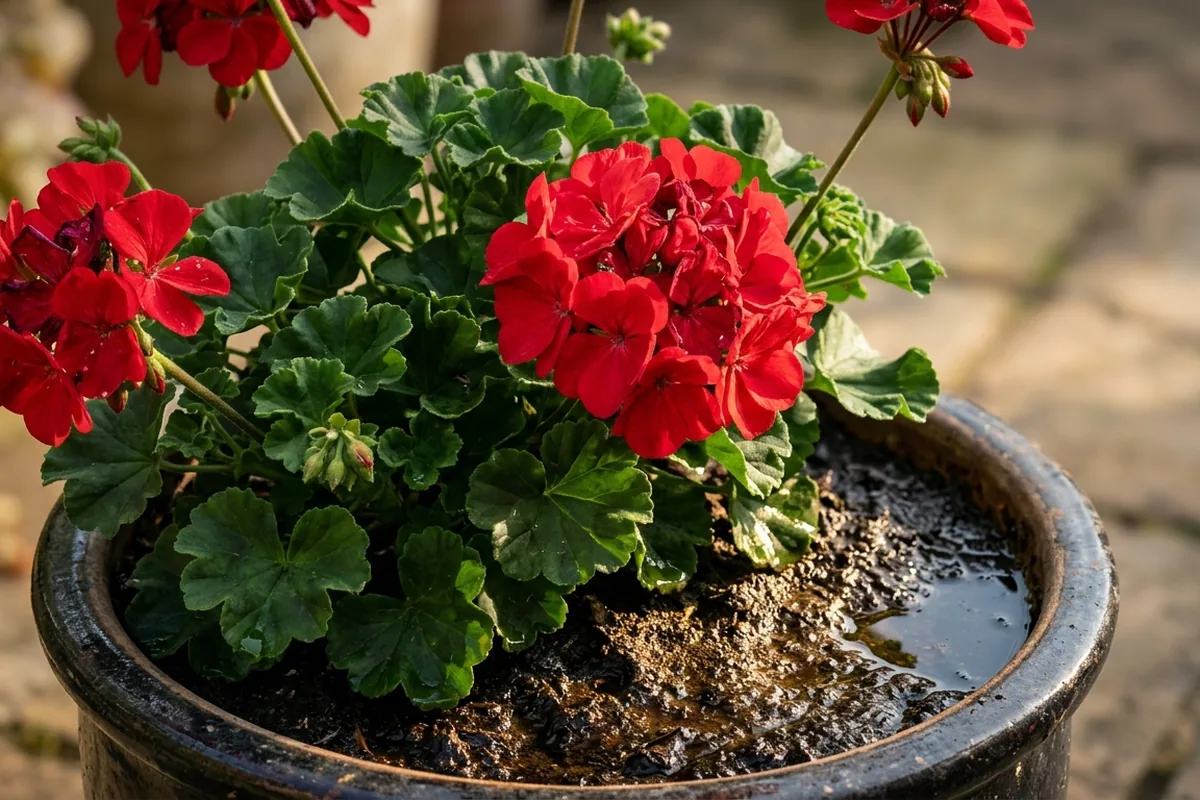
The trouble often begins in May, when days suddenly turn warm, pots dry faster, and we reach for the watering can “just in case”. If the top of the compost looks dry but the pot still feels heavy, watering again can quietly weaken your container flowers for the rest of the summer.
The mistake: watering little and often “from the top”
The big May mistake is frequent light watering that only dampens the top few centimetres of compost.
This does three unhelpful things:
- Roots stay shallow. They never need to go deeper in search of moisture, so plants become floppy and stressed as soon as we miss a watering.
- Compost stays unevenly wet. The surface looks dry, you water again, but halfway down it may already be soggy and airless.
- Nutrients wash out of the top layer. Flowers look hungry even though you feel you’re “looking after” them.
If this is happening on your patio, you’ll often see leggy growth, fewer buds and flowers that fade quickly, even though you’re watering most days.
A quick check: lift the pot. If it still feels surprisingly heavy, wait. This is the point where many people water again too soon.
How to water containers properly in May
The aim is deep, occasional watering, not constant dampness.
When you water:
- Check first. Push a finger 3–4 cm into the compost. If it feels cool and damp, do not rush to water, even if the surface looks pale and dry.
- Water until it runs through. When it is genuinely dry at finger depth, water steadily until you see a good flow from the drainage holes.
- Empty saucers. If there’s still water in the saucer the next morning, you overdid it. Tip it away so roots don’t sit in a swamp.
- Feed with purpose. From May, use a balanced or high-potash liquid feed (tomato feed works well) every week or two, following the label.
On a bright but breezy May day, a small hanging basket can dry out far faster than a big patio tub. Look at each container, not the calendar.
Signs your containers are already affected – and how to reset them
If your May watering has been a bit enthusiastic, look for:
- Drooping stems in wet compost – a sign of stressed or suffocating roots, not thirst.
- Yellowing lower leaves while the top still grows.
- Mould on the compost surface or a sour smell when you water.
- Roots circling the bottom of the pot, even though you water often.
To help them recover:
Loosen the top few centimetres of compost gently with your fingers to let air in. If the compost is very wet, move the pot somewhere bright but not baking hot for a few days and hold off watering until it feels lighter.
For badly affected plants, slide the rootball out of the pot. If the outer compost is sodden but the middle is dry, it confirms the “little and often” problem. Repot into fresh compost, water once thoroughly, then let the top dry slightly before watering again.
If you get the rhythm right in May, your containers usually reward you with stronger roots, sturdier stems and far better flowers by high summer. Before you water this week, lift, feel, then decide – it takes seconds and can transform how your pots perform.
Reader note
The Flower Expert is an independent gardening publication. Your support helps us keep creating practical plant care guides for everyday UK readers.
This article was created with the assistance of AI and reviewed by an editor. It is intended as general gardening information, not personalised professional advice.
If you still have a question, or if something looks unclear or inaccurate, you can contact us through our contact form.
If you found this article helpful, please consider sharing it on social media or leaving a comment below with your own experience. It helps other readers too.