
Yellowing that appears just after you’ve watered is nearly always a sign that something around the roots is wrong, not that the leaves themselves suddenly “went off”. If the top of the compost looks dry but the pot still feels heavy, watering again can quietly tip a plant into trouble.
What the sudden yellow leaves are really telling you
The first thing to understand is that watering doesn’t cause yellow leaves on its own – it simply exposes an existing imbalance.
Most often, yellow leaves after watering point to:
- Soggy compost and low oxygen around the roots (early root rot risk).
- Roots already damaged from previous overwatering, then stressed again.
- A big change in watering rhythm, especially after a dry spell.
- Cold, wet roots after watering in a chilly room or on a cold windowsill.
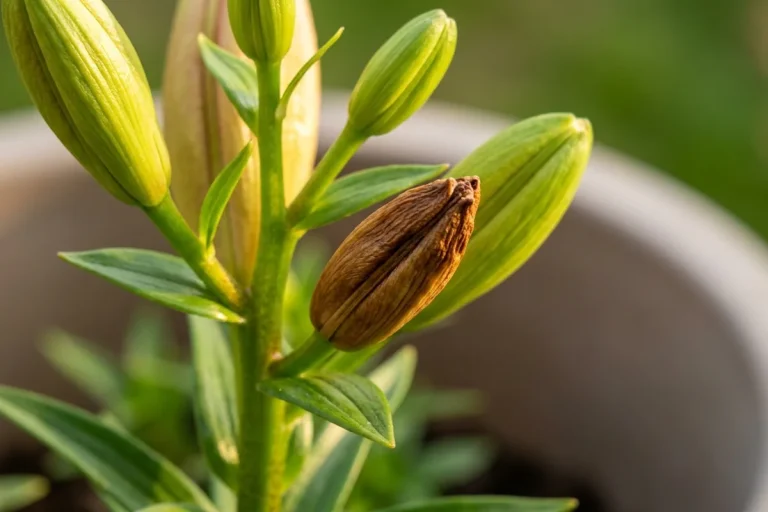
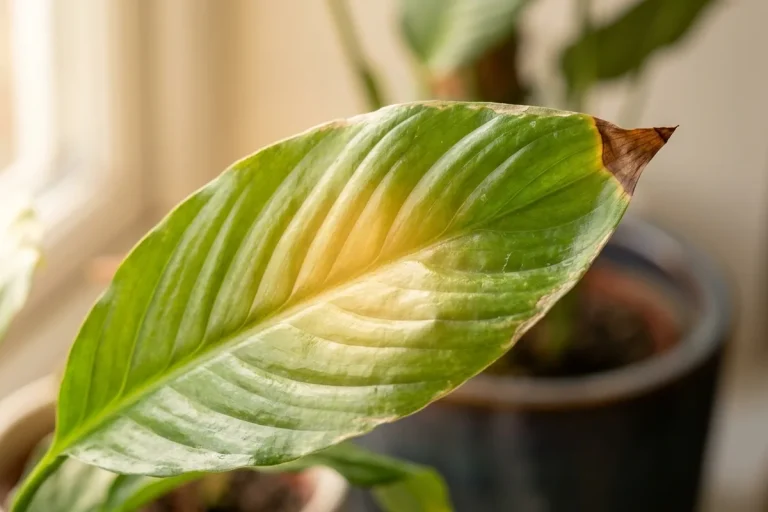
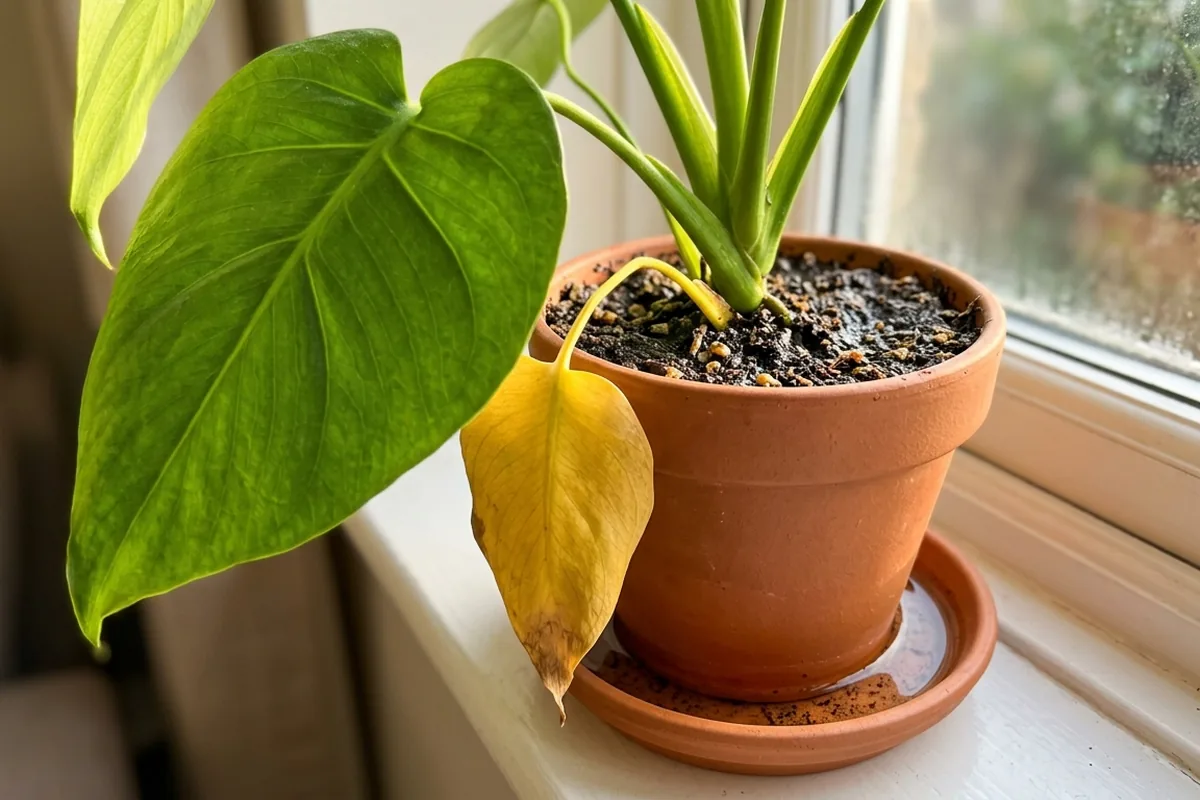
Look at the pattern. Older leaves yellowing first (especially at the bottom) usually means a root or watering issue. Random single yellow leaves higher up can just be natural ageing.
If this is happening on your plant, resist the urge to water again “to perk it up”. This is the point where many people make things worse.
The check to make before you water again
Before you blame feed, light or pests, check the compost properly. A quick finger check tells you more than the surface.
Do this:
- Press a finger 3–4 cm into the compost.
- Lift the pot – does it feel unexpectedly heavy for its size?
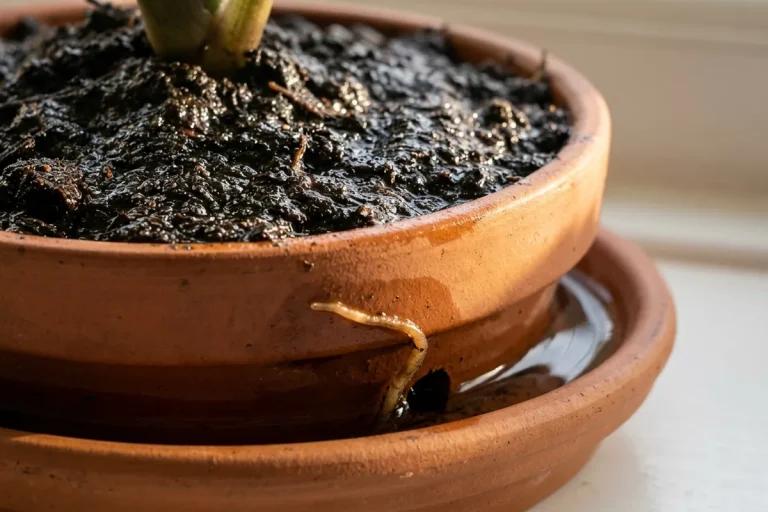
- Look underneath: are the drainage holes blocked? Is the saucer still holding water the next morning?
If the compost feels cool, dark and wet below, and the pot is heavy, the plant is waterlogged. Yellow leaves after watering in this situation are the roots struggling for air.
If the compost is dust-dry through the whole rootball, and you’ve just given a big drink, leaves may yellow because the roots were already stressed and can’t move water properly yet.
In both cases, the answer is not more water. It’s to reset the conditions around the roots.
How to steady the plant and stop more yellowing
Once you’ve checked the compost, work with what you find:
- If compost is wet and heavy:
- Move the plant somewhere bright but not hot, away from radiators.
- Tip out any water from the saucer or outer pot.
- Loosen the top layer of compost gently with a fork to help it dry.
- Then wait; do not water again until the top few centimetres are dry and the pot feels lighter.
- If compost is dry right through:
- Stand the pot in a bowl of water for 10–20 minutes so the rootball can soak evenly.
- Let it drain fully; no standing in water afterwards.
- Next time, water before it gets bone dry, especially for thirstier houseplants.
- If roots are circling and tight at the bottom:
- The plant may be pot-bound and yellowing after every watering because there’s more root than compost.
- Repot into a slightly larger pot with fresh compost, firm but not rammed. Most general-purpose peat-free mixes from a garden centre or the RHS-recommended types will do for common houseplants.
Remove only the worst yellow leaves, and leave anything that’s still partly green; the plant can still reclaim some goodness from them.
If the leaves look worse after every “fix”, stop changing several things at once. Go back to the basics: light, compost moisture, drainage, pot size. Once those are steady, most plants stop producing new yellow leaves, even if the existing ones don’t recover.
A good next step is simple: before you reach for the watering can this week, check the compost three centimetres down and lift the pot. That tiny pause is usually enough to prevent the next round of yellow leaves.
Reader note
The Flower Expert is an independent gardening publication. Your support helps us keep creating practical plant care guides for everyday UK readers.
This article was created with the assistance of AI and reviewed by an editor. It is intended as general gardening information, not personalised professional advice.
If you still have a question, or if something looks unclear or inaccurate, you can contact us through our contact form.
If you found this article helpful, please consider sharing it on social media or leaving a comment below with your own experience. It helps other readers too.