
Lavender only stays compact and full of flowers if it’s pruned regularly, but cutting into old, brown wood can leave you with a bare, sulking stump. If your plant has a neat green top and a woody base, and you’re nervous about where to put the secateurs, you’re in exactly the right place.
Where to cut without weakening the plant
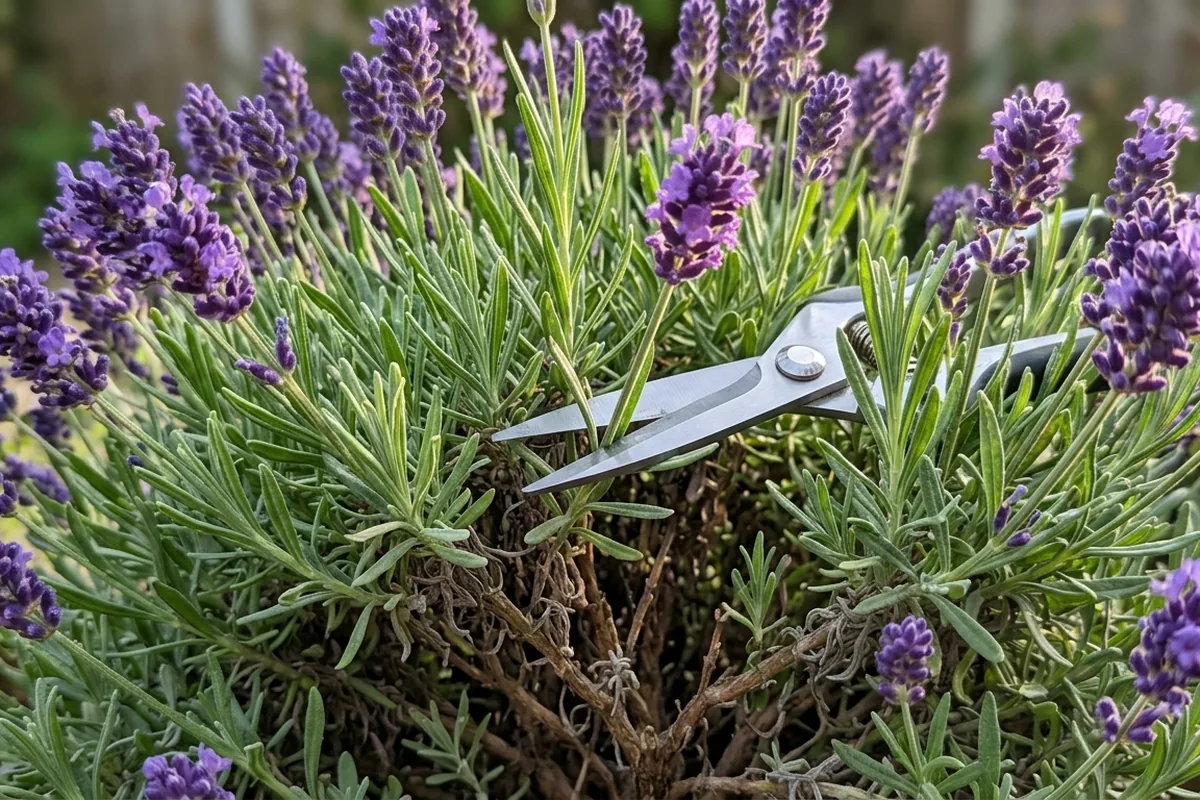
The golden rule is simple: never cut back beyond where you can see green growth.
Look closely at a stem. You’ll usually see:
- soft, leafy tips
- firmer, light brown lower stems with some side shoots
- older, dark brown wood at the base
You can safely prune into the leafy and lightly woody part, as long as each stem you cut still has some green shoots or leaves left below your cut.
A good guide is to:
- remove the old flower stalks
- then cut back the soft growth by about one third to one half
- stop as soon as the stems start to look bare and brown with no obvious green buds
If you’re unsure, cut a little less. You can always go back, but you cannot stick a woody stem back on once it’s gone.
Step-by-step: pruning English lavender safely
This method suits most English lavenders (Lavandula angustifolia) in UK gardens and pots.
1. Choose the right moment
The main prune is best in late August to early September, once flowering has finished but while the plant is still in active growth. Avoid heavy pruning in winter or very early spring.
2. Tidy the top first
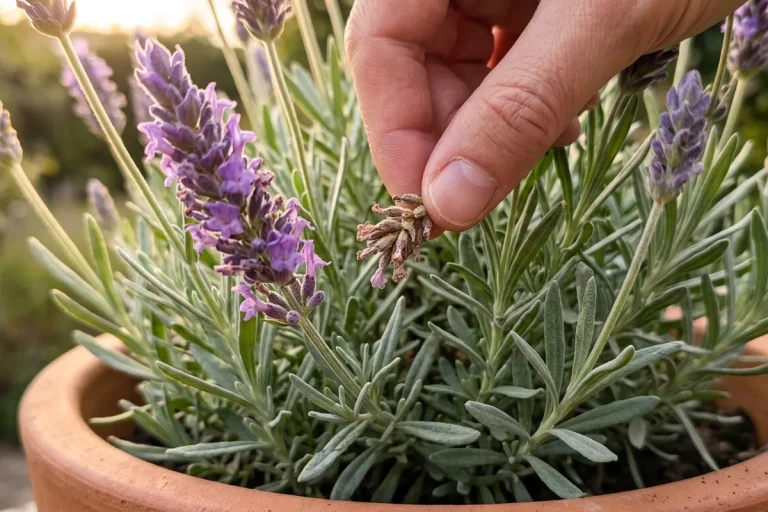
Snip off all the spent flower stalks down into the foliage. This instantly shows you the shape of the plant.
3. Shape the cushion
Work around the plant, trimming the green growth to make a low, rounded mound. Aim to leave it about 20–30cm high for a mature plant, but the exact height matters less than staying in green wood.
4. Check each section as you go
After every few cuts, pause and look. If you see bare brown stubs with no leaves left on that section, you’ve gone too far. The useful clue is not one stem, but the pattern across the plant – it should still look green all over.
5. Leave the old framework alone
The thick, gnarled base stems are there to support new growth. Do not cut into this old wood; lavender rarely reshoots from it, and you can end up with gaps that never refill.
If your plant is in a pot on a hot patio, it may grow faster and need a light spring trim as well – just the tips, to keep it bushy, again staying well within green growth.
What if your lavender is already very woody?
If your lavender has long, bare legs and just a pom‑pom of green on top, gentle pruning will help but won’t turn it back into a young plant.
You can:
- give it the same post-flower trim, taking no more than a third off the green top
- avoid cutting into the bare brown stems
- consider replacing it if more than half the plant is woody and sparse
In many UK gardens, lavender plants are at their best for about 5–7 years. After that, even perfect pruning cannot fully reverse age. At that point, take a few cuttings from the healthiest green shoots and start fresh plants in pots.
Before you pick up the secateurs, walk round your lavender and look for the line where green turns to brown. Keep your cuts comfortably above that line, and you’ll keep your plants compact, scented and flowering well for years.
Reader note
The Flower Expert is an independent gardening publication. Your support helps us keep creating practical plant care guides for everyday UK readers.
This article was created with the assistance of AI and reviewed by an editor. It is intended as general gardening information, not personalised professional advice.
If you still have a question, or if something looks unclear or inaccurate, you can contact us through our contact form.
If you found this article helpful, please consider sharing it on social media or leaving a comment below with your own experience. It helps other readers too.