
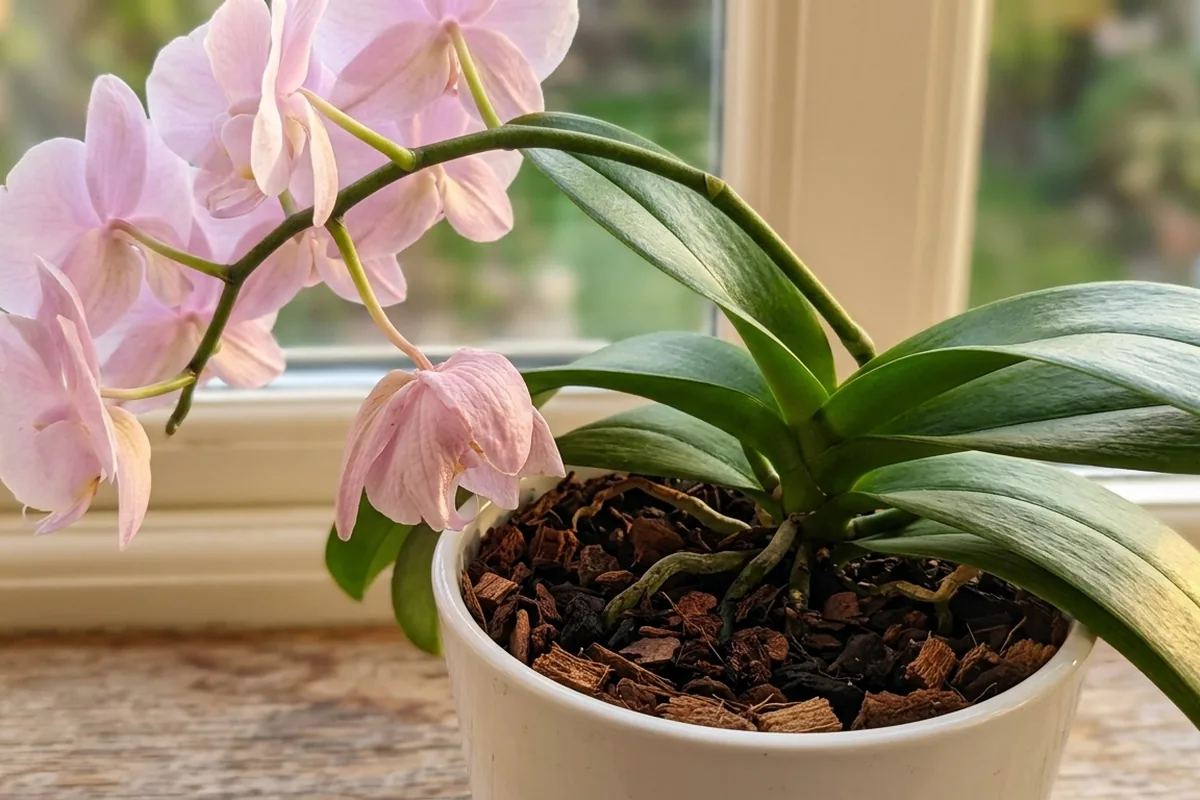
Before you reach for the watering can, pause. A “tired” moth orchid (Phalaenopsis) usually shows limp leaves, dull flowers or bare flower spikes, and the compost often looks dry on top. If the top of the compost looks dry but the pot still feels heavy, watering again can make the problem worse.
The check to make before watering again
First, work out whether your orchid is tired from too much water or not enough. The symptoms can look surprisingly similar.
Take the plant out of its decorative cover pot if it has one. Then:
- Lift the pot: if it still feels heavy, wait. The roots are probably still wet.
- Look through the clear pot (if you have one): healthy roots are firm and green or silvery. Brown, mushy roots point to overwatering.
- Feel the compost 3–4 cm down: push a clean finger in. If it’s cool and damp, do not water yet. If it’s dry and the pot feels light, a proper drink will help.
This is the point where many people water again too soon, especially when flowers are fading and the plant “looks sad”.
If the saucer or cover pot is still holding water the next morning, the roots have been sitting wet for too long. That is usually why an orchid declines on a bright UK windowsill, not a lack of water.
How to revive it gently, step by step
Once you’ve checked the roots, use this simple routine:
- If roots are mostly healthy:
Water thoroughly, but only when the compost is almost dry. Stand the pot in a bowl of room‑temperature tap water for about 10–15 minutes, then let it drain fully. Empty any water from the saucer or cover pot.
- If many roots are brown and mushy:
Slide the plant out of its pot. Trim away dead roots with clean scissors. Repot into fresh, slightly damp orchid bark in a pot with good drainage holes. Do not pack the bark too tightly.
- If leaves are limp but roots look fine:
The plant is often thirsty or has been in hot, dry air. Give a careful soak as above, then move it to bright, indirect light, away from radiators and cold draughts.
- If there are no flowers left:
Cut the old flower spike back to just above a plump node, or right down at the base if it is brown and dry. This lets the plant focus on rebuilding roots and leaves.
After any rescue work, resist the urge to fuss. Do not feed for 3–4 weeks after repotting or root trimming; then use a balanced orchid feed at half strength, following the label.
Keeping a recovering orchid out of trouble
A tired orchid usually perks up over a few months if you get the rhythm right:
- Let the top few centimetres of compost dry before watering.
- In a typical centrally heated UK flat, this might mean watering every 7–14 days, less in winter.
- A quick finger check tells you more than the surface of the compost.
- Avoid cold, bright winter windows where leaves touch the glass.
- Turn the pot every week or so to keep growth even.
If the leaves look worse after every “fix”, stop changing several things at once. Go back to basics: light, temperature, and only watering when the pot feels light and the compost is nearly dry.
With a calmer watering routine and a bit of patience, most moth orchids will quietly produce new roots, firmer leaves and, in time, another flush of flowers. Before you water next time, simply lift the pot – that one small habit will do more for your orchid’s recovery than any miracle product.
Reader note
The Flower Expert is an independent gardening publication. Your support helps us keep creating practical plant care guides for everyday UK readers.
This article was created with the assistance of AI and reviewed by an editor. It is intended as general gardening information, not personalised professional advice.
If you still have a question, or if something looks unclear or inaccurate, you can contact us through our contact form.
If you found this article helpful, please consider sharing it on social media or leaving a comment below with your own experience. It helps other readers too.