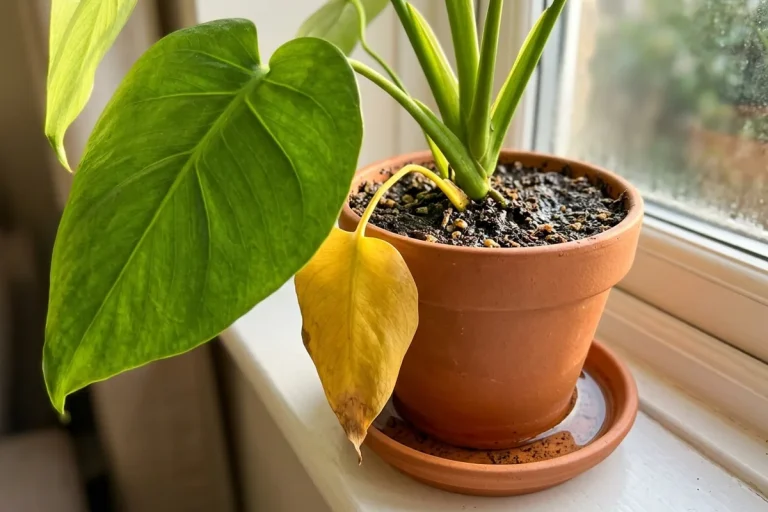

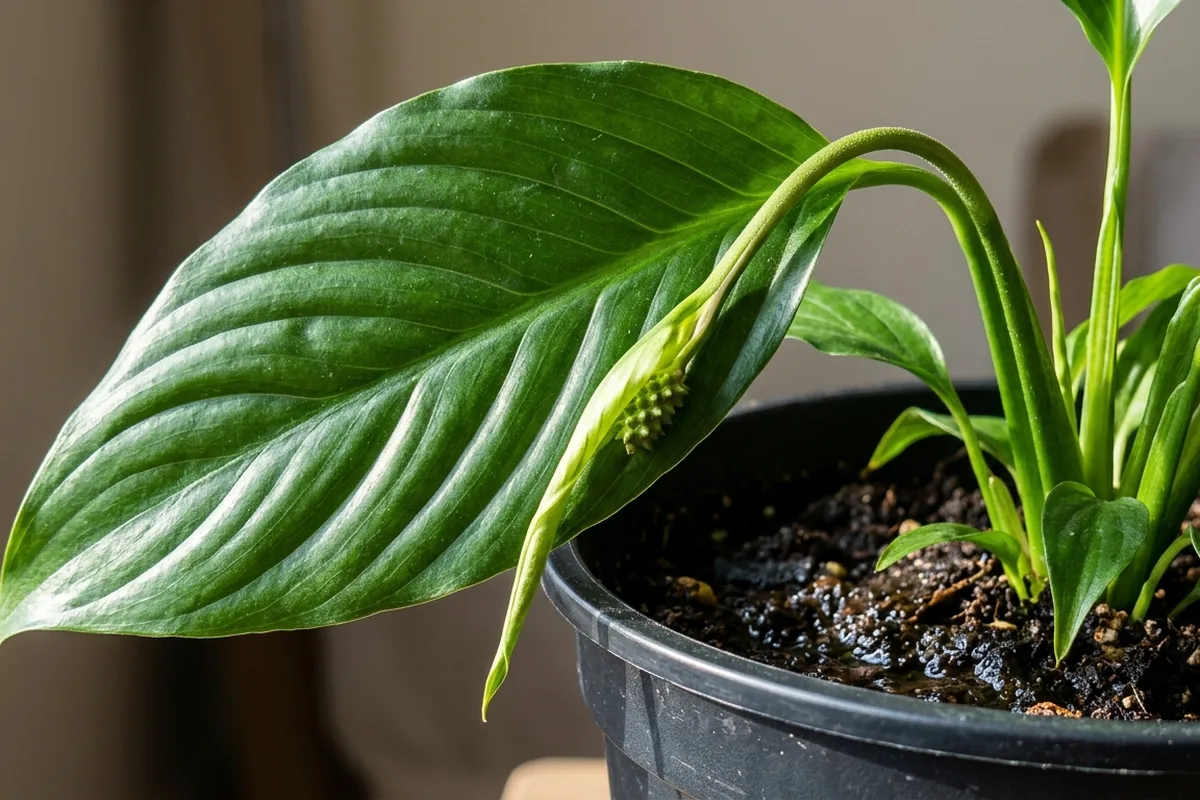
The confusing thing with peace lilies is how dramatically they flop, even when the compost still looks and feels damp. You water, the leaves perk up for a bit, then a few days later they’re collapsed again, sometimes with a saucer still holding water from last time.
What is really happening when a “watered” peace lily droops
Peace lilies usually droop in damp compost because the roots are struggling, not because the plant is thirsty at the surface.
Most often it is one of these:
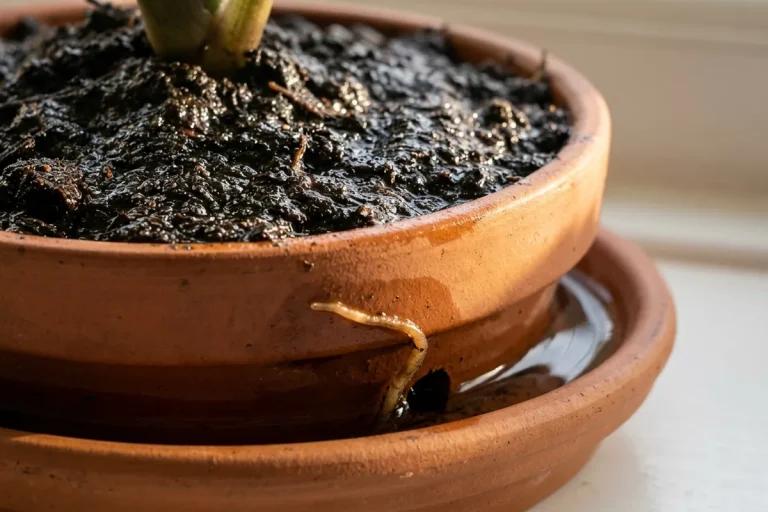
- Waterlogged roots: The compost is wet lower down, so roots sit in stale water and lack oxygen. They cannot move water up to the leaves, so the plant wilts even though the pot feels heavy.
- Compacted or old compost: Over time, compost breaks down and holds water like a sponge. The top may look dry and cracked, but 3–4 cm down it can be soggy.
- Cold, dark position: On a chilly, low-light UK windowsill, the plant uses water very slowly. Damp compost lingers, roots sulk, and the leaves droop.
- Rootbound plant: A pot full of circling roots with very little compost can swing between soggy and bone dry quickly, stressing the plant.
- Recent over-correction: A plant that has been too dry, then suddenly overwatered, often droops through sheer shock to the root system.
The useful clue is not one leaf, but the pattern across the plant. If almost every leaf is bowed and the pot feels heavy, think root stress rather than thirst.
The check to make before watering again
Before you reach for the watering can, check below the surface:
- Push a finger 3–4 cm into the compost. If it feels cool and wet, do not water, even if the top looks dry.
- Lift the pot. If it still feels surprisingly heavy, wait.
- Look at the drainage holes. Are they blocked, or are roots crammed through them?
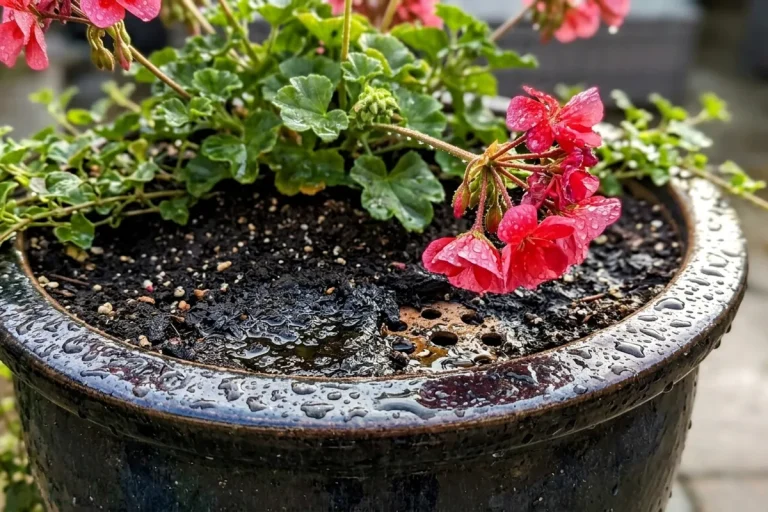
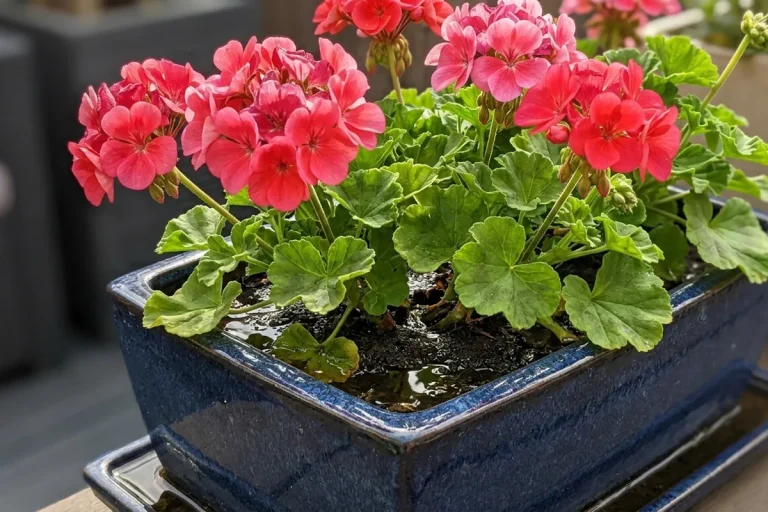
- Check the saucer or outer decorative pot. If there is water sitting there the next morning, empty it and let the pot drain fully.
This is the point where many people water again too soon. A peace lily will often droop slightly to signal it is ready for a drink, then recover within a few hours after a proper soak. If it stays limp in damp compost, the roots are not coping.
How to help a drooping peace lily recover
Once you are sure the compost is already damp, focus on improving conditions for the roots, not adding more water.
- Let it dry a little: Move the plant somewhere bright but out of direct sun, and allow the top few centimetres of compost to dry before watering again.
- Sort drainage: Make sure there are drainage holes and that the pot is not sitting in water. Add a layer of clay pebbles or gravel in the outer cover pot if needed.
- Repot if the compost is tired: In spring or early summer, gently slide the plant out. If you see dark, mushy roots or very compact, sour-smelling compost, repot into fresh peat-free houseplant compost, teasing out circling roots.
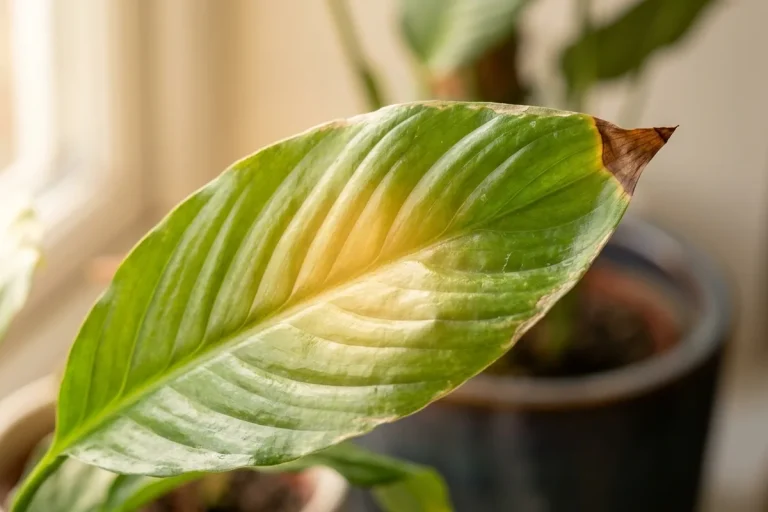
- Trim only what is clearly dead: Cut off completely brown, limp leaves at the base. Keep any that are still partly green.
- Adjust watering rhythm: In a typical UK home, peace lilies usually prefer a thorough water when the top few centimetres are dry, then a proper drain. Little sips every few days often keep the compost permanently damp and the roots unhappy.
If the leaves look worse after every “fix”, stop changing several things at once. Give the plant two to three weeks with better drainage, steadier watering and decent light, and watch for slower, more upright new growth rather than instant perfection.
With peace lilies, understanding that droop can mean “I can’t breathe” as well as “I’m thirsty” makes all the difference. Next time yours flops, pause, feel down into the compost, lift the pot, and let that guide your next move.
Reader note
The Flower Expert is an independent gardening publication. Your support helps us keep creating practical plant care guides for everyday UK readers.
This article was created with the assistance of AI and reviewed by an editor. It is intended as general gardening information, not personalised professional advice.
If you still have a question, or if something looks unclear or inaccurate, you can contact us through our contact form.
If you found this article helpful, please consider sharing it on social media or leaving a comment below with your own experience. It helps other readers too.