
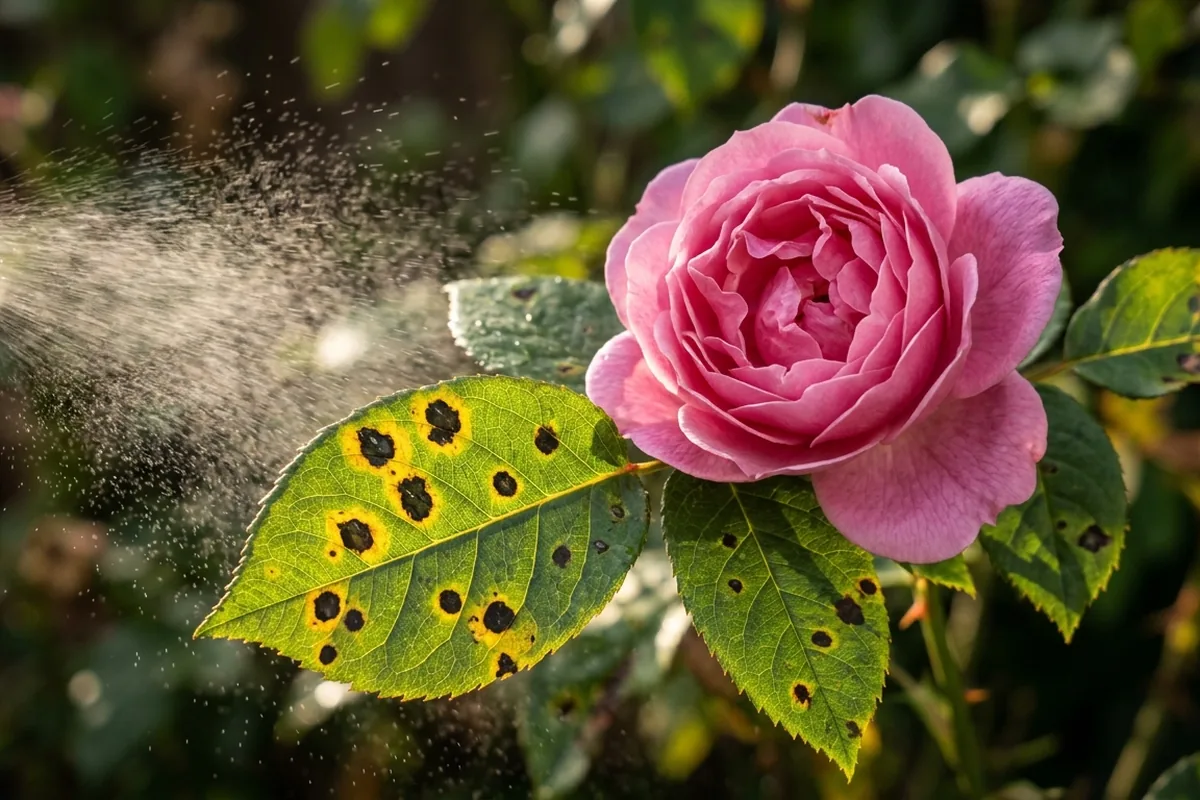
Black spot on roses usually starts as round, sooty black or purple spots on leaves, often with a yellow halo. Leaves then yellow and drop early, leaving bare stems just when you want flowers. If this is happening on your roses, you are looking at one of the most common fungal problems in UK gardens.
Why roses get black spot in the first place
Black spot is caused by a fungus (Diplocarpon rosae) that loves three things: moisture on the leaves, mild temperatures and poor air flow.
In a typical UK season, the cycle looks like this:
- The fungus overwinters on fallen leaves and infected stems.
- In spring, rain splashes spores from soil and debris up onto new leaves.
- Leaves that stay wet for hours – after rain, overhead watering or damp, still evenings – are most at risk.
- Dense, crowded growth or a rose tucked against a fence means slow-drying foliage and more infection.
So the real drivers are wet leaves, poor air circulation and infected debris left around the plant. Feed, variety choice and stress (such as drought or waterlogging) also affect how badly a rose suffers, but they are not the root cause.
A useful clue: if lower leaves show spots first, then it moves upwards after wet spells, you are seeing classic black spot spread.
Natural ways to reduce black spot and slow it down
You will not completely remove black spot from a typical UK garden, but you can tip the balance in your favour without harsh chemicals.
- Clear the source: Regularly pick off badly spotted leaves and collect fallen leaves from around the base. Do not compost the worst of them; bag and bin instead.
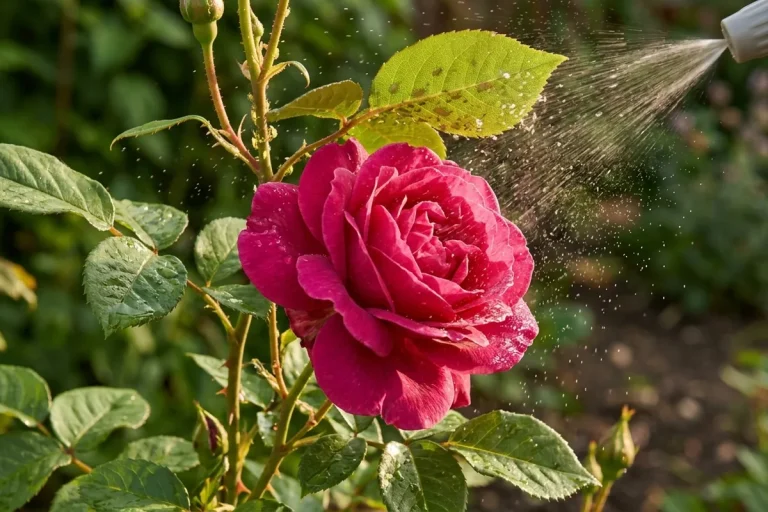
- Water the soil, not the leaves: Use a watering can spout or hose at ground level. If you splash the foliage by mistake, water early in the day so leaves dry quickly.
- Open up the plant: In late winter or early spring, prune to create a more open, goblet shape so air can move through. Remove weak, crossing stems. If stems are very congested now, you can still thin lightly.
- Improve the root zone: Roses under stress are more prone to disease. Mulch in spring with well-rotted compost or manure, and water deeply but not daily in dry spells. If the soil is damp a finger’s depth down, wait.
- Choose and replace wisely: When adding new roses, look for disease-resistant varieties and avoid replanting a new rose directly where a very sick one has just been removed.
If you use any organic or “natural” rose treatments (such as sulphur-based products), always follow the label and see them as support, not a cure on their own.
When to worry – and when to be patient
A rose can look very bare by late summer yet still flower reasonably well. If new leaves are constantly appearing clean at the top, the plant is coping. This is the point where many people reach for repeated sprays; instead, focus on hygiene, watering and pruning first.
If stems are weak, growth is poor and leaves blacken every year despite good care, it may be kinder to replace that rose with a tougher, more resistant variety. A local garden centre or the RHS website can help you choose.
For now, walk out after the next wet day, look carefully at which leaves are affected, clear what you can reach, and plan a simple routine: clean up, water the soil, and keep the plant airy. Small, steady changes usually give you healthier foliage and better flowers over the next season.
Reader note
The Flower Expert is an independent gardening publication. Your support helps us keep creating practical plant care guides for everyday UK readers.
This article was created with the assistance of AI and reviewed by an editor. It is intended as general gardening information, not personalised professional advice.
If you still have a question, or if something looks unclear or inaccurate, you can contact us through our contact form.
If you found this article helpful, please consider sharing it on social media or leaving a comment below with your own experience. It helps other readers too.