
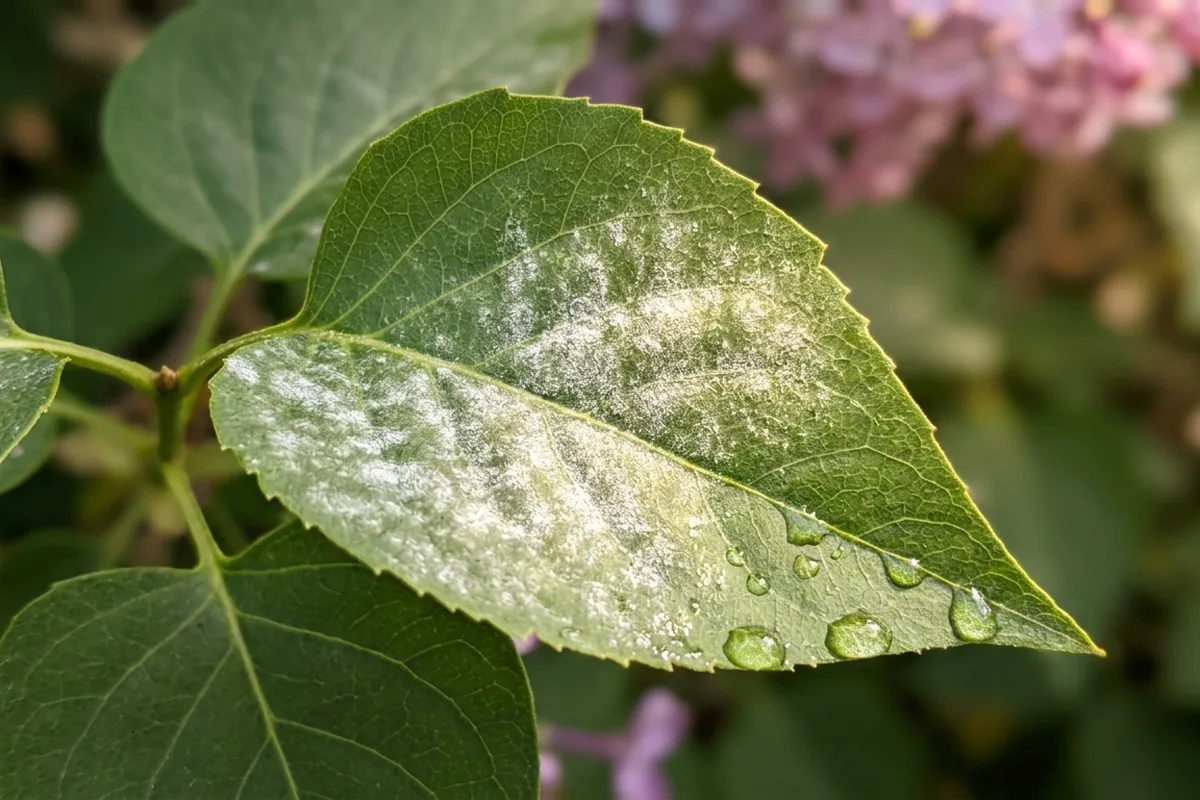
The first sign is usually a white, dusty coating on the leaves, as if someone has shaken flour over your lilac. It often starts on the lower or inner foliage, then spreads until whole leaves curl, yellow and drop early. If this is happening on your shrub, you are almost certainly looking at powdery mildew.
What powdery mildew on lilacs really is
Powdery mildew is a fungal disease that thrives when lilac leaves are dry but the air is warm and slightly humid – very common in late summer in the UK, especially after a damp spell followed by a few warm days.
It spreads by airborne spores and is encouraged by:
- Crowded, shady growth: still air around the leaves.
- Dry roots with stressed plants: especially in thin, dry soil.
- Soft, sappy growth: often from heavy feeding, particularly high-nitrogen fertiliser.
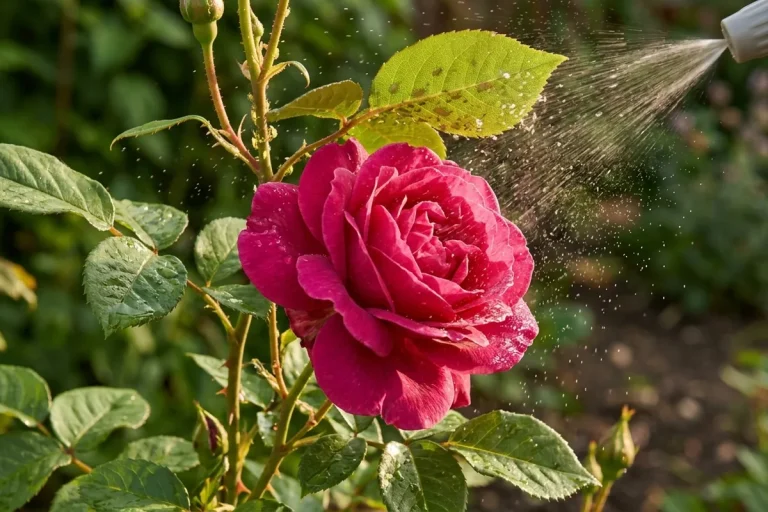
- Overhead watering in the evening: leaves stay damp, spores germinate.
The good news is that on established lilacs, powdery mildew is usually unsightly rather than fatal. The real risk is repeated bad infections that weaken the shrub over several seasons and reduce flowering.
If the white coating is only on the upper leaf surface, rubs off on your fingers, and the leaves are still mostly green, it’s classic powdery mildew. If the leaves are blotchy, speckled or sticky rather than dusty, pause – you may be dealing with pests instead.
What to do now: treatment that actually helps
Start with simple, physical steps before reaching for products.
- Prune for airflow: Thin out some of the oldest, most congested stems in late winter, then during the season remove badly affected shoots. You’re aiming for light and a gentle breeze through the plant.
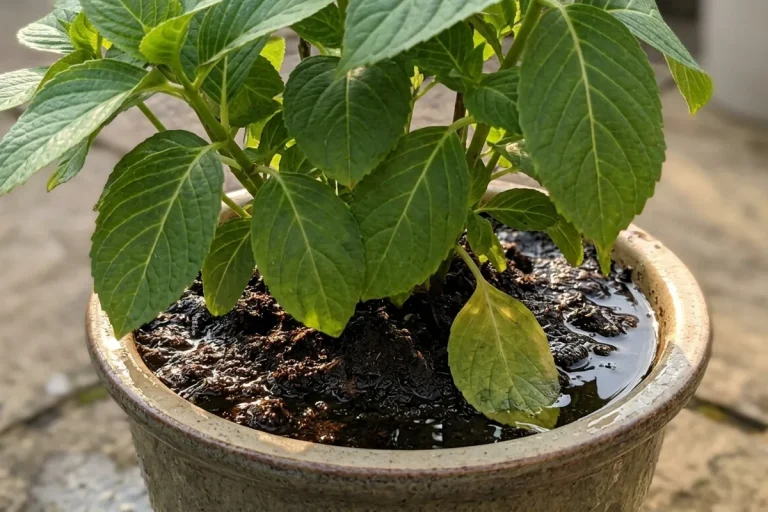
- Water the roots, not the leaves: In dry spells, give a deep soak at the base once a week rather than a light sprinkle over the top. If the soil under your lilac is bone dry a few centimetres down, water; if it’s still cool and damp, wait.
- Clear fallen leaves: Rake up and bin (do not compost) heavily mildewed leaves in autumn. They can harbour spores ready for next year.
- Avoid forcing soft growth: Stop high-nitrogen feeds. A light, balanced feed in spring, then a mulch of garden compost, is usually enough.
- Consider a fungicide only if needed: For severe, repeated infections on valued plants, a garden fungicide labelled for powdery mildew on ornamentals can help. Always follow the label, and do not overuse.
If the leaves look worse after every “fix”, stop changing several things at once. Go back to basics: light, airflow, and steady moisture at the roots.
How to prevent powdery mildew on lilacs next year
Prevention is mostly about growing conditions rather than sprays.
Choose a sunny, open spot – lilacs flower and resist disease better in good light. A shrub crammed against a fence in a narrow side passage will almost always be more prone to mildew than one with space around it.
Improve the soil so it holds moisture but drains well. Work in garden compost or well-rotted manure around the root area in early spring, then mulch. This helps keep roots evenly moist through summer without constant watering.
When you plant new lilacs, give them room to breathe. Check the label spacing, then resist the urge to plant closer. It’s much easier to prevent mildew on a well-spaced shrub than to cure it on a hedge of tightly packed ones.
On older, mildew-prone lilacs, a light annual renewal prune – removing one or two of the oldest stems at the base each year – gradually opens the centre. If you lift a branch and can suddenly see daylight through the shrub, you’re heading in the right direction.
If you’re unsure whether your plant is worth saving, look at the new growth next spring. Strong, clean leaves and good flower buds mean it has bounced back and your changes are working.
With lilacs, the aim is not perfection but a healthy, well-aired shrub that shrugs off the odd dusty leaf. Start with pruning and watering habits, and you’ll usually see less mildew each season.
Reader note
The Flower Expert is an independent gardening publication. Your support helps us keep creating practical plant care guides for everyday UK readers.
This article was created with the assistance of AI and reviewed by an editor. It is intended as general gardening information, not personalised professional advice.
If you still have a question, or if something looks unclear or inaccurate, you can contact us through our contact form.
If you found this article helpful, please consider sharing it on social media or leaving a comment below with your own experience. It helps other readers too.