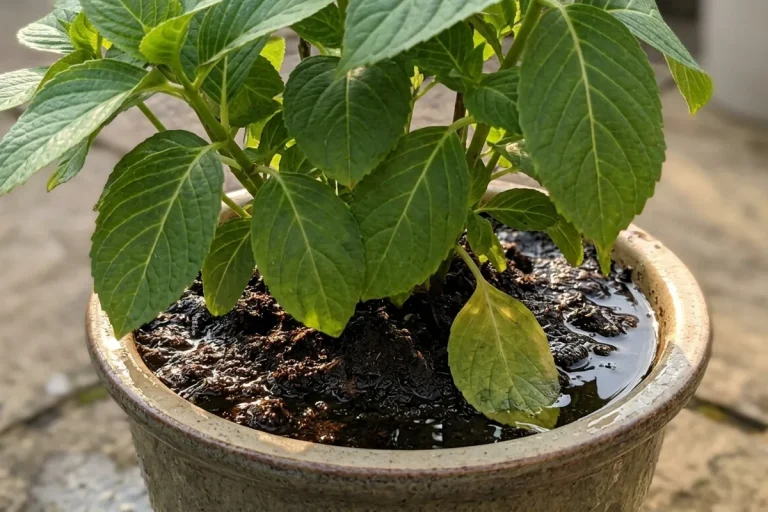

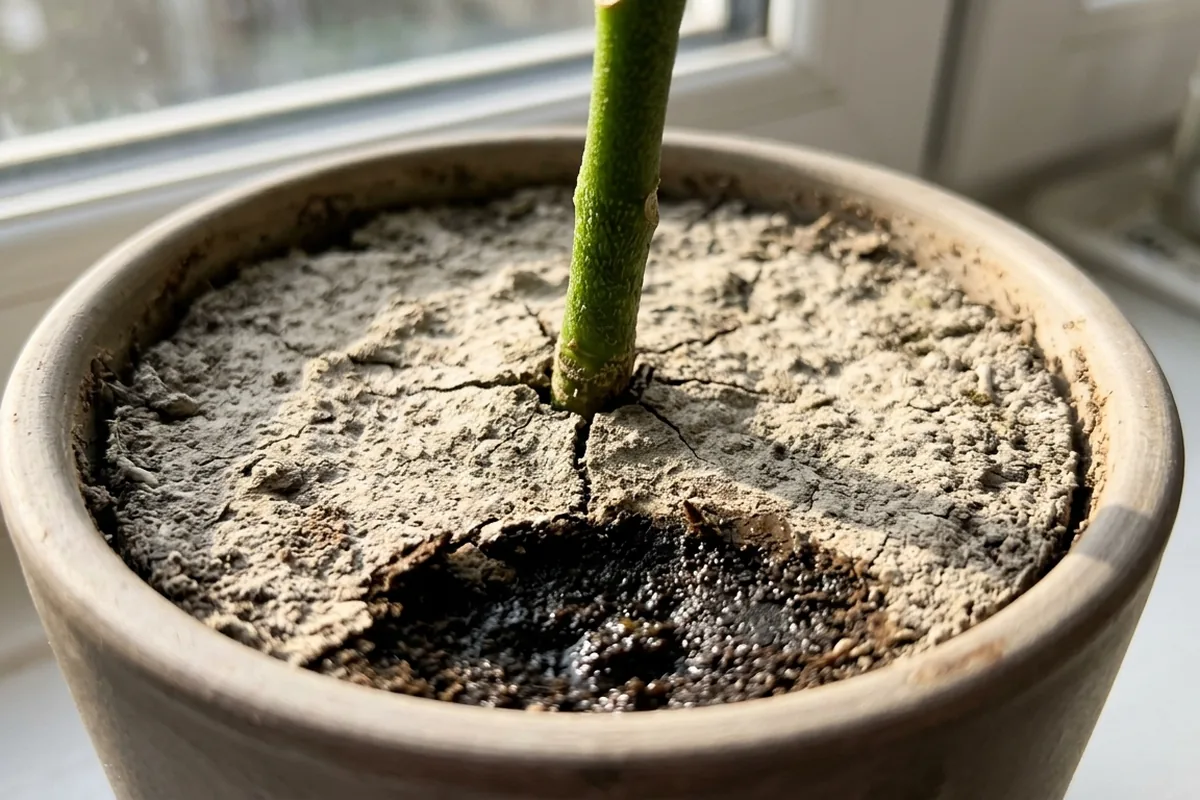
Before watering again, it helps to know what is really going on below the surface. If the top of the compost looks pale and dusty but the pot still feels heavy, watering again can quietly tip the plant into root rot.
What is happening inside the pot
Compost in pots often dries from the top down. The top centimetre or two is exposed to air, central heating, sun through glass and any passing draughts, so it loses moisture fastest. Underneath, where there’s less air movement and more shade, water lingers for much longer.
Most modern composts are a mix of fine and chunky bits. The fine material can hold onto water like a sponge. The chunkier pieces create air pockets. Over time, especially in older or peat‑free mixes, the fine particles can settle lower down, forming a denser, wetter layer while the top looks dry and crumbly.
A few common situations make this more obvious:
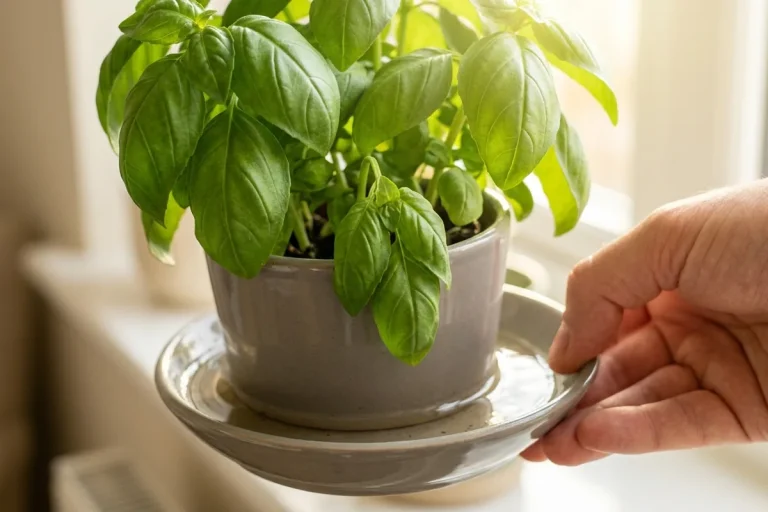
- Indoor pots on radiators or sunny sills: the surface bakes, but the middle stays damp.
- Large patio containers: rain wets the top, then sinks and sits in the middle while wind dries the surface again.
- Plastic pots with few drainage holes: water has nowhere to go, so it collects lower down.
This is the point where many people water again too soon, because we trust what we see on top.
The checks to make before you water again
Instead of going by the surface, use one or two simple checks.
- Lift the pot. If it still feels surprisingly heavy for its size, there is usually plenty of water inside. Wait.
- Do a finger test. Push a clean finger 3–4 cm into the compost. If it feels cool and sticks slightly, it is still damp enough.
- Check the drainage holes. If compost near the holes is dark and wet, or the saucer is still holding water the next morning, do not add more.
- Look at the leaves. Limp, floppy leaves with wet compost suggest overwatering; crisp, drooping leaves with dry compost suggest underwatering.
The useful clue is not one leaf, but the pattern across the plant.
If the top stays dry and almost water‑repellent while the bottom is wet, the compost may have become hydrophobic. You see this when water runs straight down the gap between compost and pot instead of soaking in.
How to deal with dry-on-top, wet-underneath compost
If this is happening on your plant, focus on improving how water moves through the pot rather than simply watering more or less.
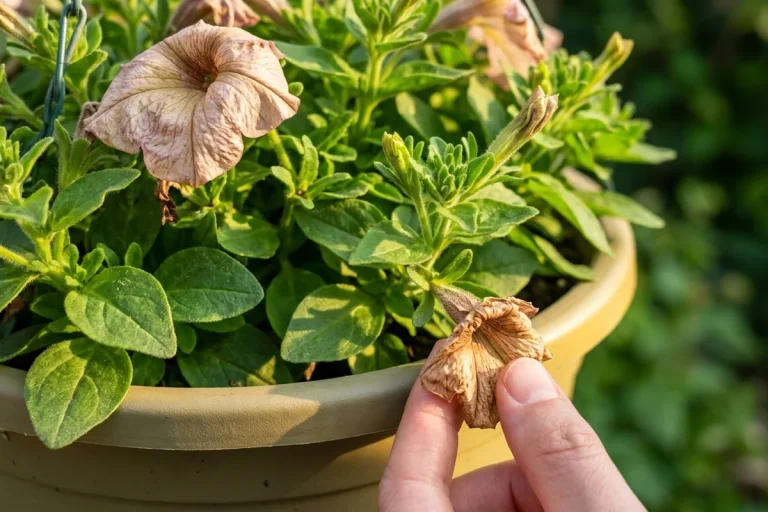
- Let it dry to the right depth. For most houseplants, allow the top 2–3 cm to dry before watering. For thirstier plants (like summer bedding in pots), keep it just slightly moist, not soggy.
- Water more slowly. Pour gently, pause, then add a bit more so the compost has time to absorb water instead of letting it rush through.
- Improve drainage. Make sure there are drainage holes and empty any saucers after 15–20 minutes. If water sits in a saucer overnight, roots can suffocate.
- Refresh tired compost. If the plant has been in the same pot for years, consider repotting into fresh peat‑free compost, loosening the root ball so water can move through again.
- Re-wet water‑repellent compost. Stand the pot in a bowl of water for 20–30 minutes so moisture is drawn up from below, then let it drain well. A light mulch on top (fine bark, compost) can help slow surface drying.
If leaves look worse after every “fix”, stop changing several things at once. Let the compost settle into a steadier rhythm and adjust watering gradually.
Once you get used to lifting the pot and checking below the surface, the dry‑on‑top, wet‑underneath puzzle becomes a simple moisture pattern you can read and respond to calmly.
Reader note
The Flower Expert is an independent gardening publication. Your support helps us keep creating practical plant care guides for everyday UK readers.
This article was created with the assistance of AI and reviewed by an editor. It is intended as general gardening information, not personalised professional advice.
If you still have a question, or if something looks unclear or inaccurate, you can contact us through our contact form.
If you found this article helpful, please consider sharing it on social media or leaving a comment below with your own experience. It helps other readers too.