
Before you reach for the watering can, check what is happening in the compost, not just the leaves. If your basil has suddenly flopped, stems soft and leaves hanging like wet tissue, the roots are almost always where the story starts.
Check how wet the compost really is
The first thing to check when basil starts wilting indoors is moisture in the compost around the roots.
Basil wilts from both overwatering and underwatering, and the leaves can look surprisingly similar. The only reliable way to tell is to feel the compost properly.
Do this:
- Lift the pot: if it feels unexpectedly heavy for its size, it is likely still wet inside. If it feels very light, it may be too dry.
- Finger test: push a finger 3–4 cm into the compost. Do not just look at the surface – basil compost often dries on top while staying soggy underneath.
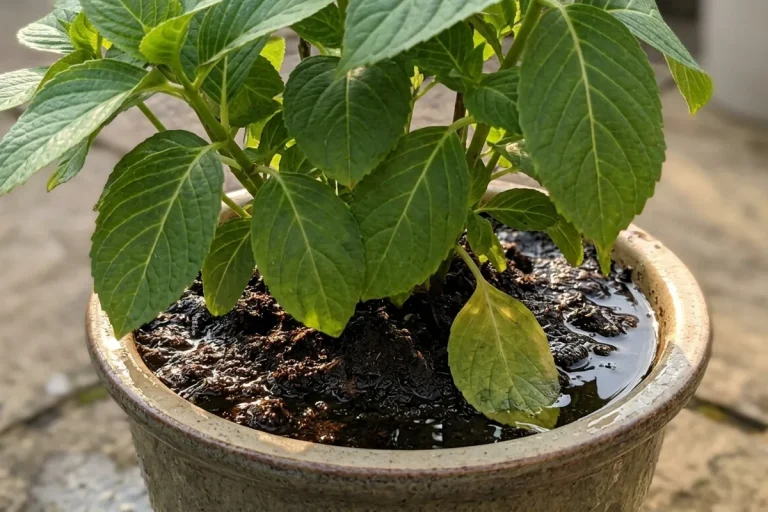
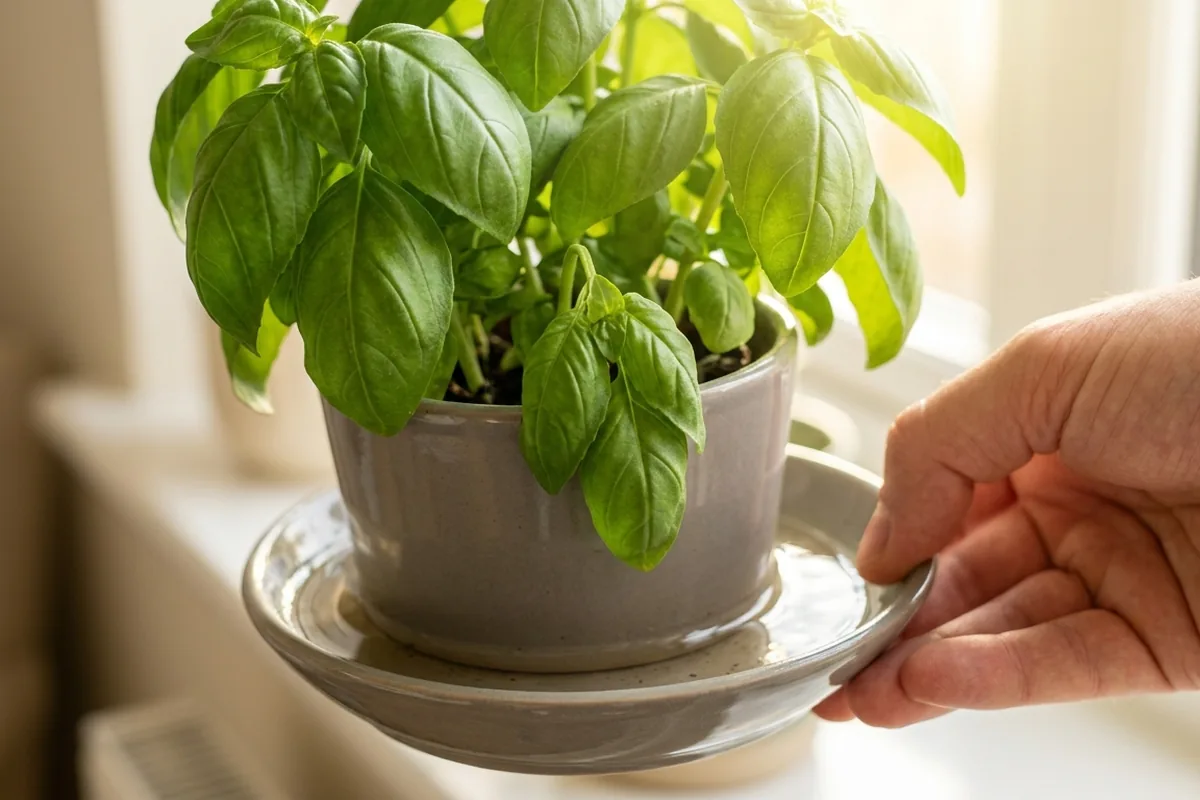
- Check the drainage holes and saucer: if the saucer is still holding water the next morning, or the compost at the bottom is sodden, the roots may be short of oxygen.
If the compost is wet or cold and soggy, the wilting is more likely from overwatering or poor drainage. If it is crumbly, pale and pulling away from the sides of the pot, it is more likely underwatering.
This is the point where many people water again too soon, turning a simple sulk into root rot.
What to do once you know wet or dry
Once you know which way the compost has gone, you can correct gently.
For overwatered, heavy compost:
- Tip away any water in the saucer.
- Stand the pot somewhere warm and bright but out of direct midday sun so the plant does not lose more water than the damaged roots can supply.
- If the compost smells sour, or you see black, mushy roots through the drainage holes, repot into fresh, free-draining compost with some perlite added. Water lightly once, then wait until the top few centimetres are dry before watering again.
For very dry, light compost:
- Stand the pot in a bowl of water for 10–15 minutes so the compost can re-wet from below.
- Let it drain thoroughly; do not leave it sitting in water for hours.
- After this soak, water only when the top few centimetres are dry and the pot feels lighter. If you lift the pot and it still feels heavy, wait.
Other quick checks that make a difference
While you are there, look at:
- Light: Basil likes a bright windowsill, but a south-facing window in high summer can scorch and dehydrate it, especially behind glass.
- Heat sources: A pot directly above a radiator can dry out astonishingly fast, even when the room feels cool.
- Crowding: Supermarket basil is usually many seedlings crammed together. Once it recovers, thinning or splitting the clump into two or three pots often keeps it healthier.
If the leaves look worse after every “fix”, stop changing several things at once. Go back to that first check: how wet is the compost, and how quickly is it drying out between waterings?
Once you get used to judging the weight of the pot and the feel of the compost, basil stops being temperamental and starts behaving quite predictably. Next time it droops, go straight to the root zone, check the moisture properly, and adjust from there instead of guessing from the leaves.
Reader note
The Flower Expert is an independent gardening publication. Your support helps us keep creating practical plant care guides for everyday UK readers.
This article was created with the assistance of AI and reviewed by an editor. It is intended as general gardening information, not personalised professional advice.
If you still have a question, or if something looks unclear or inaccurate, you can contact us through our contact form.
If you found this article helpful, please consider sharing it on social media or leaving a comment below with your own experience. It helps other readers too.