
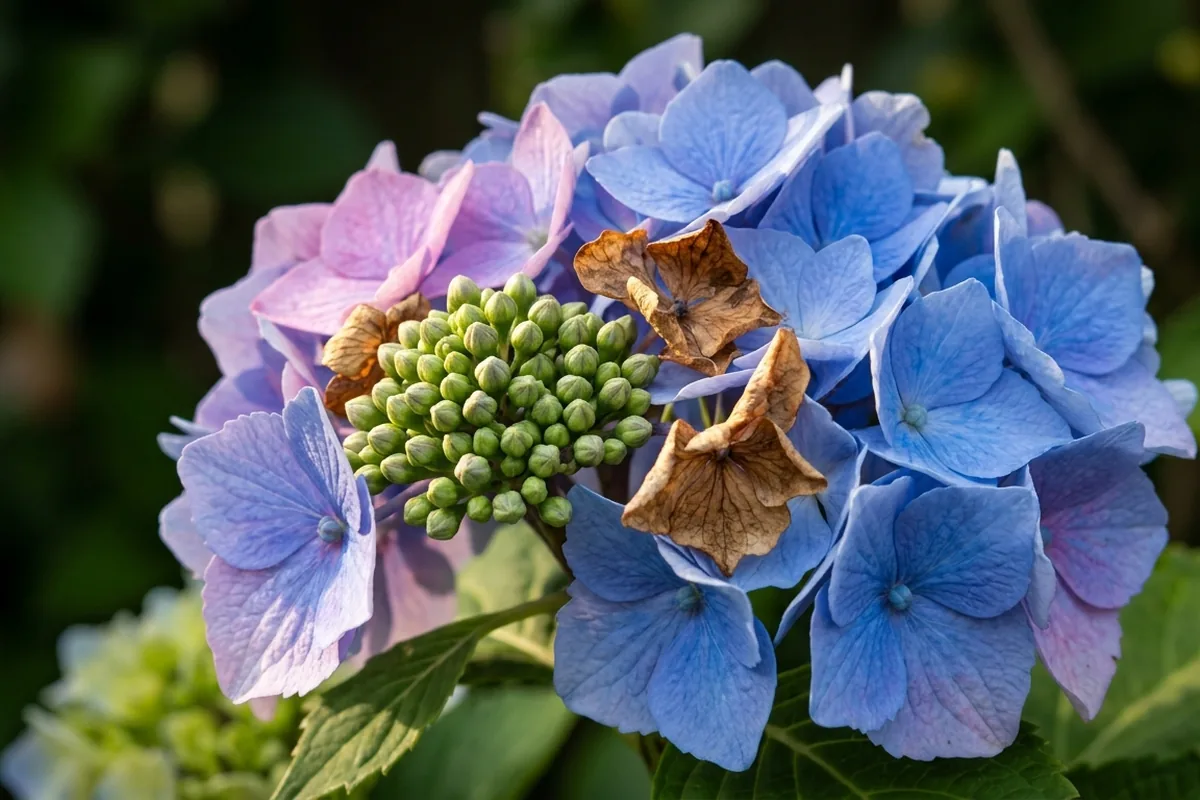
The most common reason a hydrangea refuses to flower is that the flower buds were removed or damaged long before you were looking for blooms. If you have a healthy-looking shrub with plenty of green leaves but only one or two flowers – or none at all – this is usually the story.
The first thing to check: last year’s wood
Most garden hydrangeas in the UK (especially Hydrangea macrophylla – mopheads and lacecaps) flower on old wood. That means the buds for this summer’s flowers formed on stems that grew last year.
Look closely at your plant:
- Lots of strong, tall, green stems, all the same age, no woody base: it was probably cut hard back in late winter or early spring, removing the flower buds.
- Short, stubby stems with brown tips or no side shoots: buds may have been killed by frost.
- A mix of older woody stems and newer ones, but flowers only on the older stems: pruning has been too hard or too frequent.
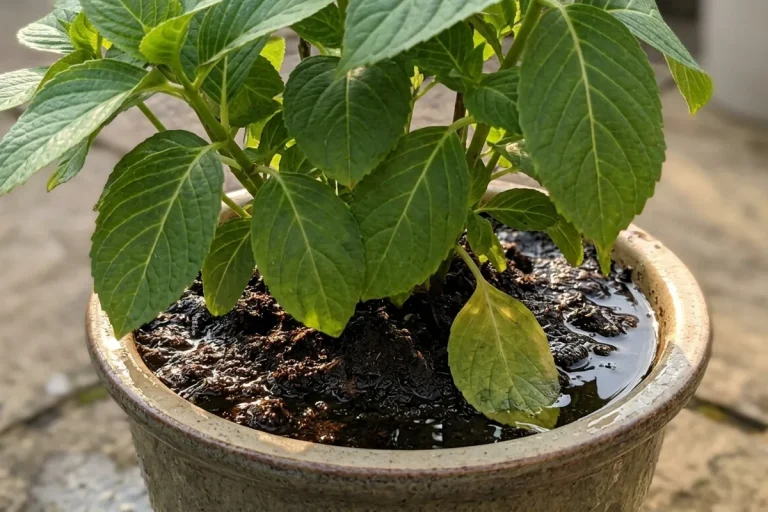
If you pruned to the ground, or a previous owner did, the plant can look lush and leafy but has simply grown replacement stems instead of flowers. This is the point where many people feed more, when the real issue is timing of pruning.
Other common reasons hydrangeas don’t flower
Once you’ve thought about the age of the stems, work down this short checklist.
- Frosted buds: Late frost after a mild spell can blacken or shrivel the top buds. Check for brown, papery tips on otherwise healthy stems, especially on exposed sites or front gardens open to wind.
- Too much shade: Hydrangeas tolerate shade, but in deep, dry shade (under a dense tree or in a north-facing corner) they may produce plenty of leaves and very few blooms.
- Exhausted or very dry compost: In pots, a plant that dries out hard between waterings may abort flower buds. The compost can look dry on top but still be damp 3–4 cm down, so a quick finger check tells you more than the surface.
- Excess nitrogen feed: General lawn fertiliser or very “leafy” feeds can push soft growth at the expense of flowers.
- Wrong type of hydrangea for the treatment: Paniculata and arborescens types flower on new wood and can be pruned hard; treat a mophead the same way and you lose the blooms.
How to encourage flowers next year
Once you know which issue fits your plant, adjust gently rather than changing everything at once.
- Change how you prune: For mopheads and lacecaps, just remove the dead flower heads in spring, cutting back to the first strong pair of buds. Every few years, take out one or two of the oldest woody stems at the base to rejuvenate, but leave the rest.
- Protect from frost: In colder spots, leave the old flower heads on over winter as a little hat, or throw a bit of fleece over the plant when frost is forecast and buds are swelling.
- Improve light and moisture: If it’s in deep shade and bone-dry soil, consider moving it in autumn to a spot with morning sun and afternoon shade, and enrich the planting hole with garden compost.
- Water and feed sensibly in pots: Water thoroughly, then let the top few centimetres dry before watering again. If the pot still feels heavy when you lift it, wait. Use a balanced or high-potash feed according to the packet, not a high-nitrogen lawn feed.
- Check the label or type: If you’re unsure which hydrangea you have, a quick comparison with RHS advice or asking at a local garden centre can stop you pruning the wrong way.
Most non-flowering hydrangeas are not “duds”; they’re simply out of sync with pruning, frost or position. Take a moment to look at the pattern of stems and buds this year, then adjust one thing at a time. With a season’s patience, you’ll usually see a much better show of flowers.
Reader note
The Flower Expert is an independent gardening publication. Your support helps us keep creating practical plant care guides for everyday UK readers.
This article was created with the assistance of AI and reviewed by an editor. It is intended as general gardening information, not personalised professional advice.
If you still have a question, or if something looks unclear or inaccurate, you can contact us through our contact form.
If you found this article helpful, please consider sharing it on social media or leaving a comment below with your own experience. It helps other readers too.