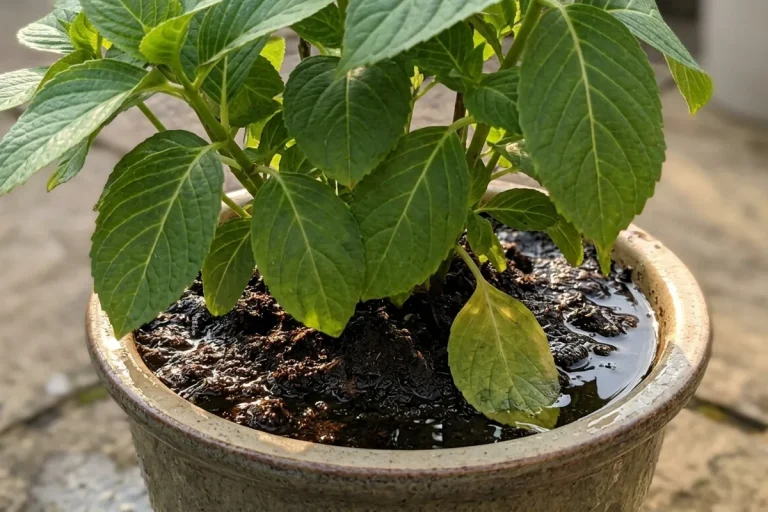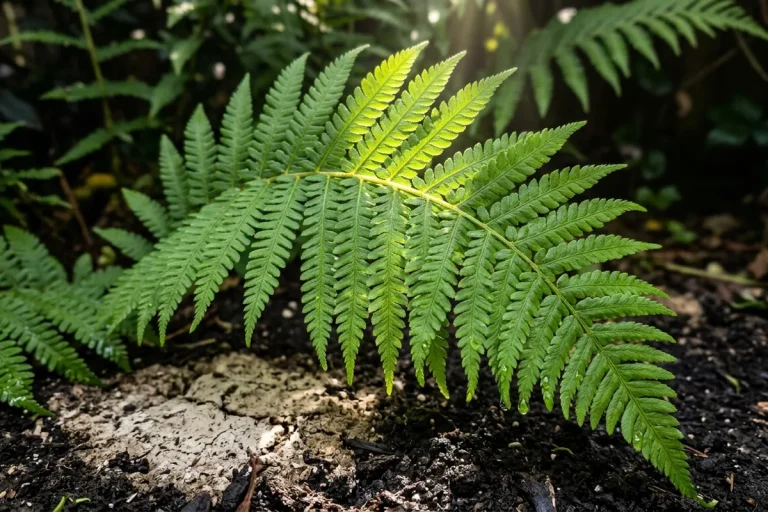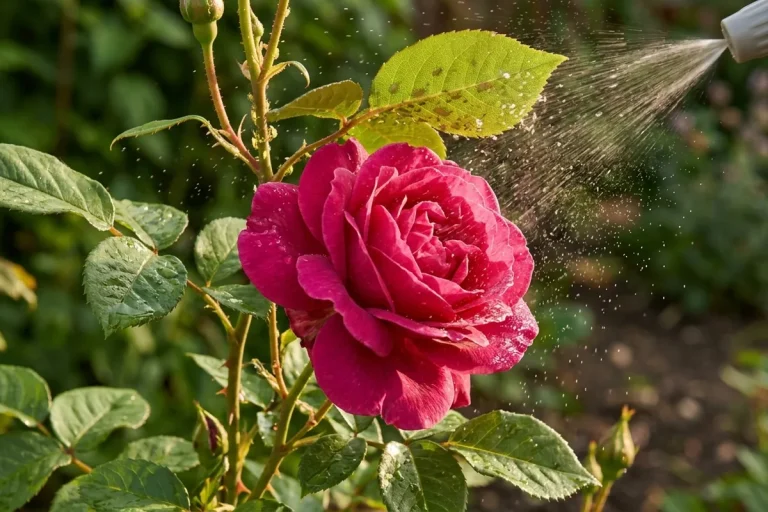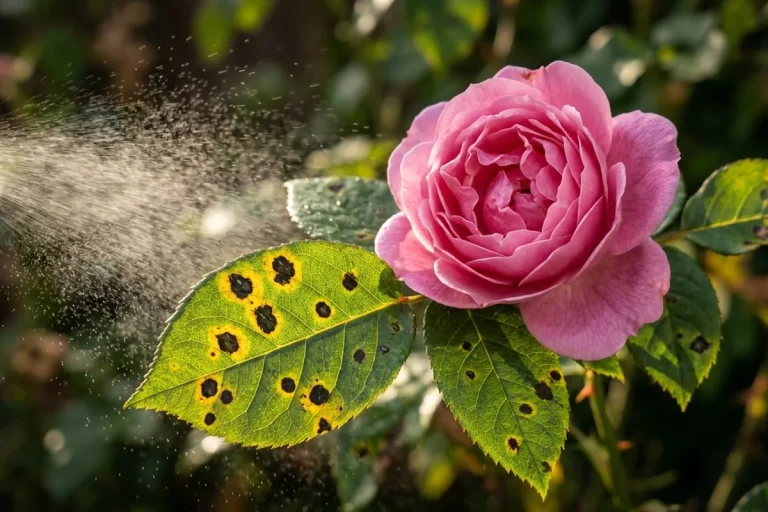

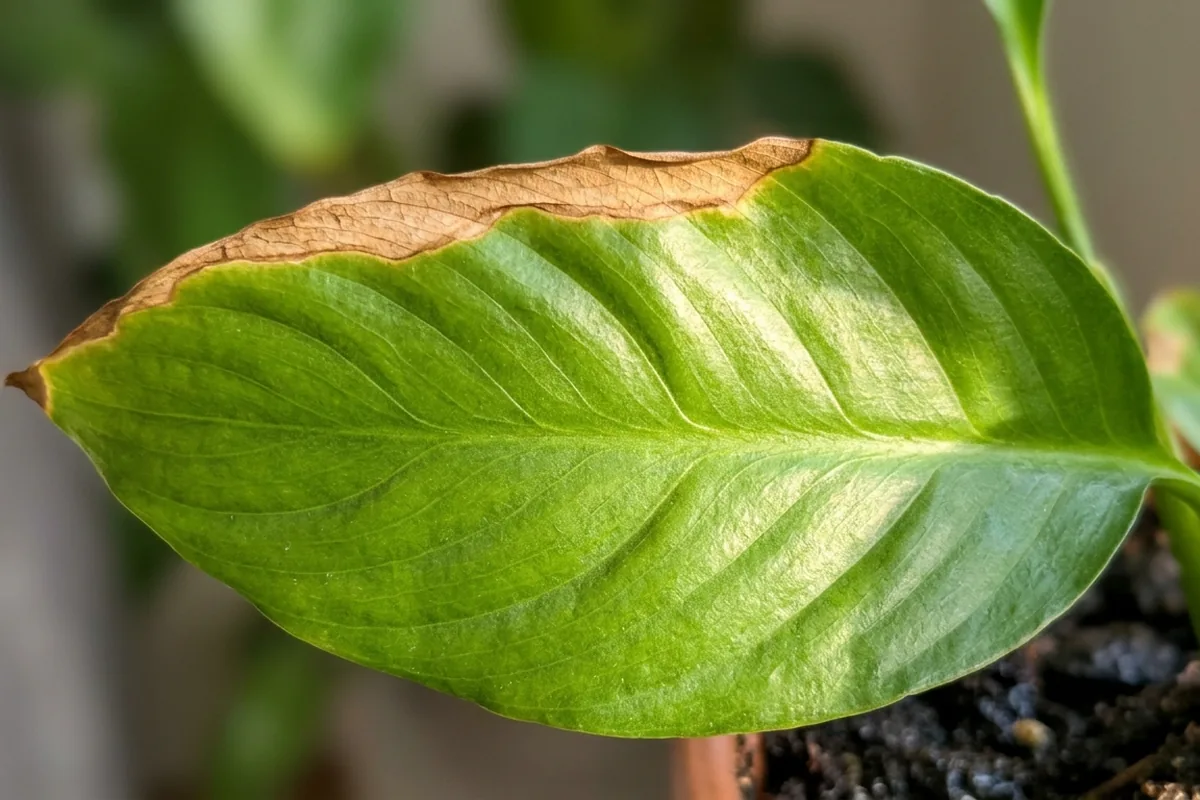
The confusing thing about scorched leaves is that they often appear on plants sitting in compost that still feels damp. Brown, crispy patches, especially on the tips and edges, can look like drought damage – but the pot is not dry, and you may even have a saucer with water still in it the next morning.
What the leaves are really showing
Leaf scorch is usually about water not moving properly through the plant, rather than how wet the compost looks on top.
Common reasons this happens even in damp soil:
- Damaged or rotting roots: Overwatering, compacted compost or poor drainage starve roots of oxygen. The plant cannot pull up enough water, so leaves scorch as if it were dry.
- Sudden heat or strong sun: On a bright south-facing windowsill or hot patio, leaves can lose moisture faster than damaged or limited roots can replace it.
- High salts from fertiliser or hard tap water: Build‑up in the compost draws water out of root tips, causing brown edges and crispy patches.
- Cold or waterlogged conditions: A pot left in a cold draught or standing in water can chill roots, slowing them so much that leaves dry at the tips.
If this is happening on your plant, the useful clue is not one leaf, but the pattern across the plant – many leaves browning from the edges, often while the compost feels wetter than you’d expect.
The checks to make before watering again
Before you reach for the watering can:
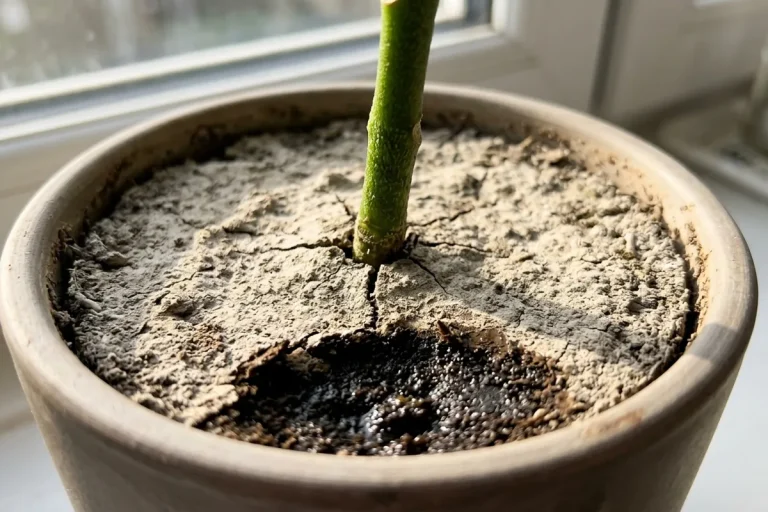
- Feel deeper into the compost. Push a finger 3–4 cm down. If it’s cool and wet while the surface looks dry, do not water. If you lift the pot and it still feels heavy, wait.
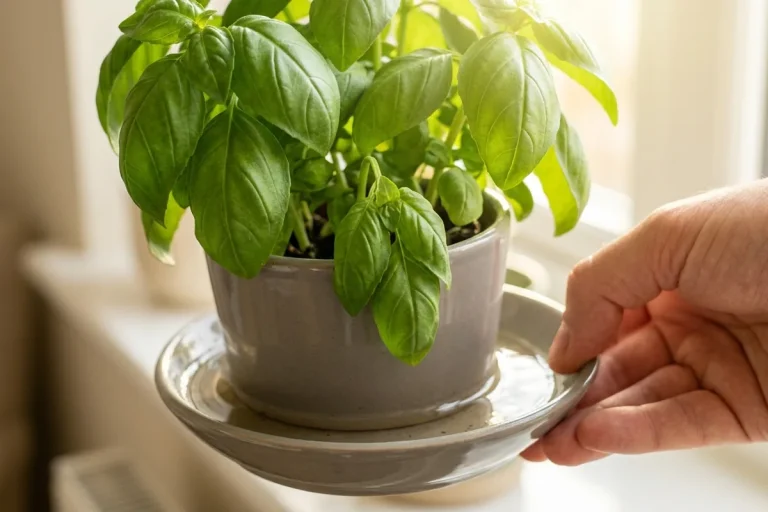
- Look at drainage. Check for blocked drainage holes, a pot with no holes, or a saucer that never gets emptied. Constantly wet compost is a common route to scorched leaves.
- Inspect the roots. If you can slide the plant out of its pot, look for firm, white or light roots. Brown, mushy, or foul‑smelling roots mean rot: the plant is effectively thirsty in a wet pot.
- Check light and heat. A plant right against hot glass, over a radiator, or on a bright but cold UK windowsill in winter can scorch even in damp compost.
- Think about feed. If you’ve been feeding every watering, or see a white crust on the compost, salts may be building up.
This is the point where many people water again too soon, because the leaves look dry. In most cases of scorch with damp compost, more water is the last thing the plant needs.
How to help scorched plants recover
Once you’ve checked the basics, adjust gently:
- Let the compost partly dry. Allow the top few centimetres to dry before watering again. Empty any saucers after 20–30 minutes.
- Improve drainage. Repot into fresh, free‑draining compost and a pot with good drainage holes if roots are sitting in sludge. For houseplants, a peat‑free houseplant mix with added grit or perlite works well.
- Rinse out excess salts. If roots are healthy but you suspect fertiliser build‑up, water thoroughly once, letting plenty run through and out of the pot, then reduce feeding for a while. Always follow the fertiliser label.
- Soften the conditions. Move plants out of fierce midday sun or away from direct radiator heat. Aim for bright, indirect light for most houseplants.
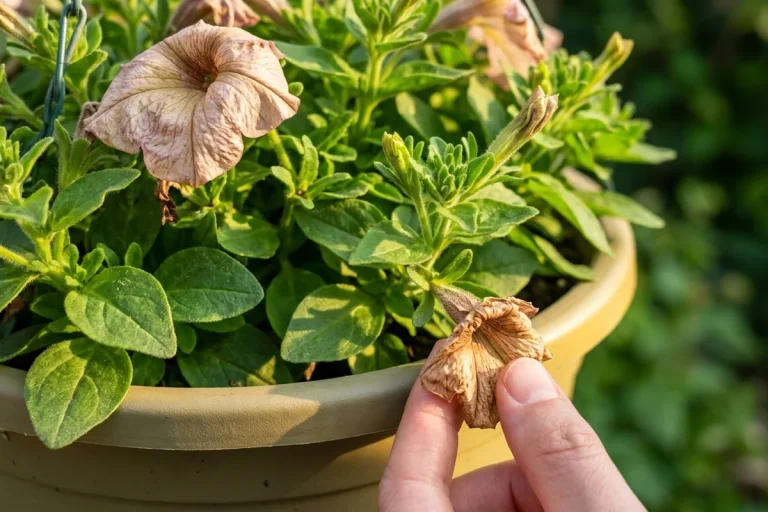
- Trim only the worst damage. You can remove fully dead, crispy leaves, but do not strip the plant bare. Light pruning helps it focus on new growth.
Leaf scorch from damp‑soil problems often looks dramatic, but if some foliage is still green and new leaves are appearing, the plant can usually steady itself once the roots are happier.
If you’re unsure what to do next, choose one small change – usually improving drainage and letting the compost breathe – then wait and watch. New growth that looks fresher and less patchy is your sign you’re on the right track.
Reader note
The Flower Expert is an independent gardening publication. Your support helps us keep creating practical plant care guides for everyday UK readers.
This article was created with the assistance of AI and reviewed by an editor. It is intended as general gardening information, not personalised professional advice.
If you still have a question, or if something looks unclear or inaccurate, you can contact us through our contact form.
If you found this article helpful, please consider sharing it on social media or leaving a comment below with your own experience. It helps other readers too.