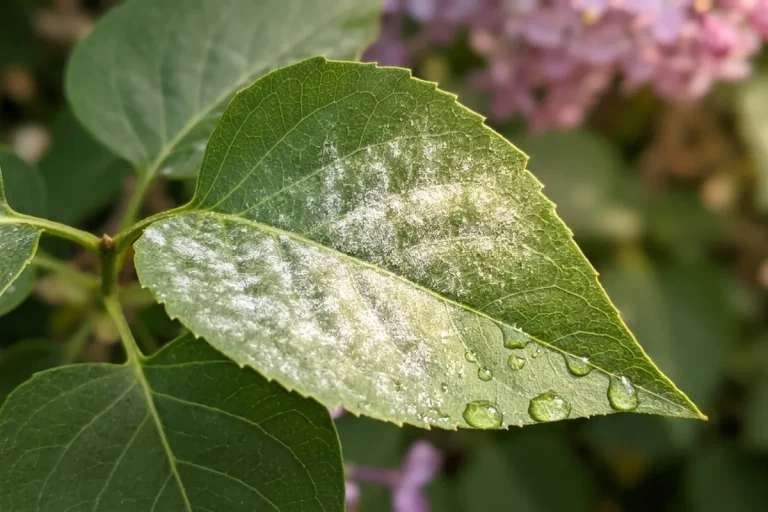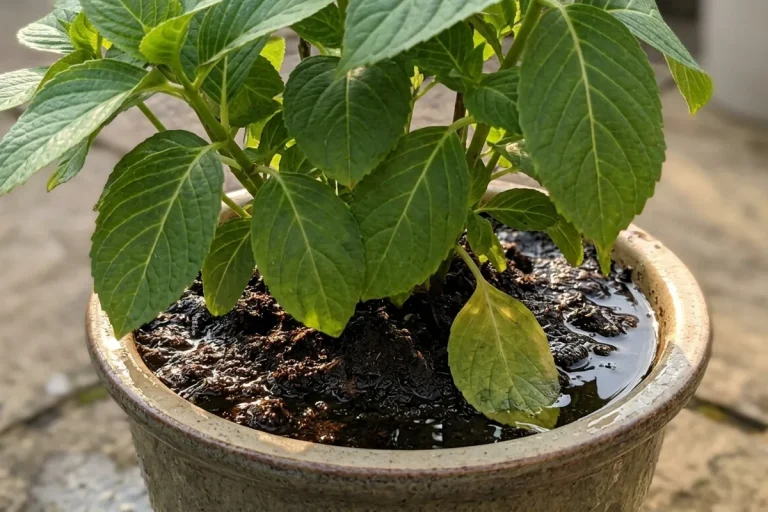

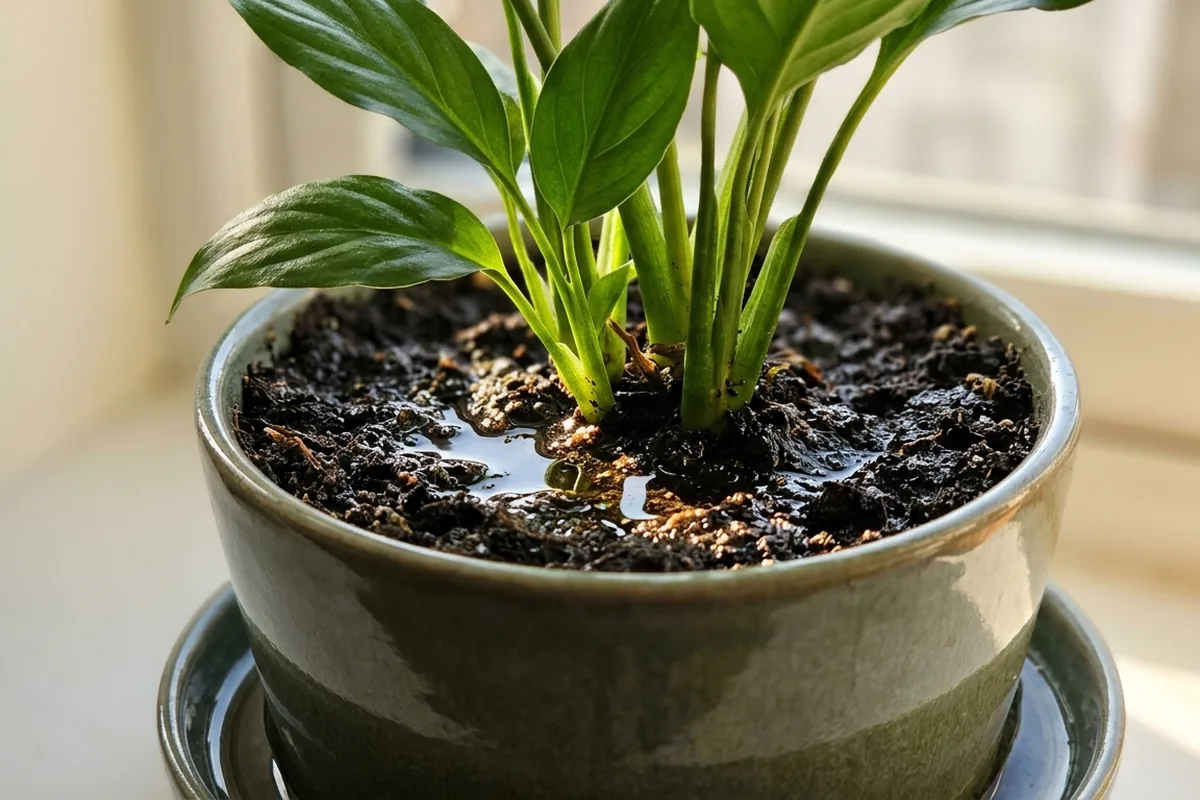
The problem often starts quietly: leaves droop even though the compost is wet, the pot feels heavy days after watering, or there’s a green film or white mould on the surface. If the top of the compost looks dry but the pot still feels heavy, watering again can make the problem far worse.
The first steps that actually save the plant
Your aim is to get air back to the roots before they suffocate and rot.
1. Check how wet it really is.
Push a finger 3–4 cm into the compost. If it feels cold and soggy, do not water. If you lift the pot and it still feels heavy, wait.
2. Get the plant out of the wet.
Take it out of its decorative cover pot or saucer. If there’s water sitting underneath, empty it and let the pot drain fully in the sink.
3. Improve the airflow.
Move the plant somewhere bright but not baking hot – a bright UK windowsill away from a radiator is ideal. Good light helps it use water faster.
4. Gently loosen the compost.
If the surface has formed a crust, lightly fork it with a pencil or plant label. This helps it dry more evenly.
This is the point where many people water again too soon. Do not rush. Let the compost reach just-barely-damp before you think about the next drink.
When you need to unpot and check the roots
If the plant is still wilting after a few days of drying out, or the compost smells sour, you may need to slip it out of the pot.
Look for:
- Firm, pale roots: usually still healthy. Pot back with better drainage and adjust watering.
- Brown, mushy, or foul-smelling roots: these are starting to rot.
- Roots circling tightly: the plant may be pot-bound and holding water unevenly.
If rot is only just starting:
- Trim away soft, brown roots with clean scissors.
- Shake off some of the wet compost.
- Repot into fresh, free-draining compost (multi-purpose with added perlite or fine grit works well for many houseplants).
- Choose a pot with drainage holes only one size bigger, or the same size if roots are sparse.
After repotting, water lightly once to settle the compost, then leave the plant alone to recover. If the saucer is still holding water the next morning, tip it away.
How to water differently so it doesn’t happen again
Once the plant has perked up a little, change the routine rather than going back to “every Saturday” watering.
- Check, don’t guess. A quick finger check tells you more than the surface of the compost or a reminder on your mobile.
- Water thoroughly, but less often. When it really needs water, give enough that it runs from the drainage holes, then let it drain fully.
- Empty decorative covers. Never leave pots standing in water for days, especially in low winter light.
- Adjust for seasons. Many indoor plants drink less in autumn and winter on a dull UK windowsill. The same plant on a sunny summer balcony or patio may need far more.
If the leaves look worse after every “fix”, stop changing several things at once. Go back to basics: light, compost moisture, pot size, and drainage. In many cases, quietly correcting those is enough to avoid root rot altogether.
A single careful check before you reach for the watering can is usually all it takes to catch overwatering early. Start with the compost, give the roots some air, and let the plant tell you when it’s ready for its next drink.
Reader note
The Flower Expert is an independent gardening publication. Your support helps us keep creating practical plant care guides for everyday UK readers.
This article was created with the assistance of AI and reviewed by an editor. It is intended as general gardening information, not personalised professional advice.
If you still have a question, or if something looks unclear or inaccurate, you can contact us through our contact form.
If you found this article helpful, please consider sharing it on social media or leaving a comment below with your own experience. It helps other readers too.