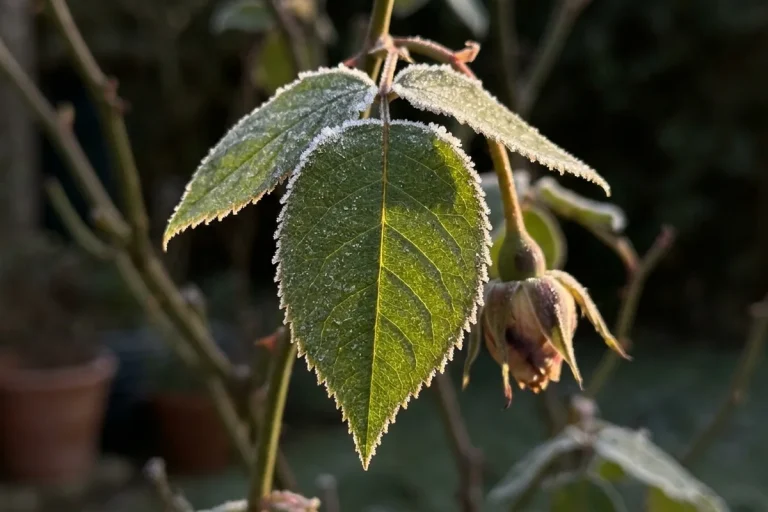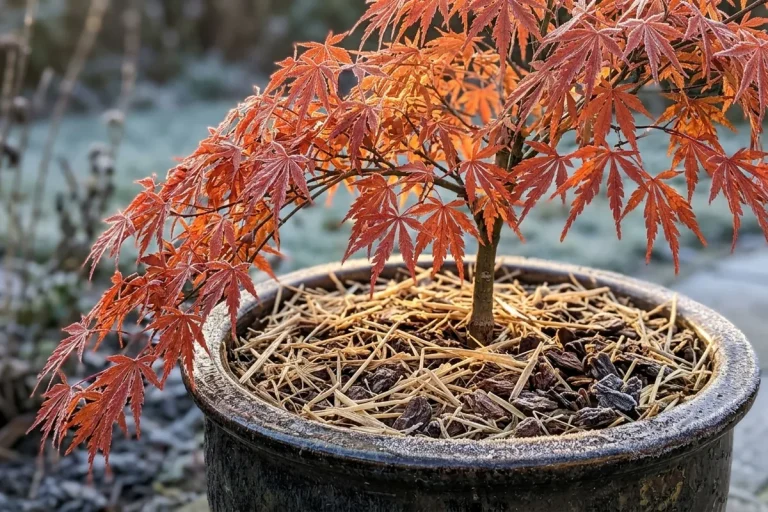


The first frost often arrives on a perfectly clear, quiet night when everything looked harmless at dusk. If you have pots of summer bedding still flowering, a half-hardy shrub on the patio or a tomato plant hanging on in the greenhouse, this is the moment to act.
The quick checks to make on frost‑vulnerable plants
Before the first frost, walk round and sort plants into three groups: must-protect, can-move, can-cope.
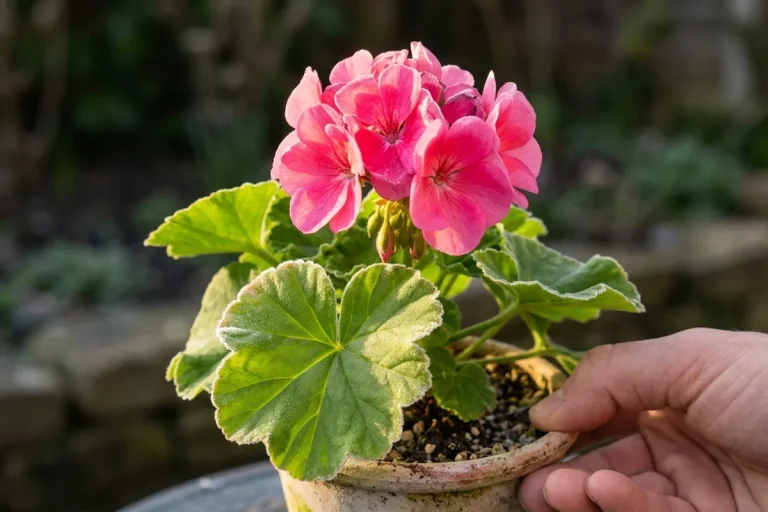
Look for anything labelled half-hardy or tender – things like dahlias, pelargoniums, begonias, fuchsias in pots, citrus, tomatoes, chillies, bedding in containers, and houseplants that spent summer outside.
Work through these checks:
- Pots you can move: Bring tender plants into a porch, unheated spare room, bright hallway or greenhouse. Even a sheltered, covered step is better than an exposed patio. If you lift the pot and it still feels heavy, wait to water; cold, wet roots are easily damaged.
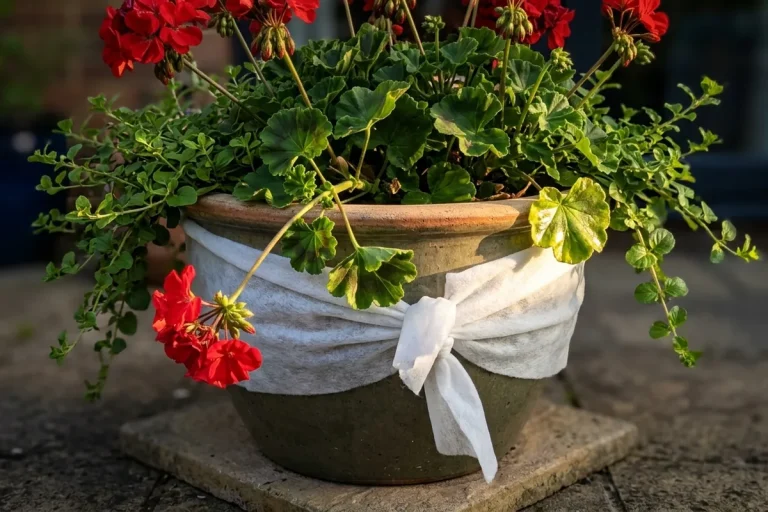
- Plants you cannot move: Wrap pots with bubble wrap, hessian or an old towel, tied loosely. This protects the roots, which are more vulnerable than the top growth.
- Border plants with fleshy roots or tubers (dahlias, cannas, gladioli): mark where they are. As soon as foliage is blackened by the first frost, you can lift and store the tubers, or in milder areas, mulch deeply and leave them in the ground.
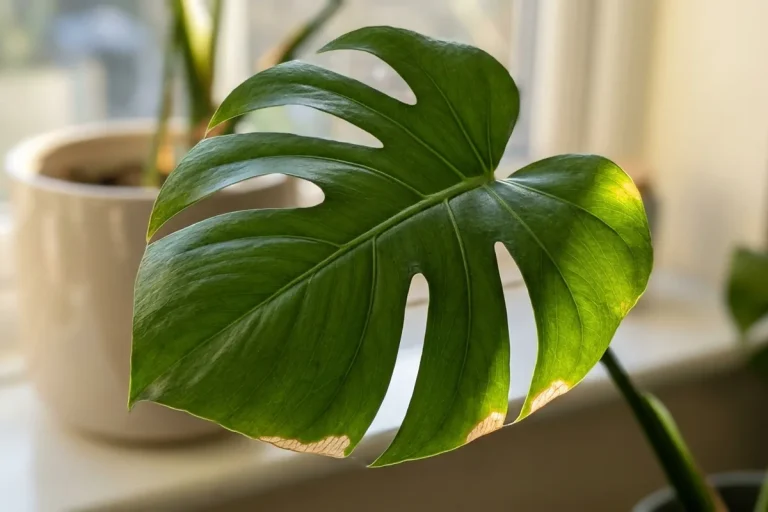
- Houseplants on cold sills: If any are touching the glass, pull them in a few centimetres. A bright UK windowsill can be surprisingly cold at 3am.
If the leaves look worse after every “rescue move”, stop shifting the plant about and focus on keeping it just cool, bright and evenly moist.
Watering, feeding and covering the night before
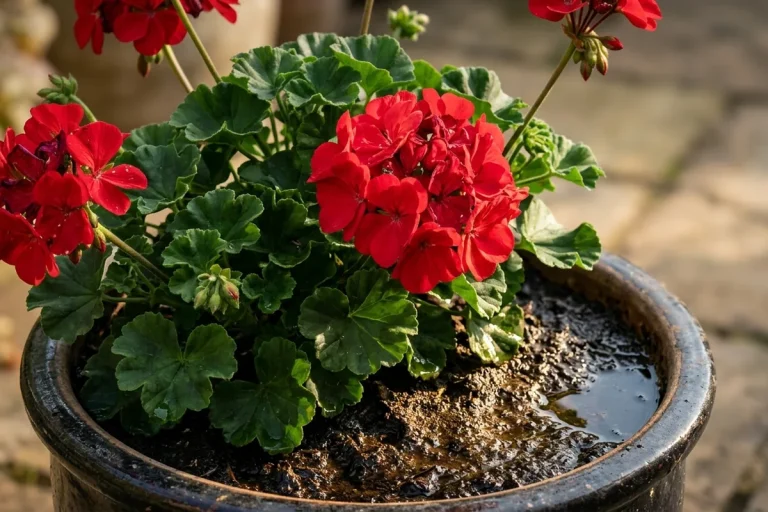
Cold, wet compost plus frost is what really finishes many plants, especially in containers.
The night (or day) before frost is forecast:
- Check compost moisture: push a finger 3–4 cm down. If it feels cool and damp, do not water. Compost that looks dry on top but is wet underneath is common at this time of year.
- Empty saucers: if there is still water sitting under a pot from yesterday, tip it away. Standing in cold water overnight chills roots badly.
- Stop feeding tender plants outside: soft, sappy growth is more likely to be damaged. Let them slow down.
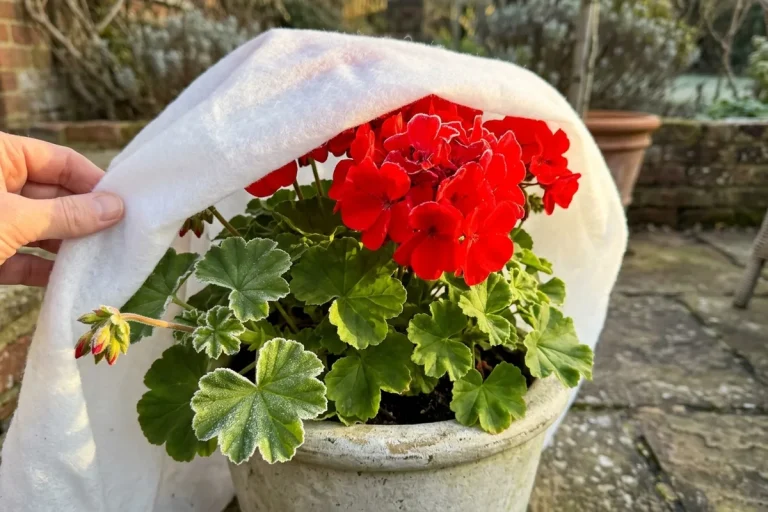
- Use simple covers: horticultural fleece, an old cotton sheet or even a cardboard box over a small pot can help for one cold night. Make sure covers are not flattening delicate stems and remove them in the morning so plants do not sweat and rot.
This is the point where many people water “one last time” and then lose plants to a sharp frost and soggy compost.
Borders, lawns and anything you want to keep flowering
Frost is not only about tender pots; it changes how the whole garden behaves.
- Roses, dahlias and other repeat-flowering plants: deadhead once more so they put remaining energy into ripening wood and roots, not new buds that will be frosted.
- Late vegetables: pick any nearly-ripe tomatoes, chillies and courgettes. Slightly under-ripe fruit on the kitchen counter is better than a mushy one on the plant.
- Lawns: avoid walking on frosted grass in the morning; it crushes the blades and can leave brown patches later.
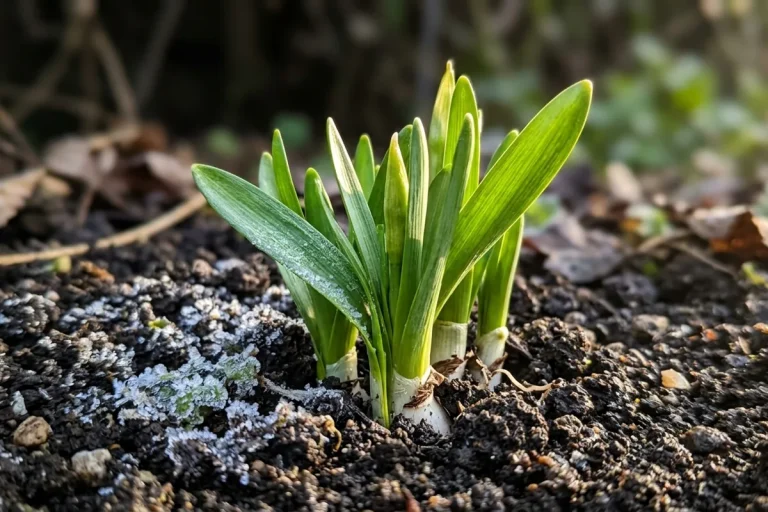
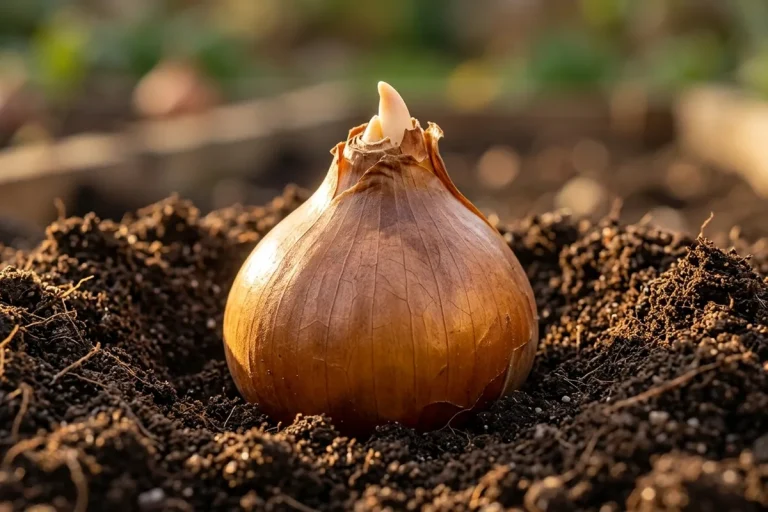
- Bulbs and borders: check any newly planted bulbs are deep enough and covered – a bulb sitting too close to the surface is more exposed to cold and can heave out of the soil as it freezes and thaws. Firm gently back in if needed.
- Greenhouse and cold frame: close vents before late afternoon so the structure holds a little warmth into the night. In very cold spells, a layer of fleece inside makes a noticeable difference.
Once you have done a single, steady circuit of your garden and dealt with anything tender, you can let that first frosty morning be something to enjoy rather than dread. Check your local forecast, choose one small area to sort this evening – perhaps just the patio pots – and you will already be ahead of the weather.
Reader note
The Flower Expert is an independent gardening publication. Your support helps us keep creating practical plant care guides for everyday UK readers.
This article was created with the assistance of AI and reviewed by an editor. It is intended as general gardening information, not personalised professional advice.
If you still have a question, or if something looks unclear or inaccurate, you can contact us through our contact form.
If you found this article helpful, please consider sharing it on social media or leaving a comment below with your own experience. It helps other readers too.