

Strong winds catch containers easily – especially tall pots, freshly planted tubs and anything on a balcony or exposed patio. If you’ve already watched a pot blow over once and spill compost, you know how quickly stems can snap and roots can be disturbed.
Quick ways to stop pots blowing over
Your aim is to lower the centre of gravity and reduce how much wind hits the pot and the plant.
- Move what you can. Pull containers against a wall, into a corner, or beside a sturdy bench. Even half a metre out of the main blast can make a big difference.
- Group pots together. Cluster them tightly so they shelter each other. Put the heaviest, widest pots on the windward side, smaller ones behind.
- Take tall tops off temporarily. For very windy weekends, it’s often kinder to move lightweight tops (hanging baskets, small pots) to the ground than to watch them swing and shred.
- Add weight low down. If a pot is very top-heavy, tuck a couple of bricks or a paving slab on the compost surface, or wedge them around the base. If you lift the pot and it still feels light, it’s more likely to topple.
- Lay the most vulnerable pots down. For very tall, narrow containers with young shrubs or standard roses, gently lay the whole pot on its side, crown facing away from the wind, and support it with bricks.
This is the point where many people rush to tie plants tightly. Do not strangle stems; a loose figure-of-eight tie to a stout cane is usually enough for a weekend.
Protecting plants, not just pots
Stopping a pot from moving is only half the job; wind strips moisture from leaves and compost.
Look for dry, fluffy compost on top but damp 3–4 cm down. A quick finger check tells you more than the surface. If it’s already moist lower down, watering heavily before a storm can leave you with soggy compost and snapped stems.
To help plants cope:
- Water the day before, not during. Give a thorough soak earlier, then let excess drain. A saucer still holding water the next morning is too much – empty it.
- Mulch exposed compost. A light layer of fine bark, composted bark or decorative gravel helps keep moisture in and stops compost blowing away.
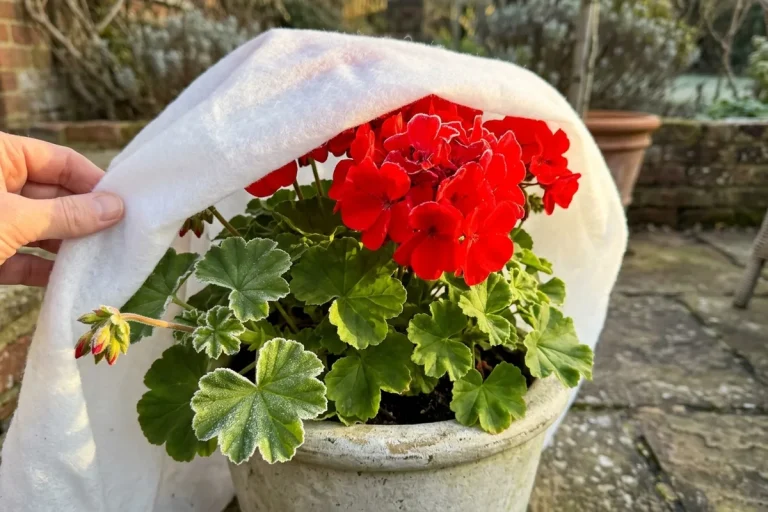
- Shield delicate foliage. For soft annuals or young perennials, prop a bit of mesh, an old crate, or a piece of windbreak fabric on canes on the windy side. You are trying to slow the wind, not block all light.
- Check ties and canes. Make sure canes go deep enough, especially in tall patio pots. If a stem is already leaning after the last blow, support it before the next one.
If leaves look worse after every “fix”, stop changing several things at once. Stabilise the pot, water sensibly, then give the plant a few calm days.
Extra care for balconies and exposed spots
Balconies, roof terraces and open coastal gardens need a bit more thought.
Choose shorter, squatter containers rather than tall, narrow ones in exposed areas. Heavy ceramic or thick plastic is usually steadier than very light, thin pots.
On balconies, consider:
- Using brackets and pot clips designed to secure containers to railings (always check weight limits and safety advice).
- Avoiding large, top-heavy shrubs in small railing planters; go for trailing plants and compact grasses instead.
- Checking with your local council or building management if you’re unsure what’s safe to fix to a balcony.
After the windy weekend, go round quickly: upright anything that’s shifted, firm compost back around any loosened roots, trim broken stems cleanly, then resume normal watering rather than “rescue” soaking.
A few minutes of shifting, grouping and weighting pots before the wind picks up usually saves you a lot of broken stems and spilled compost afterwards. Have a walk round now, spot the top-heavy containers, and decide which ones you’ll move first next time strong winds are forecast.
Reader note
The Flower Expert is an independent gardening publication. Your support helps us keep creating practical plant care guides for everyday UK readers.
This article was created with the assistance of AI and reviewed by an editor. It is intended as general gardening information, not personalised professional advice.
If you still have a question, or if something looks unclear or inaccurate, you can contact us through our contact form.
If you found this article helpful, please consider sharing it on social media or leaving a comment below with your own experience. It helps other readers too.