
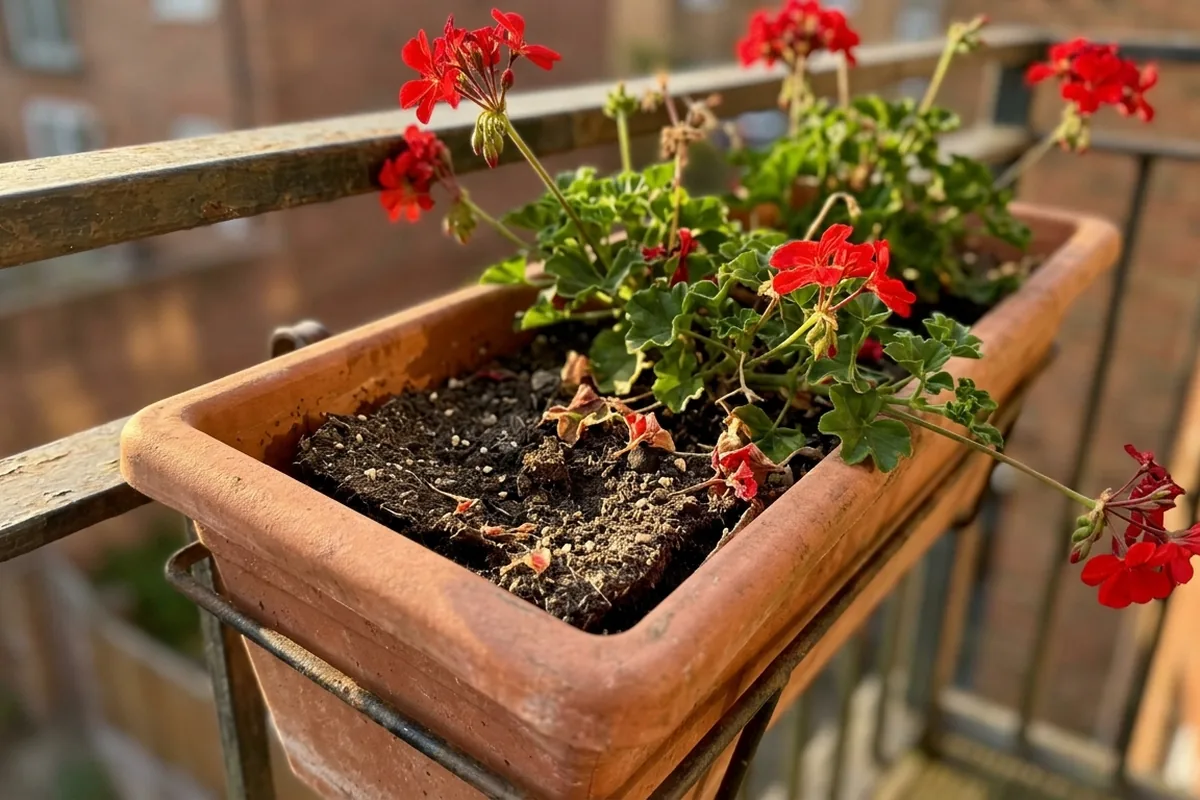
Strong wind on a balcony can shred delicate leaves, dry pots in a day and leave plants leaning away from the railings. If your compost looks dry on top by evening and stems are constantly pushed sideways, you need plants that genuinely cope with exposure, not ones that sulk at the first gust.
The best plants that actually cope with wind
Look for plants with tough foliage, flexible stems and deep or fibrous roots. These stand up better to balcony breezes and small, sun-baked patios.
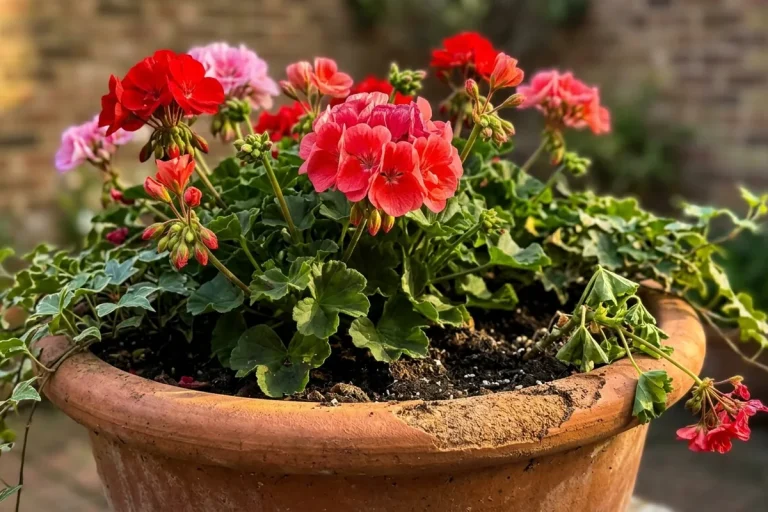
- Hardy geraniums (cranesbills) – Low, mounding, with slightly leathery leaves and long flowering. Good in troughs; cut back after flowering and they usually flush again.
- Lavender (especially compact forms like ‘Hidcote’) – Loves sun, tolerates wind, and the woody base helps it stay upright. Needs sharp drainage; a terracotta pot with grit in the compost works well.
- Heuchera – Evergreen or semi-evergreen, neat clumps that don’t flap about. Useful foliage colour on a windy, part-shaded balcony.
- Erigeron karvinskianus (Mexican fleabane) – Tiny daisy flowers, wiry stems that bend rather than snap. Spills nicely over the edge of pots or steps.
- Dwarf grasses such as Festuca glauca or Stipa tenuissima – Wind makes them move, but they rarely break. Good for softening railings.
For really cramped spaces, wall planters and rail-hung troughs with trailing plants like ivy, thyme and trailing rosemary keep most of the growth below the wind line.
What to plant where on a windy balcony
Think in layers rather than one big statement pot. On a typical UK balcony or small patio:
- Put the toughest, tallest plants (lavender, small shrubs, dwarf grasses) at the windward edge. They act as a light screen without becoming a sail.
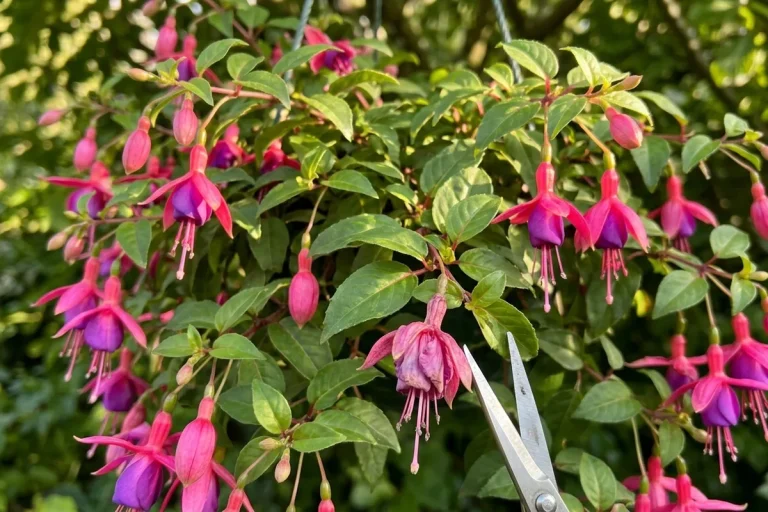
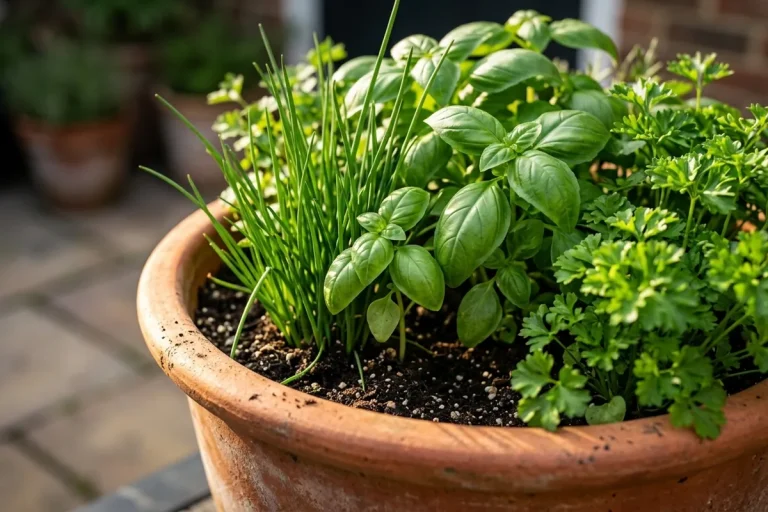
- Tuck more delicate plants (petunias, fuchsias, herbs that scorch easily) behind them, closer to the wall or door.
- Use long, heavy troughs rather than tall, narrow pots. A low, weighty container is far less likely to topple in a gale.
If you lift a pot and it still feels heavy from yesterday’s rain, wait. Wind dries leaves faster than compost, so plants can look thirsty while the roots are still sitting in the wet.
Good small-space combinations for UK conditions:
- Sunny, exposed: lavender, dwarf grasses, hardy geranium, trailing thyme.
- Part shade, breezy: heuchera, ivy, ferns in a sheltered corner, Erigeron on the edge.
- Very small balcony: one or two bigger, stable pots rather than lots of tiny ones that dry out and blow over.
Simple ways to help pots survive the wind
You can’t change the weather, but you can set pots up to cope:
- Choose sturdy containers with drainage holes and a bit of weight – ceramic, thick plastic, or well-weighted troughs.
- Add a layer of gravel or crocks at the base to help drainage and stability.
- Use a peat-free, soil-based compost for outdoor pots; it’s heavier and dries out more slowly than very light mixes.
- Group pots so they shelter each other, and tie taller stems discreetly to canes if they lean after strong gusts.
- Check saucers: if there’s still water sitting there the next morning, empty it so roots don’t rot.
If leaves look increasingly tatty, the answer is often not more watering or feed, but either a tougher plant or a slightly more sheltered spot on the same balcony.
Start with one or two of the tougher plants above, see how they handle your particular wind and sun, then add others around the ones that thrive. A windy balcony can still be green and colourful – it just needs the right cast of plants.
Reader note
The Flower Expert is an independent gardening publication. Your support helps us keep creating practical plant care guides for everyday UK readers.
This article was created with the assistance of AI and reviewed by an editor. It is intended as general gardening information, not personalised professional advice.
If you still have a question, or if something looks unclear or inaccurate, you can contact us through our contact form.
If you found this article helpful, please consider sharing it on social media or leaving a comment below with your own experience. It helps other readers too.