
Soft, hazy borders suit the cottagecore look beautifully: loose flowers spilling together, no hard edges, plenty of bees. If your border currently looks a bit stiff – straight lines of plants, bare compost between clumps – you’re in exactly the right place.
The key elements of a soft cottagecore border
For that romantic, blurred edge, think layers, not rows. You’re aiming for plants to mingle and lean, with no clear “front–middle–back” lines.
A simple structure that works well in most UK gardens:
- Tall, airy layer (back/centre): foxgloves, hollyhocks, verbena bonariensis, fennel, tall cosmos.
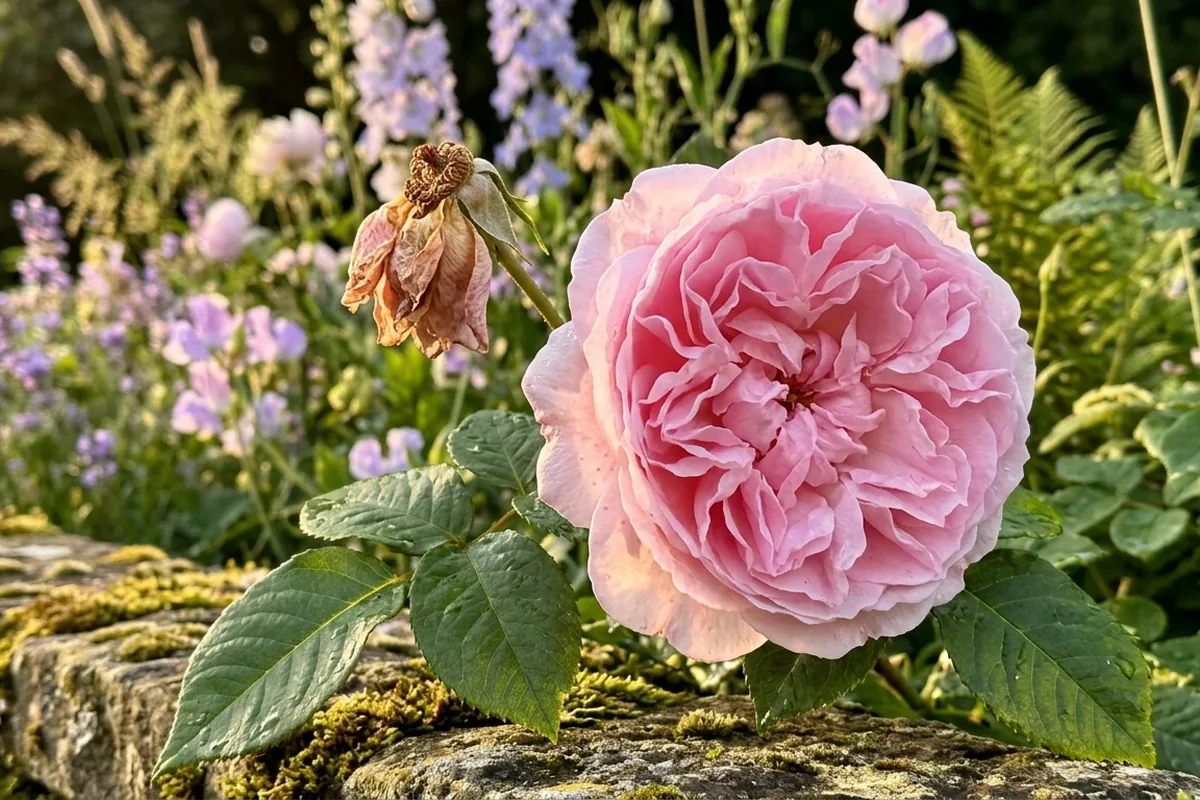
- Mid-height “cloud” layer: roses (preferably shrub or English types), hardy geraniums, achillea, phlox, scabious.
- Soft edging layer (front): catmint, lady’s mantle, low campanula, violas, erigeron (Mexican fleabane).
Choose 3–5 main plants and repeat them along the border rather than buying one of everything. This is the point where many people end up with a fussy look – too many different plants, all doing their own thing.
Keep colours gentle: creams, blush pinks, mauves, soft blues, smoky purples, with a little silver foliage (stachys, artemisia) to calm everything down. Strong reds and yellows can work, but use them sparingly so they don’t shout over the rest.
Planting for that “softly overgrown” feel
The cottagecore style relies on plants knitting together so you don’t see much bare compost.
- Plant a bit closer than the label suggests, especially with airy perennials like hardy geraniums and catmint. You want them to meet, not sit as lonely clumps.
- Tuck in annuals like cosmos, nigella and cornflowers between young perennials. They’ll fill gaps in the first year while slower plants bulk up.
- Let a few things self-seed on purpose – foxgloves, nigella, forget-me-nots and poppies are ideal. If seedlings appear where you don’t want them, just lift them with a hand fork and move them further along the border.
If your soil shows as dry, cracked patches between plants, that’s your sign to add more ground-covering perennials or underplant with low growers like violas or erigeron.
Gentle upkeep that keeps it looking natural
A cottagecore border should never feel high-maintenance, but a little regular attention stops it slipping from romantic to messy.
- Deadhead lightly: snip spent roses, cosmos and sweet peas to keep flowers coming, but leave some seedheads on poppies and nigella for that wild look.
- Stake early, invisibly: tall delphiniums or hollyhocks lean after heavy rain. Slip in discreet canes or hoops while stems are still short so they’re hidden once growth fills out.
- Mulch once a year with garden compost or a soil improver. It feeds, keeps moisture in and softens the look of bare soil. If the mulch is still clearly visible weeks later, you probably still have space for more plants.
Before you buy more, stand back and squint at the border. Look for where the eye stops abruptly – a hard edge, a sudden change of height, a gap of bare compost. That’s where an extra soft grass, a repeat of a rose, or a spill of catmint will make the whole thing feel intentional.
Start with one small section of border, perhaps a metre or two, and get that feeling right. Once you see how the plants knit together and blur the edges, it becomes much easier to repeat along the rest.
Reader note
The Flower Expert is an independent gardening publication. Your support helps us keep creating practical plant care guides for everyday UK readers.
This article was created with the assistance of AI and reviewed by an editor. It is intended as general gardening information, not personalised professional advice.
If you still have a question, or if something looks unclear or inaccurate, you can contact us through our contact form.
If you found this article helpful, please consider sharing it on social media or leaving a comment below with your own experience. It helps other readers too.