
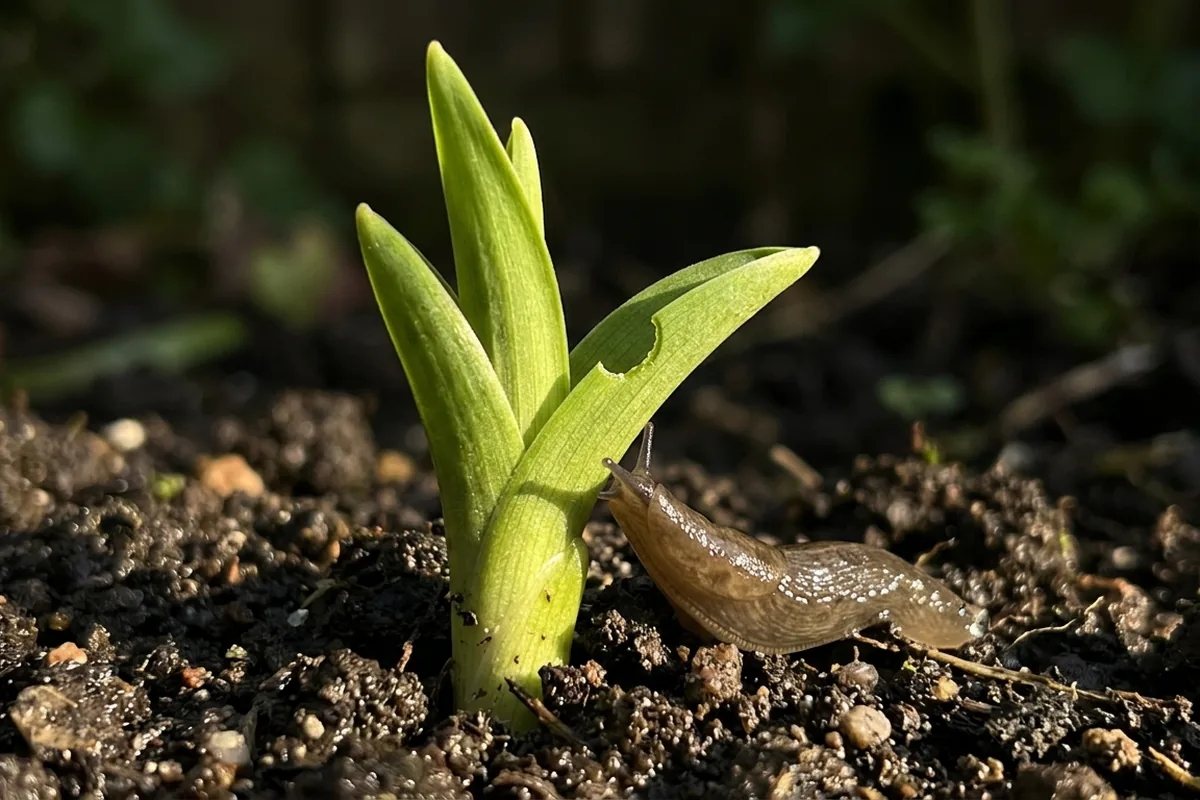
The first sign is usually subtle: you spot fresh green shoots on hostas, delphiniums or lupins, feel pleased – and two days later they’ve vanished, leaving ragged edges or nothing at all. If this is happening in your border or pots, slugs are the most likely culprits.
The one check to do this evening
Before you blame the weather or the soil, go out at dusk or after dark with a torch and look right at the base of the new growth. This is the slug check that matters.
You’re not just looking for big, obvious slugs. Check for:
- Shiny slime trails on leaves, paving or pot rims.
- Small grey or black slugs tucked under the lip of the pot or in tiny gaps.
- Nibbled edges on new leaves, often uneven and shredded rather than cleanly cut.
- Slugs hiding in cool spots – under pots, in wall cracks, beneath old leaves or bits of bark.
If you gently lift a pot and it feels unexpectedly heavy, look underneath. It’s very common to find several slugs stuck to the underside, waiting for night.
This is the point where many people simply scatter pellets and hope. The check with a torch tells you exactly where they’re coming from and which plants they’re targeting, so you can be more precise and use less.
What to do if the check shows slugs
Once you’ve confirmed they’re there, focus on protecting the new shoots, not trying to clear every slug in the garden.
Good, practical options:
- Hand-pick at night: Drop slugs into a pot of soapy water. A couple of focused evenings can make a real difference.
- Remove hiding places: Clear soggy leaves, old trays and unused pots where they shelter during the day.
- Use barriers around precious plants: Wool pellets, rough grit or copper rings can help slow slugs, especially in pots and small areas.
- Consider wildlife-friendly pellets: If you use pellets, choose ones labelled safe for pets and wildlife, and follow the packet carefully.
Look closely at pots by a shady fence, a damp corner or near a water butt – these are classic slug zones. A patio pot can be stripped overnight while something in a drier, breezier spot is barely touched.
When it might not be slugs
If you do the night check and see no slime trails, no slugs and no ragged edges, think again.
New shoots disappearing can also be:
- Pigeons or rabbits: Damage is often neater, with stems snipped off cleanly.
- Vine weevil larvae in pots: Plants wilt and pull up easily because roots are eaten.
- Frost damage: Tender tips blacken or turn mushy after a cold night.
The useful clue is not one leaf, but the pattern across the plant and the bed. Ragged, slimy, mostly at ground level points to slugs. Clean cuts or whole stems gone higher up suggest something else.
Do the torch check over two or three nights, especially after rain. Once you know what’s really happening, you can protect new growth calmly instead of guessing. Start tonight with your most precious clumps – the hostas by the path, the delphiniums in the middle of the border – and see who’s visiting them after dark.
Reader note
The Flower Expert is an independent gardening publication. Your support helps us keep creating practical plant care guides for everyday UK readers.
This article was created with the assistance of AI and reviewed by an editor. It is intended as general gardening information, not personalised professional advice.
If you still have a question, or if something looks unclear or inaccurate, you can contact us through our contact form.
If you found this article helpful, please consider sharing it on social media or leaving a comment below with your own experience. It helps other readers too.