
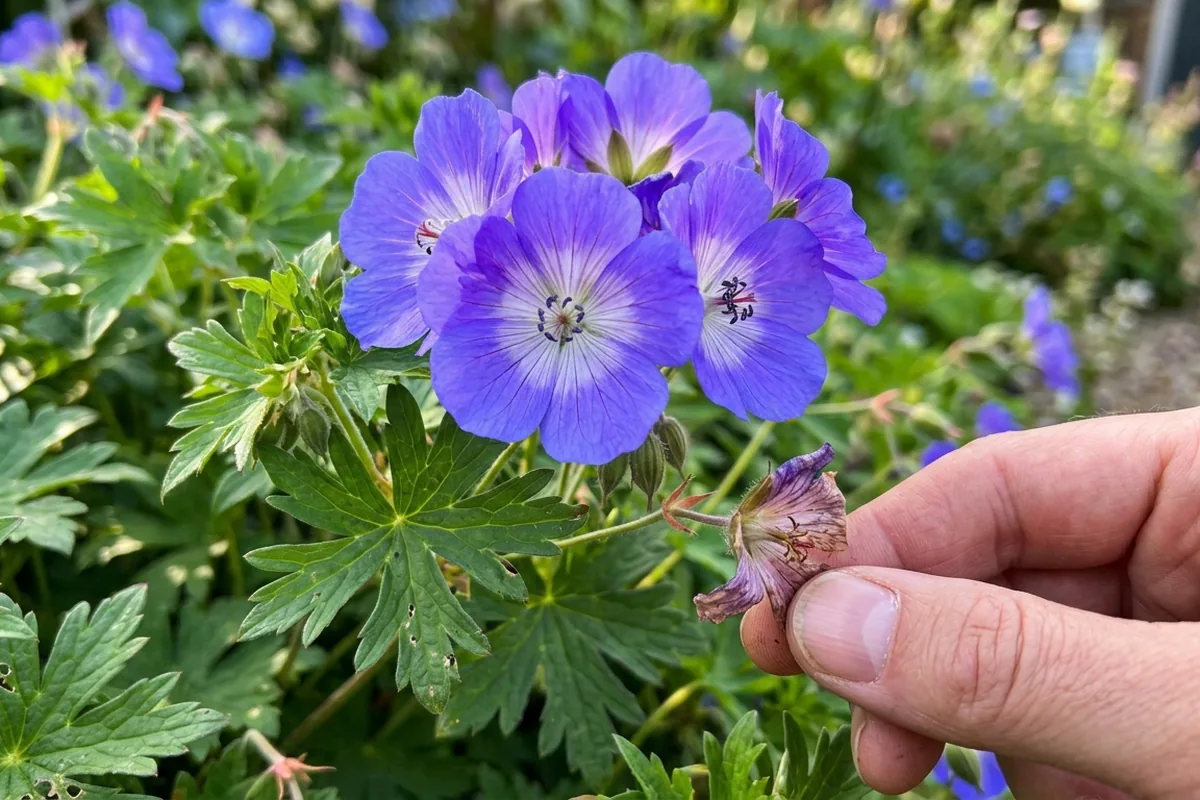
For nonstop flowers from June to the first frosts, Geranium ‘Rozanne’ needs just a few things done consistently: enough light, the right amount of moisture, and a light tidy when it gets tired. If your plant started brilliantly in early summer and is now a flat green mound with only a few flowers, you are not alone.
The simple routine that keeps Rozanne flowering
Geranium ‘Rozanne’ is generous if the basics are right:
- Light: Give it full sun to light shade. In most UK gardens, it flowers best with at least half a day of sun. In deep shade it will spread, but flowering tails off.
- Soil and drainage: It prefers moist but well-drained soil. Heavy clay that stays wet or very dry, stony soil will both reduce flowering. If water still sits in a dip or border the next morning, improve drainage with compost and a little grit.
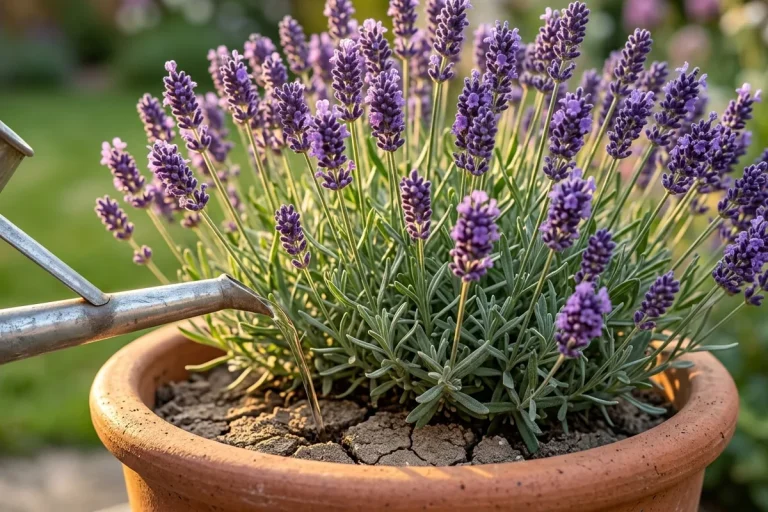
- Watering: Once established in the ground, it usually copes with normal UK summers. In a dry spell, water deeply once or twice a week rather than a light sprinkle every day. If the soil is cracked and the plant is flopping by late afternoon, that is your cue.
- Feeding: Too much feed gives lots of leaves and fewer flowers. A light sprinkle of balanced, slow‑release fertiliser in spring is usually enough. In pots, a dilute liquid feed every 3–4 weeks in summer can help, but do not overdo it.
If you grow Rozanne in a container, check more often. A patio pot in full sun can be dry at the roots even when the surface still looks slightly damp.
Cutting back and deadheading for more blooms
The trick to continuous flowering is removing tired growth before it takes over.
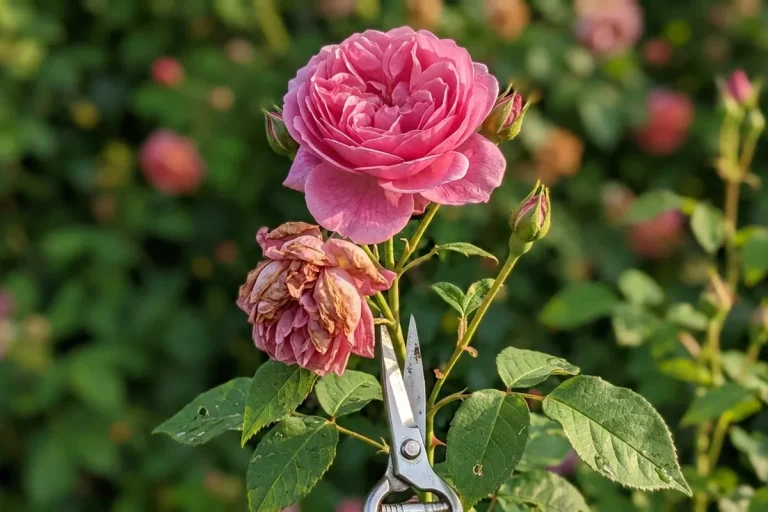
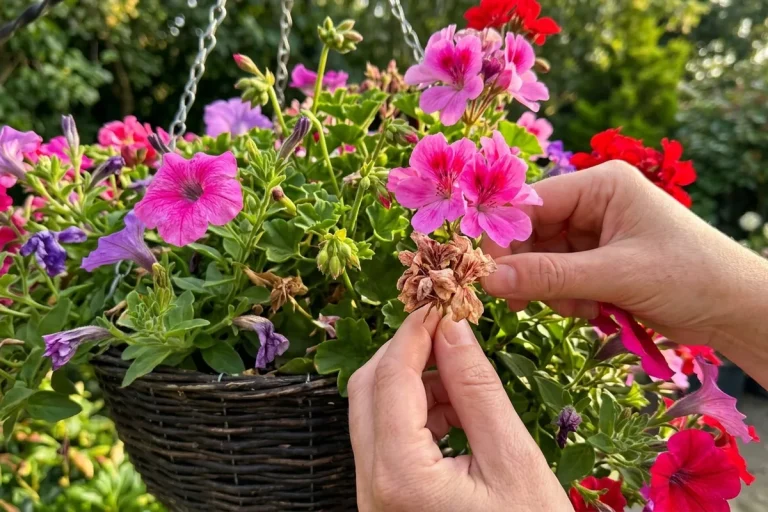
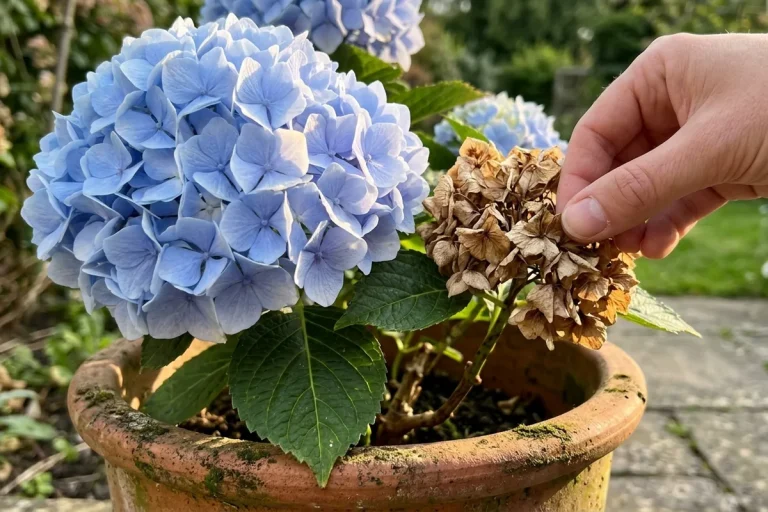
- Regular deadheading: Snip or pinch off spent flowers with their stems. If you only pull the faded petals, the seed head remains and the plant thinks its job is done.
- Mid-summer haircut: If Rozanne has become a sprawling, open clump with fewer flowers, cut the whole plant back by about one third to half. It looks brutal for a week, then fresh foliage and a new flush of blooms usually follow. Water well afterwards and, in poor soil, give a light feed.
- Check the centre of the clump: If the middle looks woody and bare while the edges flower, that is normal on older plants. A harder cut-back or gentle division in early spring can refresh it.
This is the point where many people water again, when actually the plant is simply between flushes and waiting for you to tidy it.
Position, spreading and long-term health
Rozanne is a spreading hardy geranium, not a bedding pelargonium. It behaves more like a soft groundcover than a neat little dome.
- Space: Allow around 60–80 cm for it to spread. If it is climbing into neighbouring plants, you can lift and redirect stems, or trim back lightly.
- Borders vs pots: In a border, it weaves well through roses, grasses and shrubs. In pots, use a roomy container with drainage holes and good peat‑free compost. If the roots are circling the pot or pushing out of the drainage holes, it is time to move up a size or plant into the ground.
- Weather: Rozanne usually shrugs off damp springs and cool summers, but a very hot, dry spell can scorch leaves. If this is happening on your plant, check: is the soil dry several centimetres down, or are the roots sitting in hot, compacted compost in a small pot?
- Winter: It is fully hardy in most of the UK. Let the foliage die back naturally, then tidy old stems in late winter or early spring. A mulch of garden compost around, not over, the crown helps keep it vigorous.
If the flowers are fading earlier each year, look first at light and overcrowding, then at water and feeding, rather than reaching straight for more fertiliser.
A quick review of light, watering and a firm mid‑season trim is usually all Geranium ‘Rozanne’ needs to flower from early summer to the first frost. Before you buy another plant, look at where yours is sitting now and make one small change today – a haircut, a drink, or a sunnier spot.
Reader note
The Flower Expert is an independent gardening publication. Your support helps us keep creating practical plant care guides for everyday UK readers.
This article was created with the assistance of AI and reviewed by an editor. It is intended as general gardening information, not personalised professional advice.
If you still have a question, or if something looks unclear or inaccurate, you can contact us through our contact form.
If you found this article helpful, please consider sharing it on social media or leaving a comment below with your own experience. It helps other readers too.