
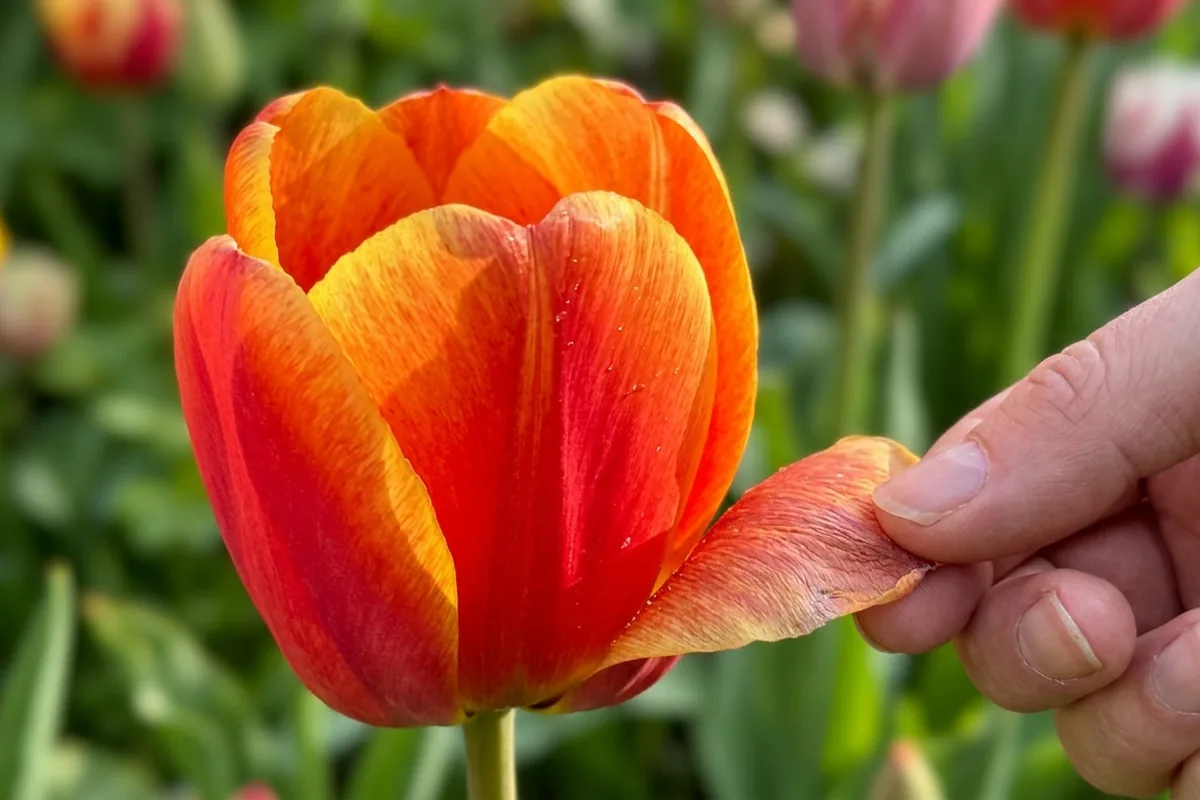
For a really colourful spring, tulips do more work than almost any other bulb. If your borders look flat in March, or pots on the patio are all one shade, it’s usually a sign you’re growing too few types and they’re all flowering at the same time.
Tulips that give you reliable colour
To keep things simple, think in three waves: early, mid and late. Mix all three and you stretch the show from March into May, even in a cool, damp UK spring.
Here are dependable varieties that earn their space:
- Early colour (March–early April)
- ‘Purple Prince’ – rich purple, neat shape, good in pots and front of borders.
- ‘Apricot Beauty’ – soft apricot-rose, lovely with forget-me-nots.
- ‘Showwinner’ (Kaufmanniana) – low, wide-opening red flowers; ideal for exposed spots.
- Mid-season stars (mid–late April)
- ‘Queen of Night’ – almost black, brilliant for contrast with pale pinks or white.
- ‘Ballerina’ – scented orange lily-flowered tulip, looks elegant even in wind.
- ‘Pink Impression’ – tall, big-flowered pink, excellent for the back of a border.
- Late colour (late April–May)
- ‘Angelique’ – soft double pink, like small peonies; best in a sheltered spot.
- ‘Black Hero’ – double form of ‘Queen of Night’, deep and dramatic.
- ‘Carnaval de Nice’ – white and crimson double, very showy in containers.
If you lift the pot and it still feels heavy after rain, wait before watering; tulip bulbs dislike sitting in cold, soggy compost.
Good mixes for pots, borders and small spaces
For pots on a balcony or patio, choose shorter or mid-height tulips so they don’t snap in wind:
- ‘Purple Prince’ with ‘Apricot Beauty’ for a soft, warm mix.
- ‘Ballerina’ with ‘Queen of Night’ for a stronger, modern look.
- Add a trailing ivy or violas around the edges for extra colour and to hide bare compost.
For a small front garden or narrow border, plant in generous clumps rather than dotted singles. A patch of fifteen ‘Pink Impression’ or ‘Angelique’ has far more impact than three of each scattered about. This is the point where many people under-plant and then wonder why the display looks thin.
In larger borders, use ‘Queen of Night’ or ‘Ballerina’ to thread through existing shrubs and perennials. When the tulips fade, the emerging foliage around them hides the dying leaves.
How to keep the colour going each year
Most modern tulips are best treated as short-lived. Some will return, but not all will stay strong.
- Choose species and perennial types (such as Tulipa clusiana, T. tarda, and Darwin hybrids like ‘Pink Impression’) if you want good repeat flowering.
- Plant bulbs deeply – about three times their own height. A bulb sitting too close to the surface is more likely to dwindle.
- Use free-draining soil or compost. In heavy clay, add grit or plant in pots rather than forcing them into a waterlogged border.
- After flowering, deadhead but leave the foliage until it yellows. That’s when the bulb is refuelling.
If the leaves look worse after every ‘fix’, stop changing several things at once. Check drainage, depth and whether that spot is simply too shady; tulips need decent light to perform.
A small next step: pick one early, one mid and one late variety from the list, order at least ten of each, and plan one pot or patch for each group. That alone will make next spring feel far more colourful and organised.
Reader note
The Flower Expert is an independent gardening publication. Your support helps us keep creating practical plant care guides for everyday UK readers.
This article was created with the assistance of AI and reviewed by an editor. It is intended as general gardening information, not personalised professional advice.
If you still have a question, or if something looks unclear or inaccurate, you can contact us through our contact form.
If you found this article helpful, please consider sharing it on social media or leaving a comment below with your own experience. It helps other readers too.