
If your garden path feels slippery in wet weather, or you hesitate on frosty mornings, texture is what’s missing. The aim is simple: a surface you can cross in the rain without thinking about it, that still looks good next to your borders and pots.
If you’ve ever stepped onto a smooth slab, felt your foot slide and then noticed a green film of algae, that’s the path telling you it needs more grip and better materials.
Textured paving options that actually feel safer underfoot
The most reliable way to make paths safer is to choose naturally grippy surfaces rather than rely on coatings that wear off.
Good options include:
- Riven sandstone or limestone: The slightly uneven, split surface gives natural grip and looks soft and organic, especially around cottage-style borders.
- Textured concrete slabs: Look for “riven”, “stippling” or “granular” finishes at the garden centre. They’re practical, usually cheaper than stone, and much less slippery than smooth pressed slabs.
- Granite setts or small cobbles: Excellent grip and very durable. Use them for curves, edges or short runs rather than a whole long path if you’re worried about buggies or wheelbarrows bumping.
- Resin-bound gravel: A firm, level surface with the texture of gravel locked in. It drains well, so puddles and ice patches are less likely to form.
- Stabilised gravel on honeycomb grids: Still looks like loose gravel, but the hidden grid keeps it in place and reduces slipping and sinking.
Before you decide, think about who uses the path. Wheels, walking aids and small children all do better on firm, not-too-bumpy textures. If you lift a sample and run your fingers across it, you want a slight drag, not a glassy slide.
Simple design tricks that add grip and style
Texture isn’t only about the slab itself. How you lay it makes a big difference.
- Mix smooth and rough: A band of textured setts across an existing smooth path creates a visual feature and a “grip zone” where you step most often.
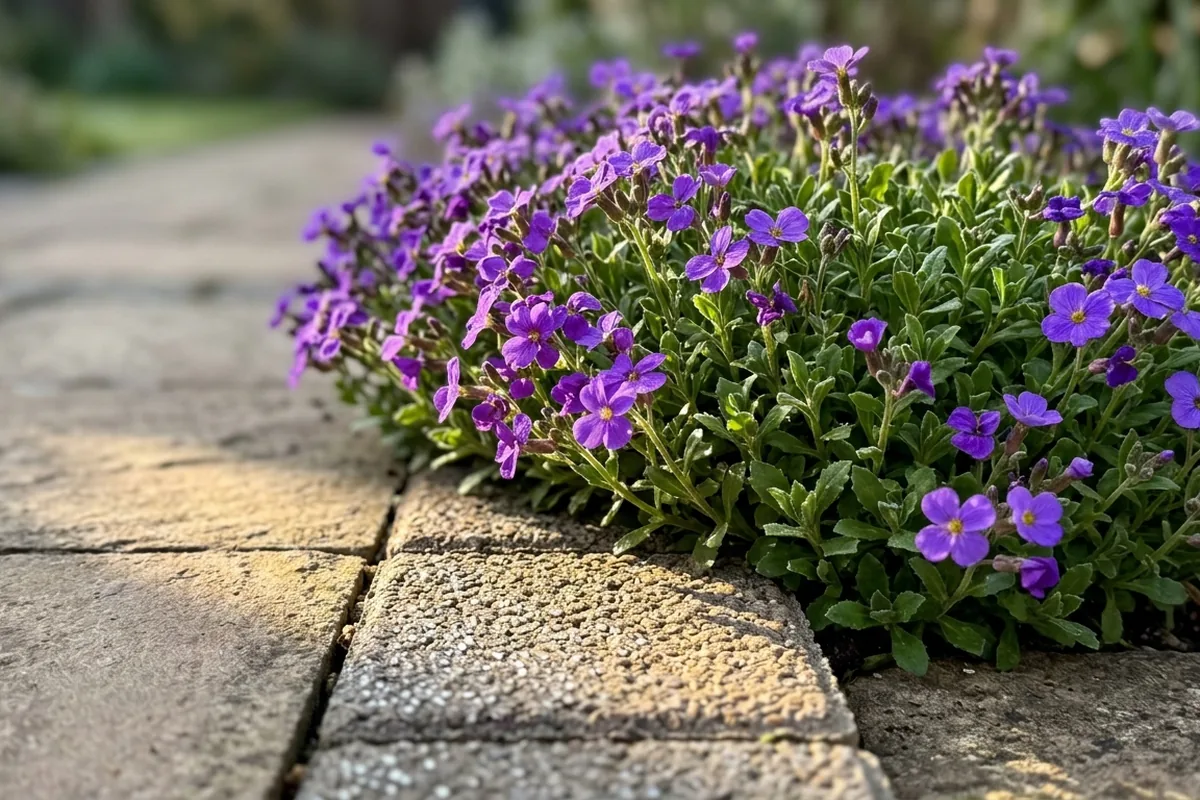
- Add edging with bite: Brick-on-edge, granite setts or chunky timber edging help guide your feet and stop gravel spilling. This is especially helpful where a path meets a lawn or patio.
- Break up long runs: Small changes in material or pattern every few metres make it easier to judge distance in low light and encourage water to drain off.
- Think about slope and drainage: Even the grippiest stone will be risky if water sits on it. Aim for a very slight fall so rain runs away rather than forming a slick film.
If your path already exists, look first at where it’s worst – often a shady stretch by a fence, or a narrow gap between house and garage. That’s the place to add a textured strip, edging or a different surface.
Keeping textured paths safe through the year
Even textured paving needs a little care to stay grippy.
- Clear algae and moss promptly, especially in shady, damp spots. A stiff brush and soapy water often go a long way; for cleaners, always follow the label and protect nearby plants.
- Sweep off leaves and petals before they turn into a slippery mulch. A quick weekly sweep in autumn can transform how secure a path feels.
- Top up loose or stabilised gravel where you can see the grid or base showing through – bare patches are where you’re most likely to skid.
- Use winter grit sparingly on stone or concrete if paths freeze. Brush off once the thaw comes so it doesn’t grind into softer materials.
If this all feels a bit much at once, start with one short section you use every day – perhaps the route from back door to bins. Once that feels safer and looks better, it’s much easier to plan the rest.
Small changes in texture and layout can turn a path you tiptoe along into one you cross without thinking, even on a wet January morning. Walk your route, notice where you hesitate, and plan one textured upgrade there first.
Reader note
The Flower Expert is an independent gardening publication. Your support helps us keep creating practical plant care guides for everyday UK readers.
This article was created with the assistance of AI and reviewed by an editor. It is intended as general gardening information, not personalised professional advice.
If you still have a question, or if something looks unclear or inaccurate, you can contact us through our contact form.
If you found this article helpful, please consider sharing it on social media or leaving a comment below with your own experience. It helps other readers too.