
The problem usually creeps up: a few blades of grass between the stones, then tufts of clover, then a mat of green where your neat gravel used to be. If your path crunches less and squelches more, or your gravel strip along a border is full of seedlings, it is time to change how that area is set up – not just keep pulling.
The quickest ways to stop weeds spreading now
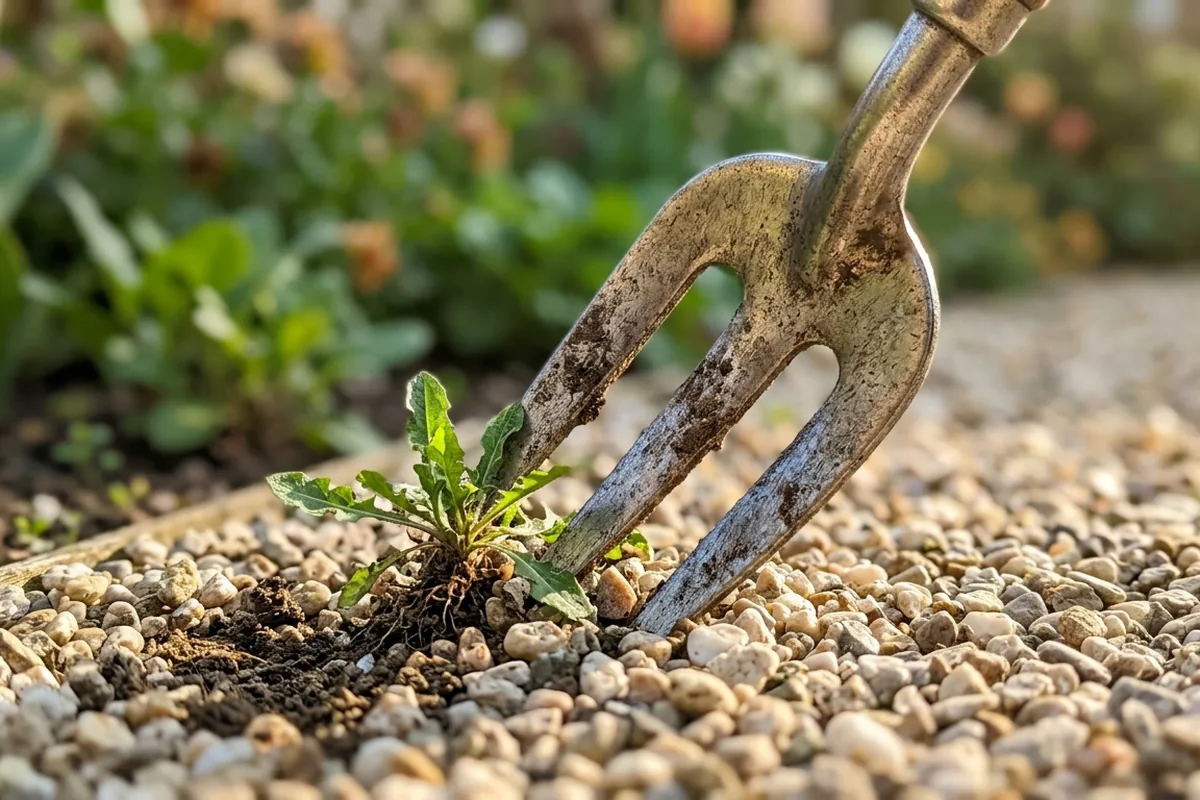
Start by dealing with what is already growing. Pull or slice out existing weeds while they are small. A sharp hand hoe or patio knife makes it easier to slide under the crown and roots. If you tug and the whole gravel layer lifts, you are hitting a thick thatch of roots – take a bit more time to loosen the area and shake the stones free.
For gravel paths and drives, keep the surface moving. Weeds root best into compacted, silty gravel. Rake the top couple of centimetres every few weeks in the growing season. You are not trying to dig, just disturb. If you hear the rake scraping the sub-base, you are going too deep.
Where weeds are pushing up through from below (dandelions, docks, couch grass), the problem is usually no membrane or a torn one. Hand-weed as much root as you can, then patch or replace the membrane once the area is clear and dry. This is the point where many people just add more gravel on top, which only hides the problem for a year or two.
If you choose to use a path weedkiller, pick one labelled for hard surfaces and follow the instructions carefully. Avoid letting it wash into borders or lawn, and do not apply before heavy rain.
How to stop new weeds getting a foothold
The aim is to starve seeds of soil, light or both. Focus on:
- A firm, clean base: beneath paths and wide gravel strips, you want compacted hardcore or well-tamped soil, not a soft, crumbly layer full of roots.
- Good-quality membrane: use a woven landscape fabric, not thin plastic that tears and traps water. Overlap joints by at least 10–15 cm.
- Enough gravel depth: 4–5 cm is usually the minimum; shallow patches invite weeds. If you can see the membrane regularly, top up.
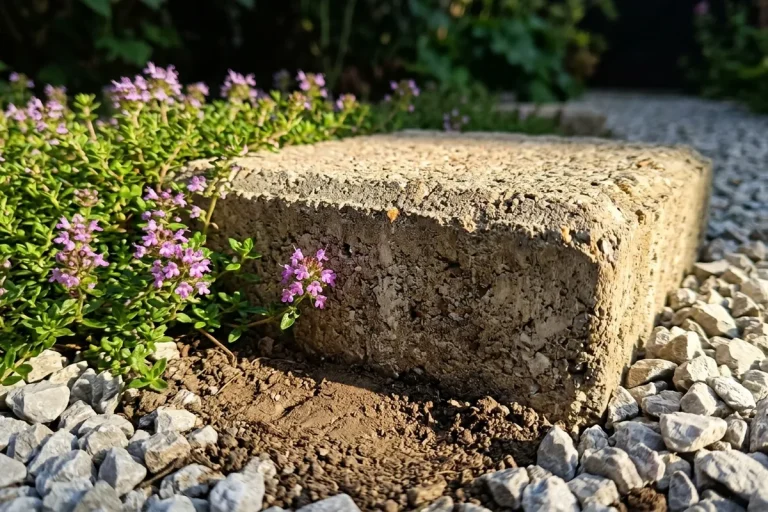
- Neat edges: where gravel meets a flower border, install an edging strip or set bricks on edge. This stops border soil washing into the stones every time it rains.
Along borders, a thin strip of gravel often becomes a seedbed because compost and mulch drift in. Before you weed again, look at how much loose soil is sitting between the stones. If there is a lot, scrape it back into the border and re-level the gravel.
Simple routines that keep gravel areas clear
Regular light attention beats a big clear-out once a year. A few minutes every couple of weeks in spring and summer makes a huge difference.
Walk your paths and gravel areas and:
- Flick out tiny seedlings with your fingers or a hand fork while the roots are threadlike.
- Brush or blow leaves off in autumn so they do not rot down into a layer of fine soil.
- After heavy rain, check for puddles. Standing water encourages moss and liverworts; you may need to improve drainage or top up low spots with fresh gravel.
- If a border plant is constantly shedding into the gravel, consider lifting and replanting it a little further back. A plant leaning over the edge after wind or rain will always drop debris where you do not want it.
If weeds keep reappearing in exactly the same patch, look more closely. The useful clue is not one weed, but the pattern: a torn membrane, a gap in edging, or a spot where soil from a bed is washing down.
Once you have the base right, a quick monthly rake and the odd hand-weed is usually enough to keep paths and gravel borders looking clean. Choose one small area today – a short stretch of path or the strip in front of a bed – and sort the base and edges properly there; it will show you how much easier the rest can be.
Reader note
The Flower Expert is an independent gardening publication. Your support helps us keep creating practical plant care guides for everyday UK readers.
This article was created with the assistance of AI and reviewed by an editor. It is intended as general gardening information, not personalised professional advice.
If you still have a question, or if something looks unclear or inaccurate, you can contact us through our contact form.
If you found this article helpful, please consider sharing it on social media or leaving a comment below with your own experience. It helps other readers too.