
Compact aubergines are perfect if you have a patio, balcony or a modest greenhouse and still want glossy purple fruits in late summer. If your plants are currently small, in pots, and you are wondering whether they will ever flower and fruit in our stop‑start UK weather, you are exactly where many people are in May and June.
The right varieties, pots and compost
Choose naturally compact varieties bred for containers and short seasons. Look for names such as ‘Patio’, ‘Baby’, ‘Mini’ or ‘F1’ types described as dwarf or container-friendly on the label. These crop better in a cool summer than large traditional types.
Use:
- Pots 25–30 cm wide for one plant
- Deep enough for a good root run, with drainage holes
- A sturdy stake or cane in place from the start
Fill with a good peat‑free, loam‑based compost, or a mix of peat‑free multipurpose with about a third added garden compost. In a small greenhouse, aubergines do well in large containers or growbags, but avoid overcrowding; air needs to move around the foliage.
Sow seeds in late winter to early spring with heat, or buy young plants from a garden centre from April onwards. Do not rush them outside: aubergines dislike cold roots and cold nights.
Light, warmth and watering for strong plants
Aubergines need consistent warmth and bright light. In the UK that usually means:
- A sunny, sheltered patio spot from late May/early June
- Or a small greenhouse / polytunnel from April, with vents opened on hot days
If the leaves are a dull green and growth is slow, it is often not warm or bright enough, rather than a feeding problem.
Watering is where many container aubergines struggle. Keep the compost evenly moist, not sopping:
- Water when the top 2–3 cm feels dry and the pot feels lighter
- If you lift the pot and it still feels heavy, wait
- Avoid a saucer full of water still there the next morning
This is the point where many people water again too soon, and roots sit in cold, wet compost. In a warm spell, patio pots can dry faster than greenhouse ones, so check each pot rather than watering everything on the same day.
Once flower buds appear, start a high‑potash liquid feed (tomato feed is fine) every 7–10 days, following the label.
Pruning, pollination and getting fruits to set
Compact aubergines do not need complicated pruning. Simply:
- Tie the main stem gently to its stake
- Remove any yellowing leaves low down to improve airflow
- Pinch out very weak side shoots so the plant puts energy into flowers and fruits
In a small greenhouse, flowers sometimes drop without forming fruit because pollinating insects are scarce. On dry days, gently tap or shake the plant or brush over the flowers with a soft paintbrush to move pollen around. In containers outdoors, bees usually do the work, but a quick tap of the stem still helps.
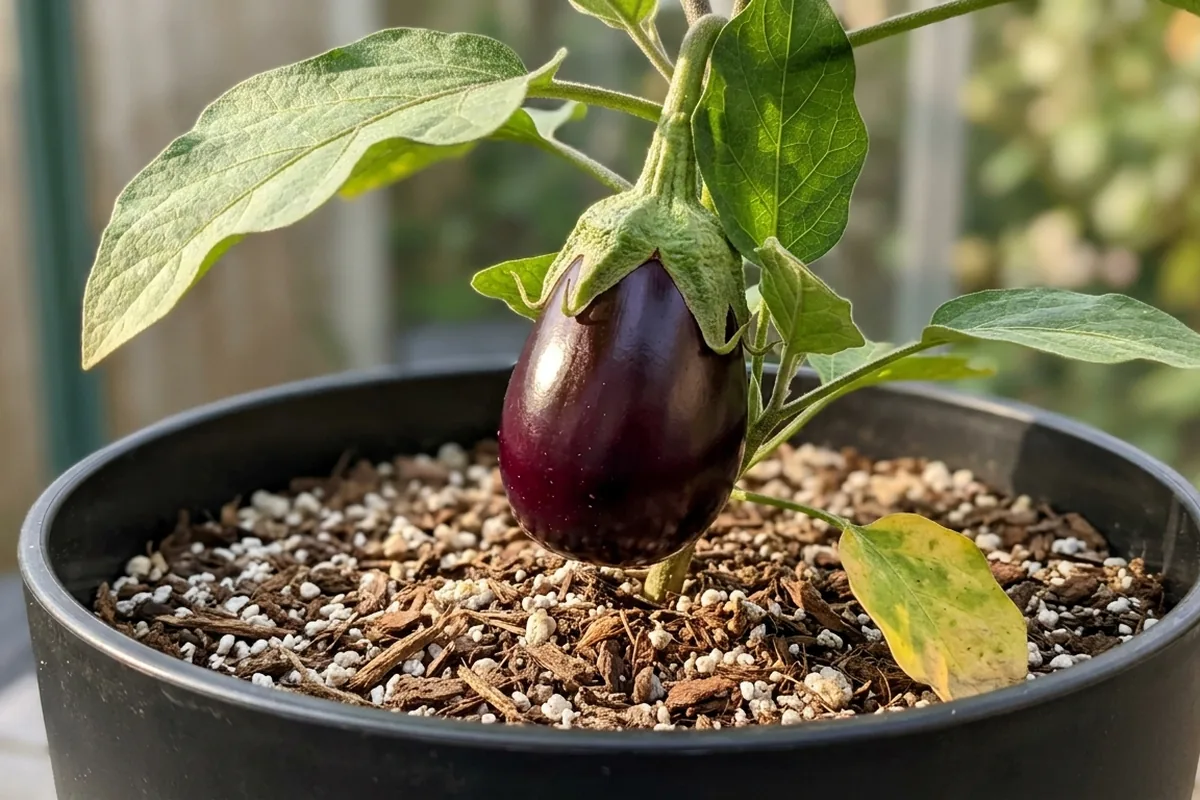
On compact varieties, aim for 4–6 fruits per plant. If it sets far more, remove the smallest so the rest can size up. Harvest when fruits are glossy and firm; if the skin turns dull, they are over‑mature and seeds will be tougher.
If you are starting this year, the most useful step is to pick a compact variety, a 25–30 cm pot and a warm, bright spot. Once those three are right, the rest is mostly steady watering and a weekly feed.
Reader note
The Flower Expert is an independent gardening publication. Your support helps us keep creating practical plant care guides for everyday UK readers.
This article was created with the assistance of AI and reviewed by an editor. It is intended as general gardening information, not personalised professional advice.
If you still have a question, or if something looks unclear or inaccurate, you can contact us through our contact form.
If you found this article helpful, please consider sharing it on social media or leaving a comment below with your own experience. It helps other readers too.