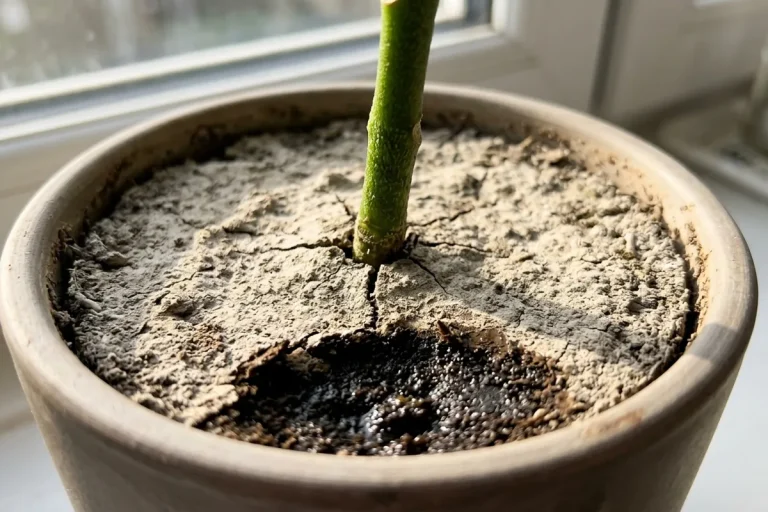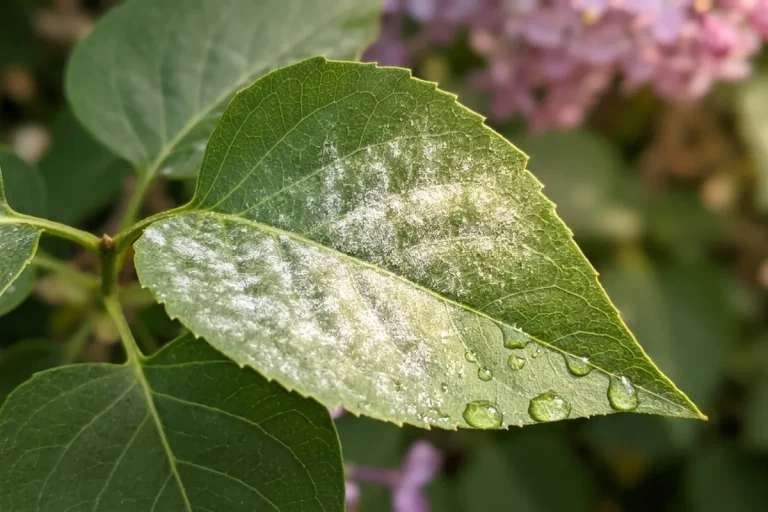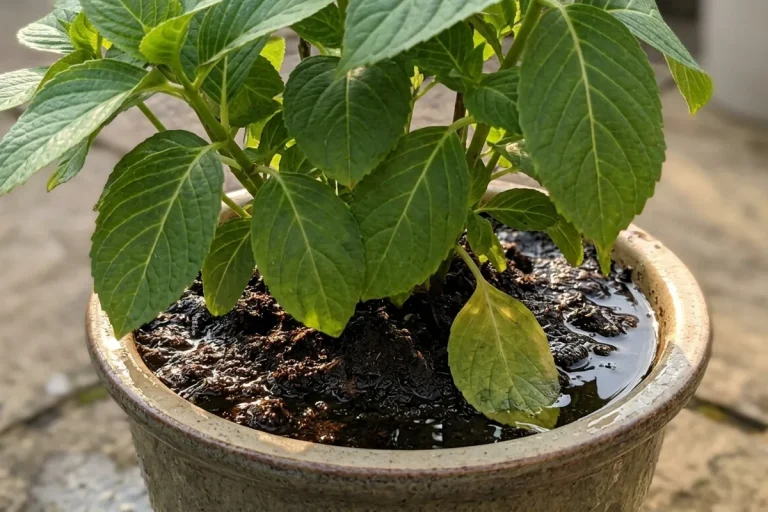

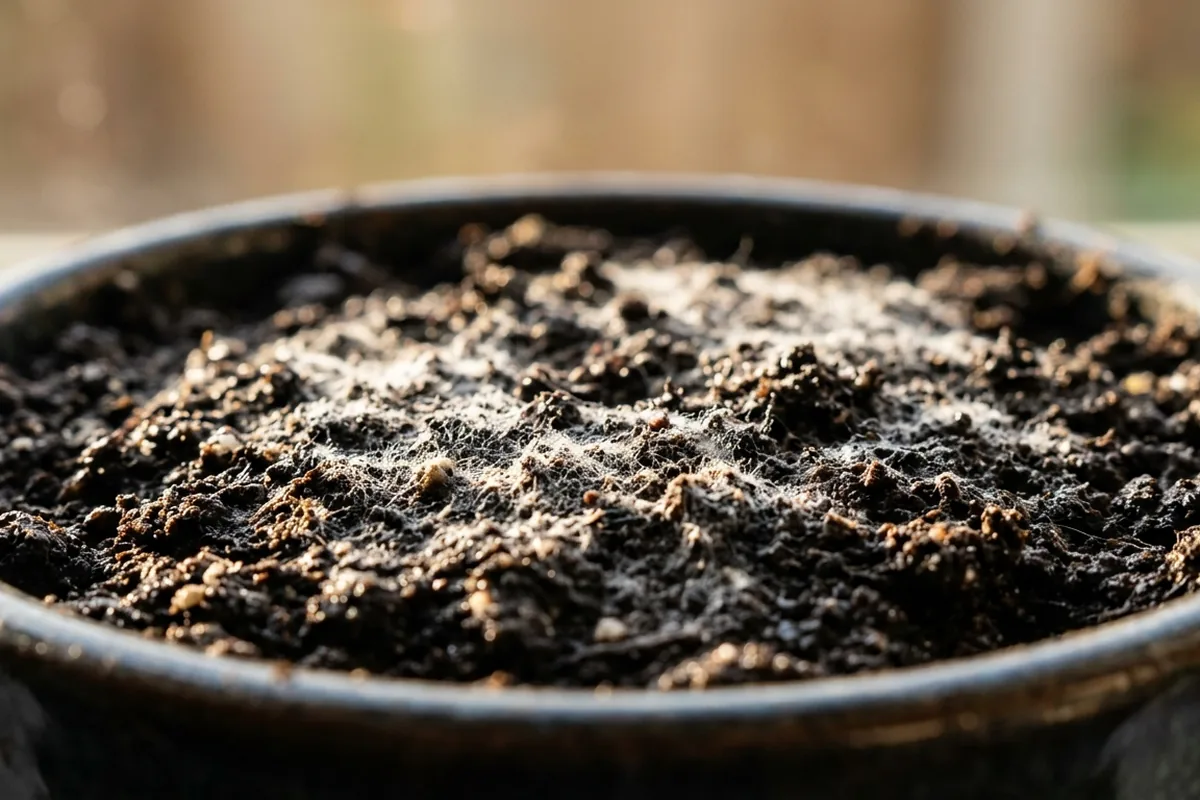
The first sign is usually a fine white fuzz on the surface of the compost, around the base of the stem or clinging to bits of bark in the pot. It often shows up on houseplants in winter, seed trays in a propagator, or patio pots after a damp spell.
If the top of the compost looks dry but the pot still feels heavy, and there’s a white film across the surface, watering again can make the problem worse.
What that white mould usually means
Most of the time, white mould on compost is harmless saprophytic fungus feeding on decaying organic matter, not on your plant. It’s very common in peat‑free mixes, barky orchid composts and seed composts kept constantly damp.
You’re more likely to see it when:
- the compost stays consistently wet
- air is still (no air movement indoors, closed propagators)
- temperatures are mild and stable
- there’s plenty of organic material to break down
On its own, this sort of mould does not usually damage roots. The real risk is that the conditions that suit the mould – soggy compost, poor air flow – are the same conditions that can lead to root rot and weak growth.
Worry more if:
- the mould is accompanied by mushy stems or a sour smell
- leaves are yellowing from the base upwards
- compost feels wet several centimetres down, not just on top
- the plant is drooping even though the pot is heavy
If this is happening on your plant, the problem is less about the mould and more about overwatering and lack of drainage.
Checks to make before you panic
Before you reach for a fungicide, do three simple checks:
- Finger test: push a finger 3–4 cm into the compost. If it’s cool and wet, wait before watering again. If only the surface is crusty and dry, you can gently loosen it.
- Weight test: lift the pot. If it still feels unexpectedly heavy, the rootball is holding water. This is the point where many people water again too soon.
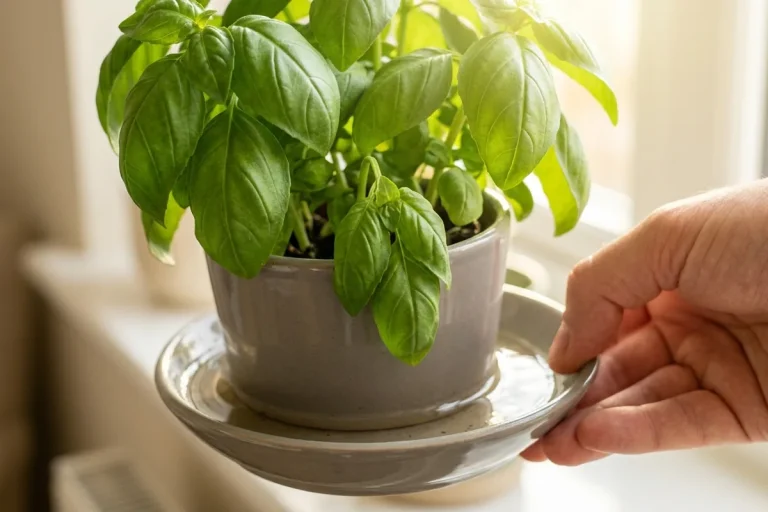
- Drainage check: look for drainage holes, a saucer still holding water the next morning, or a decorative outer pot with no way for water to escape.
For seed trays and seedlings, also look for:
- overcrowded sowings
- lids or covers left on all day, with condensation dripping back onto the compost
How to reduce white mould and protect your plants
You rarely need chemicals. Focus on improving conditions instead:
- Adjust watering: let the top few centimetres of compost dry before you water again. Water thoroughly, then allow excess to drain. Empty saucers.
- Increase air movement: move houseplants slightly away from cold windows, radiators and tight corners. Crack a window for short periods, or use a small fan in a greenhouse.
- Gently remove the mould: scrape off the top layer of affected compost with a spoon and top up with fresh, dry compost or a thin layer of horticultural grit.
- Check the pot size: a small plant in an oversized pot sits in wet compost for too long. Repot into a snugger size if the rootball is much smaller than the container.
- For seedlings: thin crowded rows, remove propagator lids once most seeds have germinated, and water from below so the surface isn’t constantly wet.
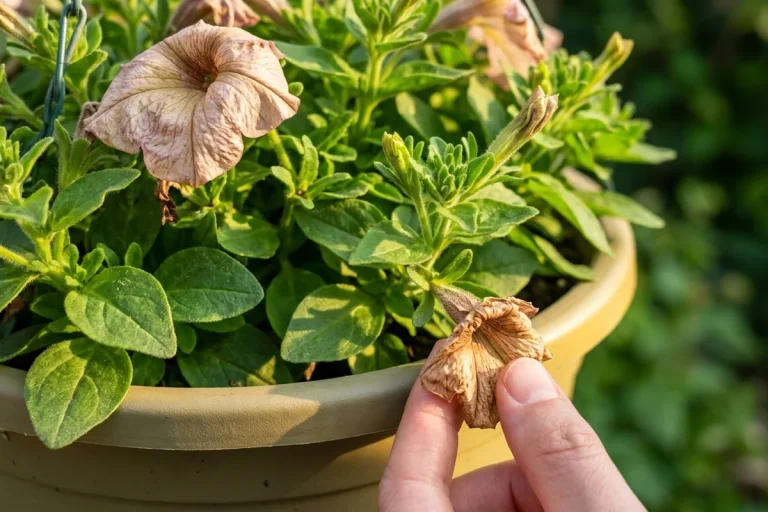
If you ever see grey, fluffy mould on stems or leaves (often on dead petals or damaged tissue), that may be botrytis rather than harmless compost mould. Remove affected material, improve ventilation and, if it spreads, check RHS advice or ask at a good garden centre for suitable treatment.
In most UK homes and gardens, white mould on compost is a sign to tweak your watering and airflow, not a reason to throw the plant away. Start with the finger test, adjust how often you water, and tidy the surface – your plants will usually respond with firmer growth and fewer fungal surprises.
Reader note
The Flower Expert is an independent gardening publication. Your support helps us keep creating practical plant care guides for everyday UK readers.
This article was created with the assistance of AI and reviewed by an editor. It is intended as general gardening information, not personalised professional advice.
If you still have a question, or if something looks unclear or inaccurate, you can contact us through our contact form.
If you found this article helpful, please consider sharing it on social media or leaving a comment below with your own experience. It helps other readers too.