
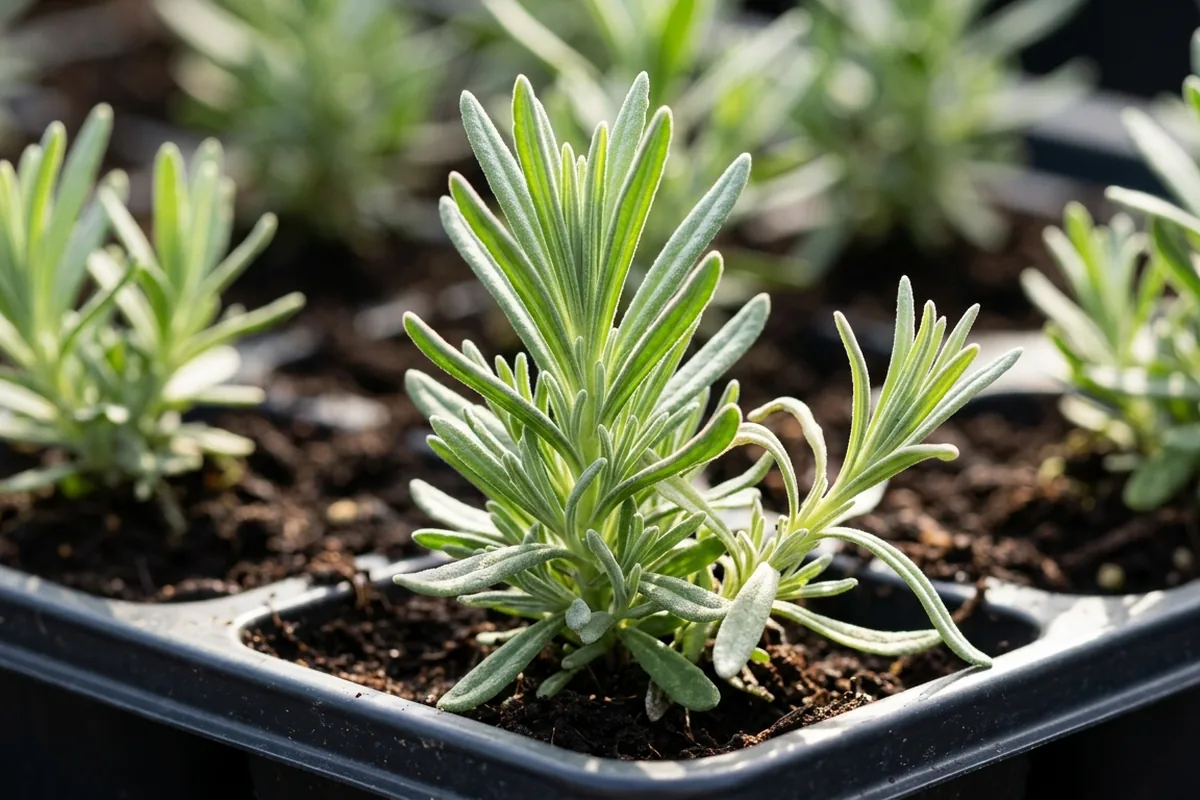
The best lavender plants start with the right seedlings. Standing in front of a bench of tiny lavenders at a garden centre, they can all look much the same – until you get them home and some romp away while others sulk or die back.
What to look for when you’re choosing
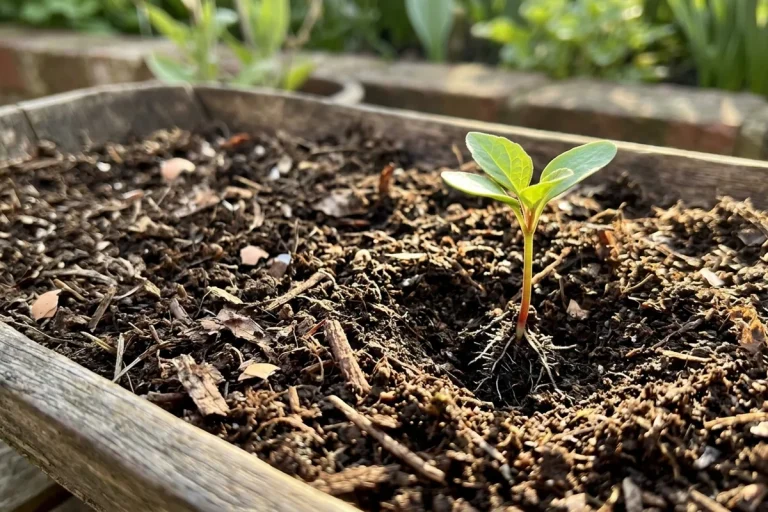
Focus less on the flowers and more on the roots, stems and overall shape. A small, sturdy plant will usually establish better than a tall, floppy one.
Here’s what to check:
- Roots: If you can, gently slide one seedling partly out of its pot. You want white, fibrous roots holding the compost together, not brown, mushy ones or roots circling tightly round and round.
- Stems: Look for short, bushy growth, not one long, stretched stem leaning towards the light. Stretched plants have often been grown too dark or too warm.
- Leaves: Healthy lavender foliage is silvery-green to grey, with a dry, slightly leathery feel. Avoid plants with yellowing leaves, black spots or a lot of dead tips.
- Compost: It should be moist but not soggy. If the pot feels unexpectedly heavy and the compost looks dark and wet, it may have been overwatered. If it’s bone dry and pulling away from the sides, that’s also a warning sign.
- Pests and damage: Check leaf undersides and stems for aphids, webbing or sticky residue, and avoid any pot with mould on the compost surface.
If you lift the pot and it still feels heavy, wait – that’s often a sign the plant has been sitting in water for too long.
Choosing the right type of lavender for your space
Before you pick individual seedlings, decide what you want them to do.
- For low, neat hedges along a path, look for Lavandula angustifolia cultivars (often sold as English lavender), such as ‘Hidcote’ or ‘Munstead’. They stay compact and cope well with UK winters.
- For larger, showier plants in a border or big pot, Lavandula x intermedia types (often called lavandin) tend to be taller with longer flower spikes and strong scent.
- For a sheltered patio or balcony, you can try French or Spanish lavender (with the “rabbit ear” bracts on top), but these are less hardy and may struggle after a cold, wet winter.
Check the label for eventual height and spread. A lavender that looks tiny in a 9 cm pot can easily reach 60–80 cm across, so do not cram them together. In a border, aim for spacing where the plants will just touch when mature, not overlap heavily.
When to buy and how to give seedlings a good start
Lavender seedlings are easiest to establish when the soil is warming up and not waterlogged – usually late spring to early summer in most of the UK.
When you get them home:
- Harden them off if they’ve been in a warm greenhouse. A few days on a bright but not windswept patio helps them adjust.
- Plant into free-draining soil or gritty compost. Heavy clay and sitting in winter wet are what kill many lavenders, not the cold itself.
- Do not be tempted to overpot. Moving from a tiny cell straight into a huge container can leave compost staying wet for too long around the young roots.
- Water in well once, then let the top of the compost dry before watering again. This is the point where many people water again too soon.
If your chosen seedling looks compact, smells fresh when you gently brush the foliage, and is growing in light, well-drained compost, you’re on the right track. Next time you pass a display of lavenders, take a moment to compare roots, stems and compost – it quickly becomes an easy habit that leads to tougher, longer-lived plants.
Reader note
The Flower Expert is an independent gardening publication. Your support helps us keep creating practical plant care guides for everyday UK readers.
This article was created with the assistance of AI and reviewed by an editor. It is intended as general gardening information, not personalised professional advice.
If you still have a question, or if something looks unclear or inaccurate, you can contact us through our contact form.
If you found this article helpful, please consider sharing it on social media or leaving a comment below with your own experience. It helps other readers too.