
Dahlias are perfect for pots when you’re short of border space but still want big, showy flowers. If you’ve brought home a knobbly tuber in a plastic bag and are now staring at your patio wondering what to do next, you’re in exactly the right place.
The simple way to plant dahlia tubers in pots
Choose the right pot first. For a single dahlia, use a sturdy pot at least 30–35 cm wide with good drainage holes. Bigger dinner-plate types are happier in 40 cm or more. Avoid narrow, tall pots that topple over once the plant is in full leaf.
Use a peat‑free, multi-purpose compost mixed with about a third grit or bark for drainage. If your compost feels heavy and claggy when wet, add more drainage material – dahlias dislike sitting in soggy compost.
1. Fill and position the pot
- Half-fill the pot with compost.
- Stand it where it will live for the summer – a sunny, sheltered spot on a patio, balcony or by a south- or west-facing wall is ideal. A heavy pot is awkward to move later.
2. Place the tuber correctly
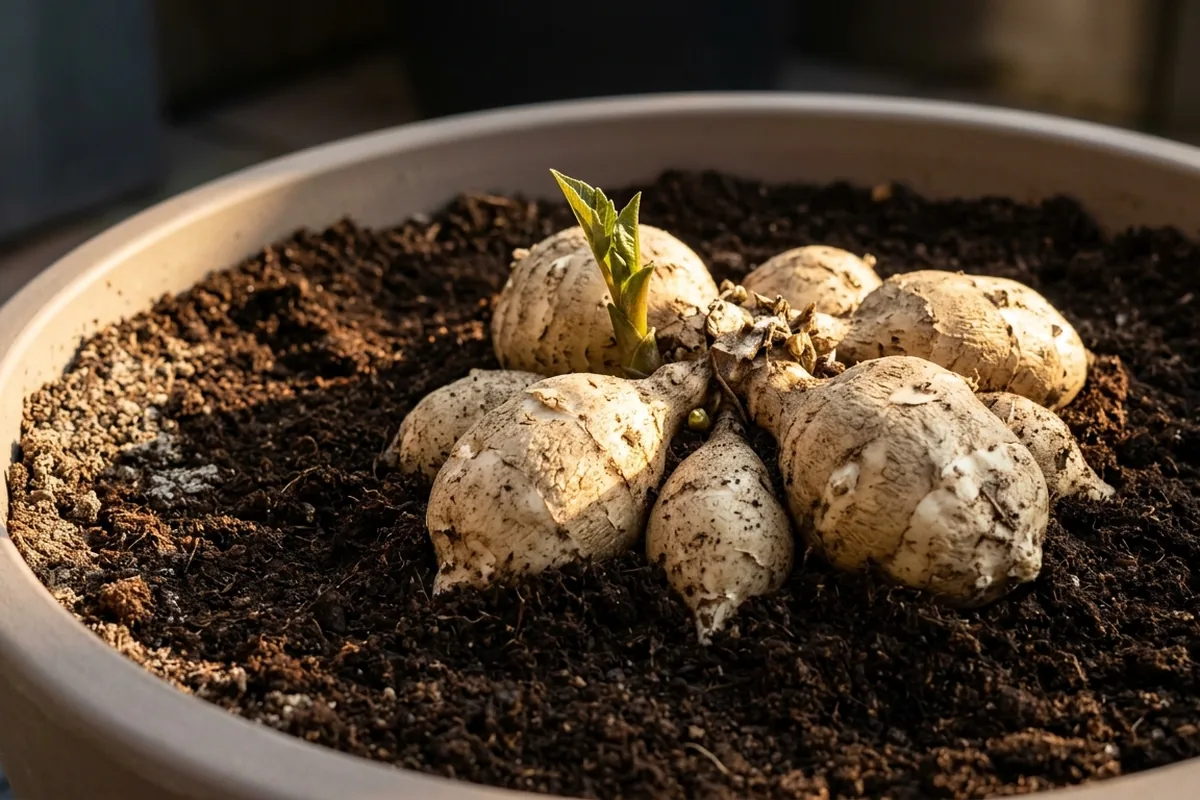
- Lay the tuber on the compost with the old stem or “eye” facing upwards.
- Spread the tuberous roots out gently like a star.
- If you can’t see a clear eye, place the thickest part where the tubers join roughly uppermost – dahlias are forgiving.
3. Cover to the right depth
- Cover with compost so the stem/eyes sit about 5–8 cm below the surface.
- Do not bury it deeply at the bottom of a deep pot; you want space for roots and drainage beneath.
4. Water once, then wait
- Water thoroughly after planting until you see a little moisture at the drainage holes, then let the pot drain completely.
- After that, hold off watering until growth appears and the top few centimetres of compost feel dry. If you lift the pot and it still feels heavy, wait.
This is the point where many people water again too soon and the tuber rots quietly in cold, wet compost.
Light, temperature and early growth
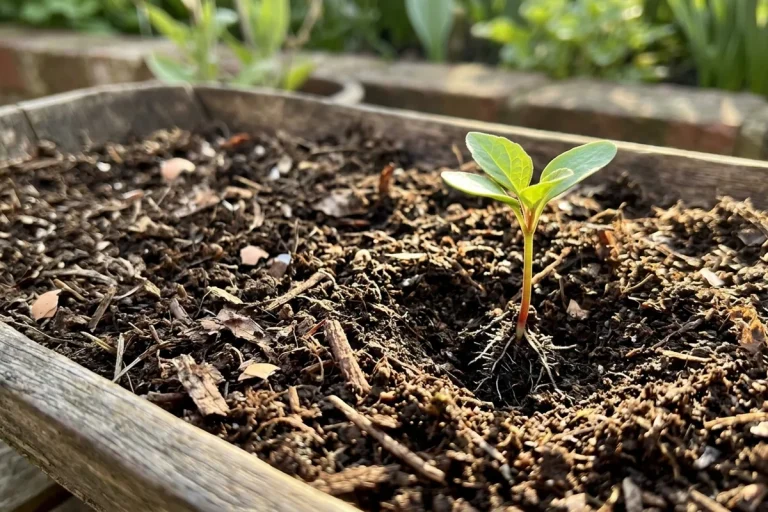
Dahlias like warmth to sprout. In a cool spring, pots can sit in a bright, frost-free spot – a porch, unheated conservatory or bright indoor windowsill away from direct radiator heat.
- If nights are still cold, keep pots inside and move them out by day to harden off once shoots appear.
- Protect young shoots from late frost with fleece or by pulling pots back under cover overnight.
Aim for at least six hours of sun in summer. On a shaded patio, you’ll often get tall, leafy plants with fewer flowers.
Feeding, staking and summer care in small spaces
Once shoots are 10–15 cm tall:
- Top up compost if any tuber is exposed.
- Pinch out the growing tip once to encourage bushier growth in a confined space.
- Add a short stake or cane early, before the plant becomes top-heavy and wind rocks the stem.
From late spring, start feeding every couple of weeks with a high-potash liquid feed (check the label – tomato feed often works well). Avoid overdoing nitrogen-rich feeds, which push leaves at the expense of flowers.
In a dry summer spell, patio pots can dry out very fast. Before you water again, push a finger 3–4 cm into the compost. If it’s still cool and damp below the surface, wait. If a saucer is still holding water the next morning, empty it – constant wet feet are a quick route to rot.
Deadhead spent blooms right back to a strong leaf joint to keep pots flowering into autumn, or until the first frost blackens the foliage.
Planting one pot this way now is enough to learn the feel of dahlia compost – the weight of a well-watered pot, how quickly it dries, and how the plant responds. Once you’ve seen one tuber through a season, adding a few more to your patio feels straightforward rather than risky.
Reader note
The Flower Expert is an independent gardening publication. Your support helps us keep creating practical plant care guides for everyday UK readers.
This article was created with the assistance of AI and reviewed by an editor. It is intended as general gardening information, not personalised professional advice.
If you still have a question, or if something looks unclear or inaccurate, you can contact us through our contact form.
If you found this article helpful, please consider sharing it on social media or leaving a comment below with your own experience. It helps other readers too.