
The problem usually starts quietly: a neat, bushy lavender that suddenly has a bare, brown middle, with flowers only on the tips. If your plant is all twig and no softness, you’re seeing lavender going woody.
Why lavender turns woody – and what you can do
Lavender is a small woody shrub, not a herbaceous perennial. As it ages, the lower stems naturally turn brown and hard. If the plant is left to grow and flower unchecked, all the leafy growth moves to the outer edges and top, leaving a bald, woody centre.
Three things speed this up:
- No regular pruning: flowers are left on, and stems keep stretching.
- Cutting back too hard into old wood: lavender rarely shoots from bare, brown stems.
- Poor light or congestion: plants shaded by others get leggy, reaching for the sun.
Once a lavender is mostly woody with very little green, it is often past saving. The useful clue is not one stem, but the overall shape: if there’s still a good ring of green growth, you can usually bring it back into better shape over a couple of seasons.
How to prune lavender so it stays bushy and flowers well
The key is little and often, never brutal. Do not rush to hack it to a mound in one go.
1. Right after flowering (late summer):
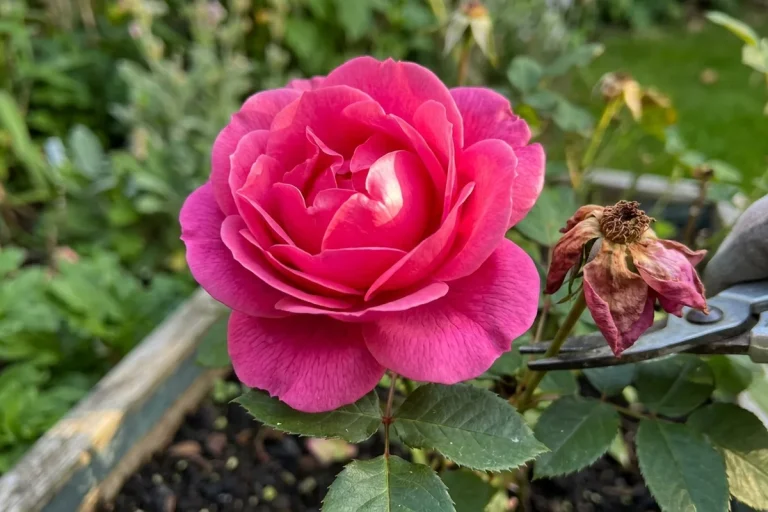
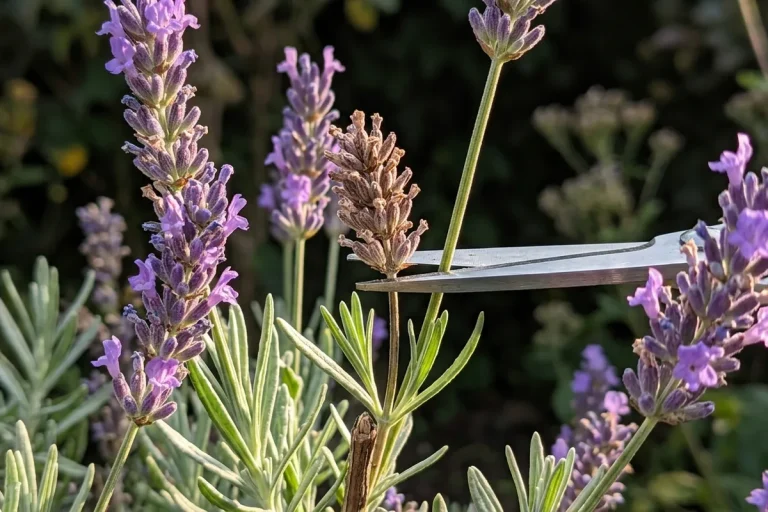
- Shear off all the spent flower stalks.
- Take another 2–3cm of leafy growth, shaping into a low dome.
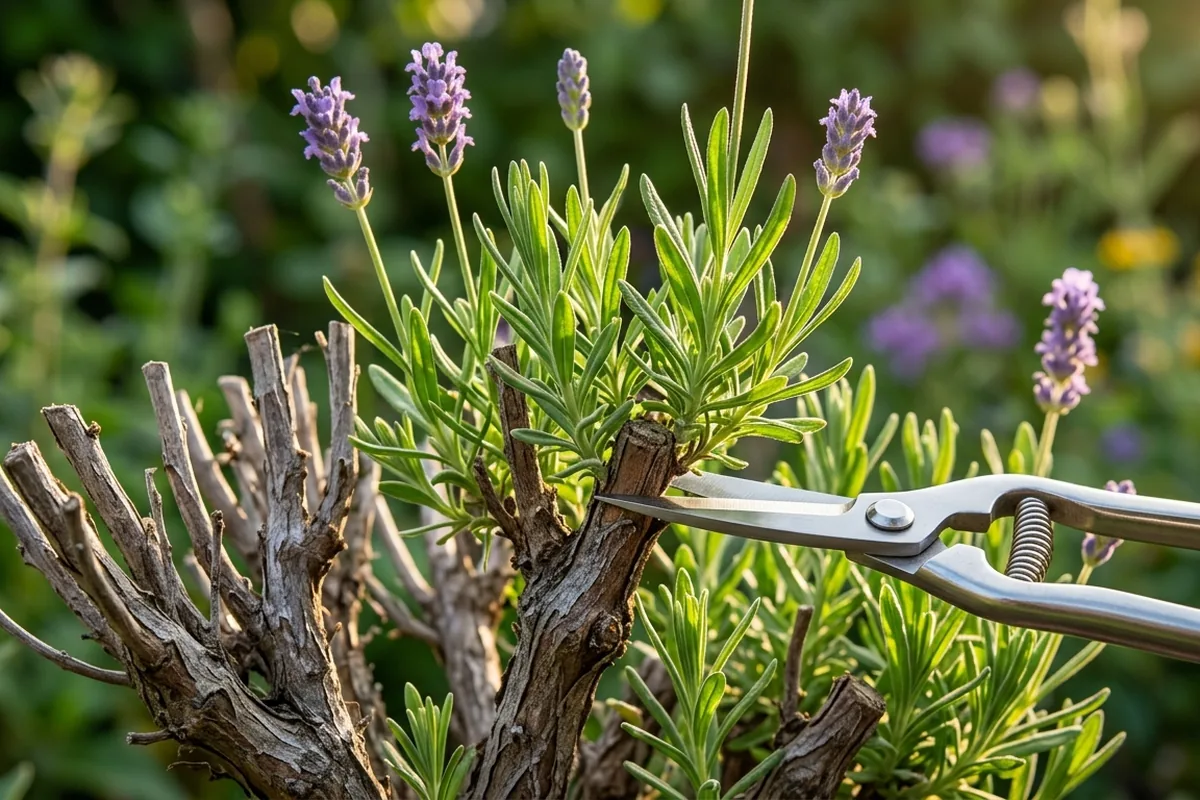
- Do not cut back into bare brown wood – always leave some green on every stem.
2. Light spring tidy (April, in most of the UK):
- Check for winter dieback and snip out dead, grey stems.
- Lightly trim to restore the dome, again staying in the green growth.
- If you lift a stem and it snaps crisply with no green inside, it’s dead – remove it.
3. For already-leggy plants:
- Reduce by a third this year, staying in leafy stems.
- Repeat the same again next year, gradually lowering the plant.
- Accept that very old, gappy plants are usually best replaced; take cuttings first if you like the variety.
This is the point where many people either don’t prune at all, or they cut right down to the woody base and the plant never recovers. Aim for a rounded cushion, about knee-high for English lavender, not a tall, straggly bush.
Growing conditions that keep lavender flowering
Good pruning only works if the plant is happy where it is.
- Sun: Lavender needs full sun – aim for at least half the day. A bright but cold north-facing wall in the UK often isn’t enough; stems stretch and woody growth shows sooner.
- Soil and drainage: It prefers poor, free-draining soil. On heavy clay or in a spot that stays wet after rain, roots sulk and top growth becomes sparse. In borders, add grit and plant on a slight mound. In pots, use a gritty compost and ensure drainage holes are clear.
- Watering in pots: Let the top few centimetres of compost dry before watering again. If the pot still feels heavy when you lift it, wait. A saucer still holding water the next morning is a warning sign.
- Feeding: Avoid rich, high-nitrogen feeds. They encourage soft, sappy growth that flops and woody bases that show quickly. A light, general feed in spring is usually enough, if anything.
- Spacing: Give each plant air and light. A lavender crammed in a mixed border, shaded by taller perennials, will stretch and go woody faster.
If your current lavender is more stick than flower, use it as a guide: improve the site, then plant a new one at the right spacing and start the gentle, regular pruning from its first year. In a few seasons you’ll have a low, scented mound that flowers well and stays young-looking for much longer.
Reader note
The Flower Expert is an independent gardening publication. Your support helps us keep creating practical plant care guides for everyday UK readers.
This article was created with the assistance of AI and reviewed by an editor. It is intended as general gardening information, not personalised professional advice.
If you still have a question, or if something looks unclear or inaccurate, you can contact us through our contact form.
If you found this article helpful, please consider sharing it on social media or leaving a comment below with your own experience. It helps other readers too.