
The key to long‑lived lavender is timing your pruning so it pushes out fresh, leafy growth without cutting back into old, bare wood. If your plant is getting woody in the middle, flopping open, or flowering less each year, the pruning has probably been a bit too light, too late – or missed altogether.
The best time to prune lavender in the UK
For strong new growth, think two main pruning moments:
- Late summer (main prune):
As soon as the main flush of flowers fades – usually late July to early September, depending where you are – is the ideal time. Do not wait until the stems are brown and wintry; you want the plant still actively growing.
- Early spring (light tidy):
Around March or early April, when frosts are easing and you can see new shoots starting. This is not a big haircut, more a gentle neatening.
If your lavender is in a windy or exposed spot, lean towards earlier in late summer so it has time to regrow a cushion of foliage before winter. If you lift the pot and it still feels heavy after rain, wait for a drier spell – pruning into cold, wet weather can set the plant back.
How to prune without cutting into old wood
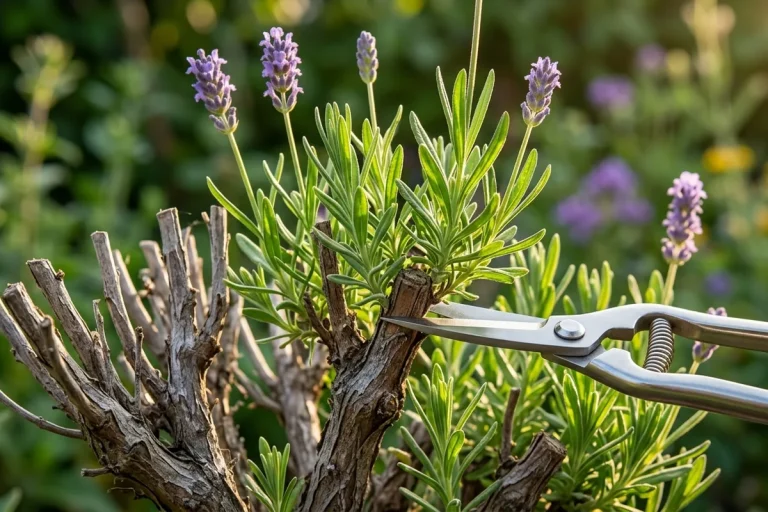
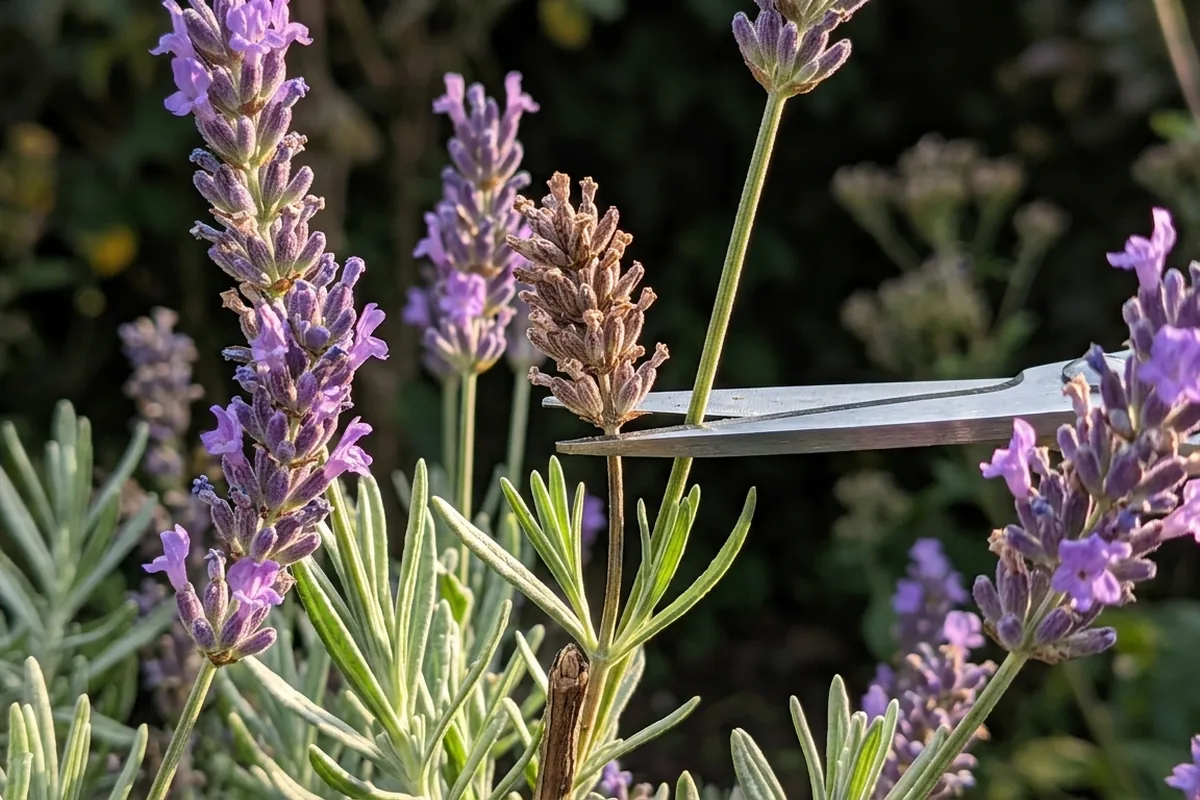
Lavender hates being cut into bare, brown, woody stems that have no green shoots. New growth usually comes from just below the leafy part, so your cuts should sit comfortably in that zone.
In late summer:
- Shear back the spent flower stems and soft growth, shaping into a neat mound.
- Aim to remove about one-third to one-half of the current season’s growth.
- Stop where you still see leaves on the stem – do not go down into completely leafless wood.
- Check the overall shape from all sides; a lopsided plant will only get worse next year.
In early spring:
- Look closely for tiny new shoots along the stems.
- Snip off any dead tips, winter damage or straggly stems, again staying above the bare wood.
- If you’re unsure, take less, not more. You can always trim again lightly in a week or two when new growth is clearer.
If this is happening on your plant – green around the edges, woody and gappy in the middle – it usually means pruning has been too high and too gentle for several years.
What to do with old, woody lavender
Older plants with thick, knobbly bases and a “doughnut” of growth around the outside are hard to rescue fully, but you can often improve them:
- In late summer, cut back a little harder on one section only, down to just above any visible shoots on the wood. Leave the rest of the plant less pruned. If that section responds well next year, you can repeat on another section.
- Avoid cutting everything back to bare stumps in one go; many plants never recover from this.
- Consider taking cuttings from healthy, non-flowering shoots in late summer. If the old plant doesn’t respond, you’ll have replacements ready.
French and Spanish lavenders (with the “rabbit ear” bracts) are generally less hardy and less forgiving than English lavender. Be especially cautious about hard pruning these in cold areas; a light summer trim and very gentle spring tidy is usually enough.
Once you’ve got the rhythm – a proper trim after flowering, a light tidy in spring, and no cutting into dead wood – lavender often stays bushy and floriferous for many years. Before you reach for the secateurs, have a slow look at where the green growth stops: that line is your guide.
Reader note
The Flower Expert is an independent gardening publication. Your support helps us keep creating practical plant care guides for everyday UK readers.
This article was created with the assistance of AI and reviewed by an editor. It is intended as general gardening information, not personalised professional advice.
If you still have a question, or if something looks unclear or inaccurate, you can contact us through our contact form.
If you found this article helpful, please consider sharing it on social media or leaving a comment below with your own experience. It helps other readers too.