
The simplest way to get more flowers from many garden plants is to remove the ones that have finished. If your pots of petunias, geraniums or cosmos started well but are now mostly brown heads and fewer new buds, this is exactly the moment when deadheading makes a difference.
How to deadhead so the plant actually reblooms
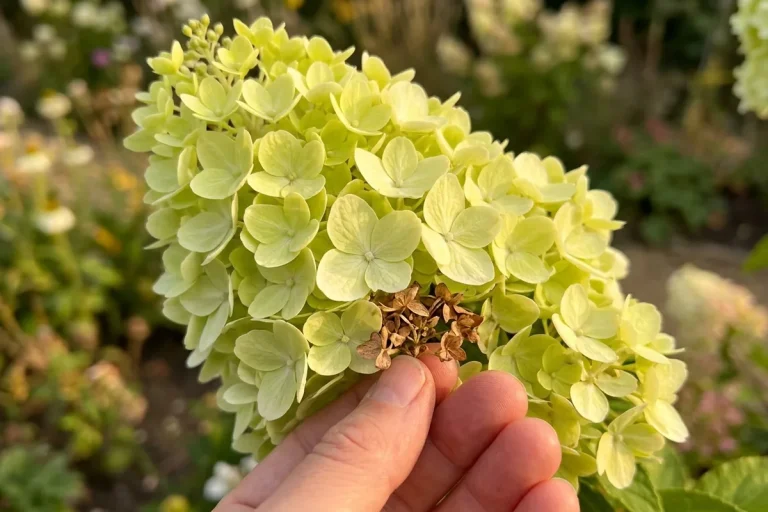
Deadheading works because you stop the plant putting energy into seeds and nudge it back into making more buds instead. The key is where you cut.
For most bedding plants and perennials (petunias, dahlias, cosmos, rudbeckia, penstemon, salvias):
- Follow the spent flower back to the first strong leaf or side shoot.
- Cut or pinch just above that leaf, not halfway along a bare stem.
- Remove the whole flower head, including the swollen seed pod underneath, not just the petals.
For clump-forming perennials (geraniums, nepeta, hardy cranesbills), you can often shear the whole clump lightly after the first flush, then water and feed, and they usually push up fresh growth and flowers.
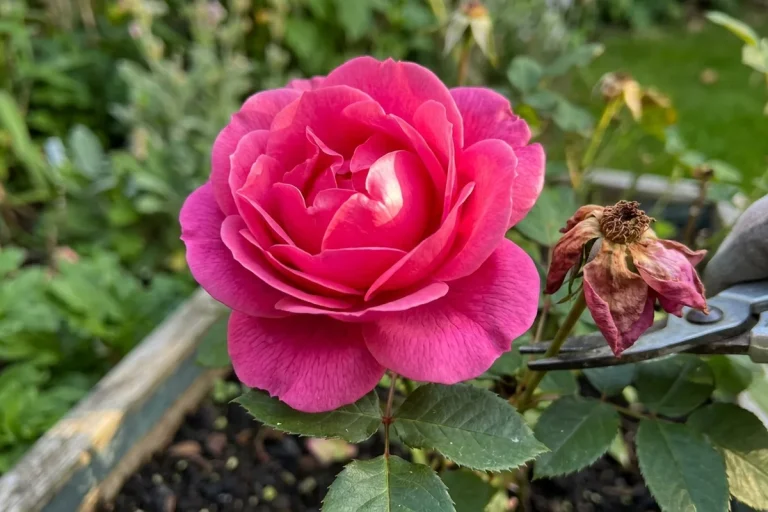
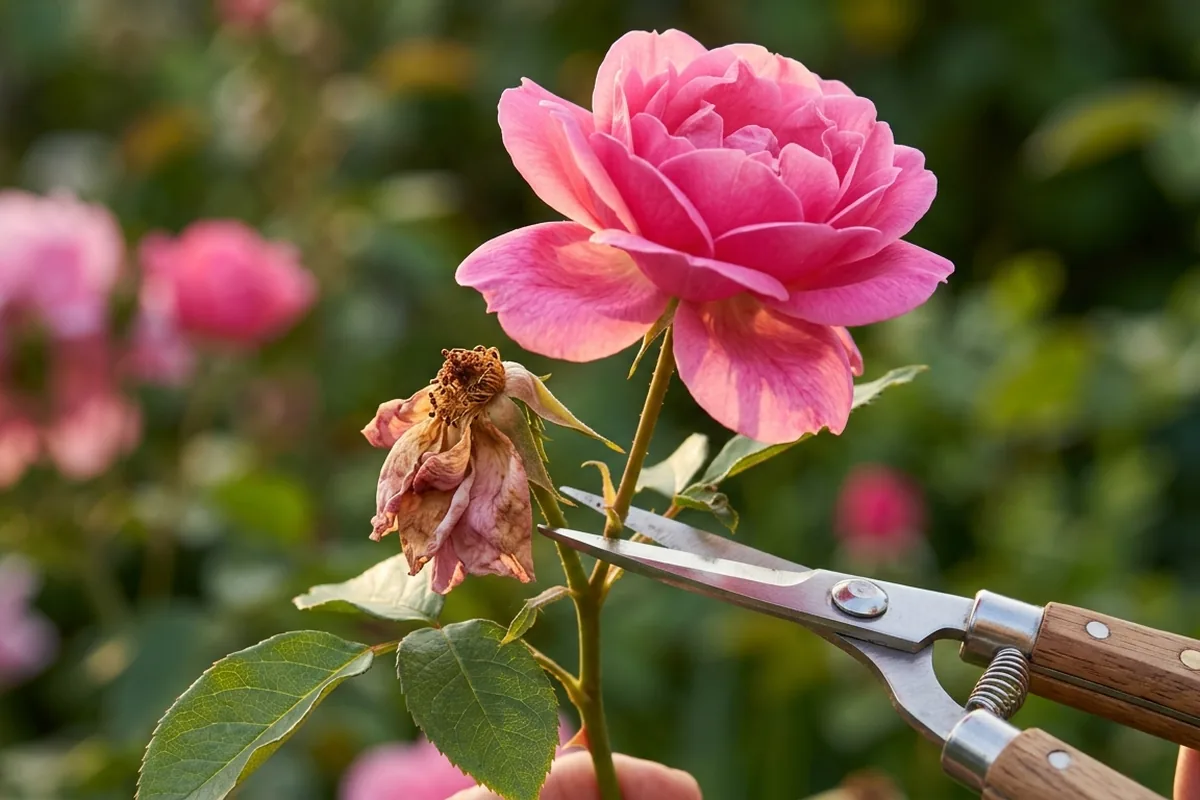
Roses need a touch more care. For repeat-flowering roses:
- Cut the dead bloom back to the first outward-facing leaf with 5 leaflets.
- Angle the cut slightly away from the bud so water can run off.
- Avoid leaving a short, bare “peg” – it tends to die back.
If you are unsure, look at the stem: the useful clue is not one flower, but how the buds are arranged. On a stem with several buds, you can often remove individual spent ones and leave the tight buds below.
When, how often, and what to use
Deadhead little and often through the flowering season. A quick check with your morning tea, or as you walk past the pots in the evening, is usually enough.
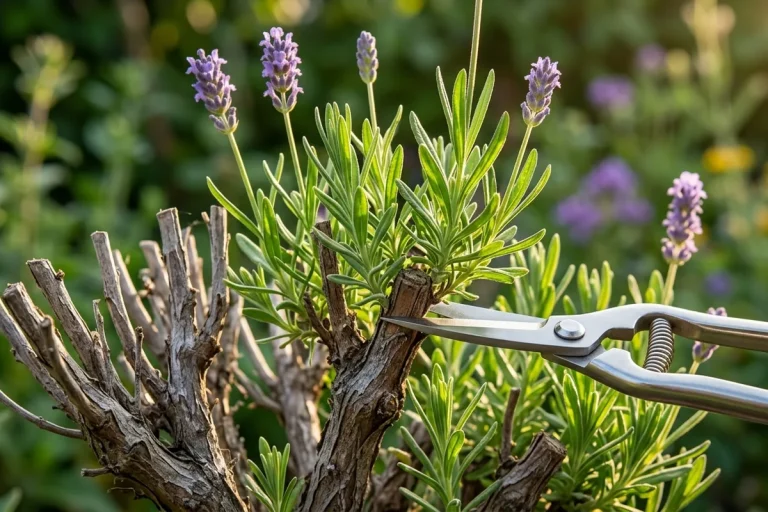
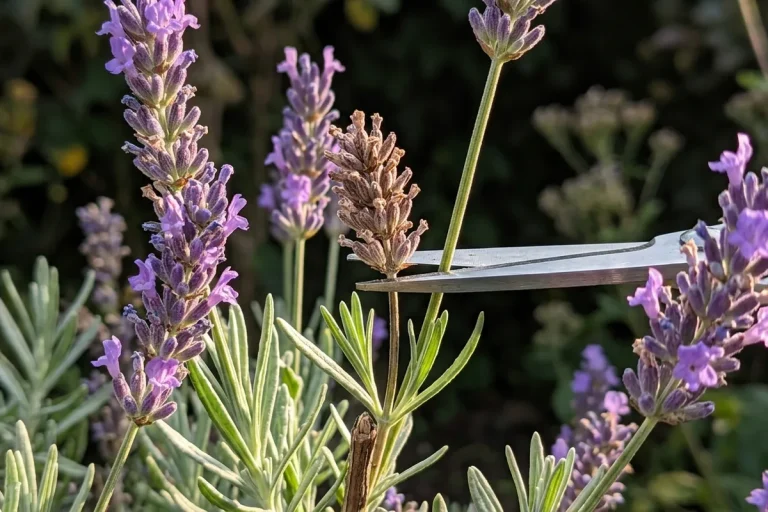
- Use sharp, clean scissors or secateurs for anything with a firm stem (roses, dahlias, penstemons).
- Pinch soft-stemmed plants (petunias, marigolds, cosmos) between finger and thumb if the stem snaps cleanly.
- If the compost is very dry and the plant is wilting, water first, deadhead later – a stressed plant is easier to damage.
If you lift a patio pot and it still feels heavy from yesterday’s rain, wait before watering again; deadheading will help, but soggy roots will not.
Some plants are better left alone. Do not deadhead:
- Ornamental grasses
- Plants grown for decorative seed heads (alliums, nigella, honesty)
- Single-flush roses grown for hips
Common deadheading mistakes to avoid
The most common problem is only pulling off the petals. It looks tidier, but the seed pod is still there, so the plant thinks its job is done.
Also avoid:
- Leaving long bare stalks that flop over other plants.
- Cutting too low into woody stems on roses and shrubs.
- Deadheading when you want hips or seeds for wildlife.
After a good deadheading session, give containers a light feed with a liquid fertiliser in the next watering (check the label for dose). In borders, a thin layer of compost and a thorough soak in dry weather can be enough.
If the plant looks worse after every “fix”, stop changing several things at once. Deadhead, adjust watering, then wait a week to see how it responds.
A few minutes spent removing spent blooms every few days can turn a tired display back into a generous one. Start with one pot or one border section today and you will quickly see which plants reward you most for the effort.
Reader note
The Flower Expert is an independent gardening publication. Your support helps us keep creating practical plant care guides for everyday UK readers.
This article was created with the assistance of AI and reviewed by an editor. It is intended as general gardening information, not personalised professional advice.
If you still have a question, or if something looks unclear or inaccurate, you can contact us through our contact form.
If you found this article helpful, please consider sharing it on social media or leaving a comment below with your own experience. It helps other readers too.