
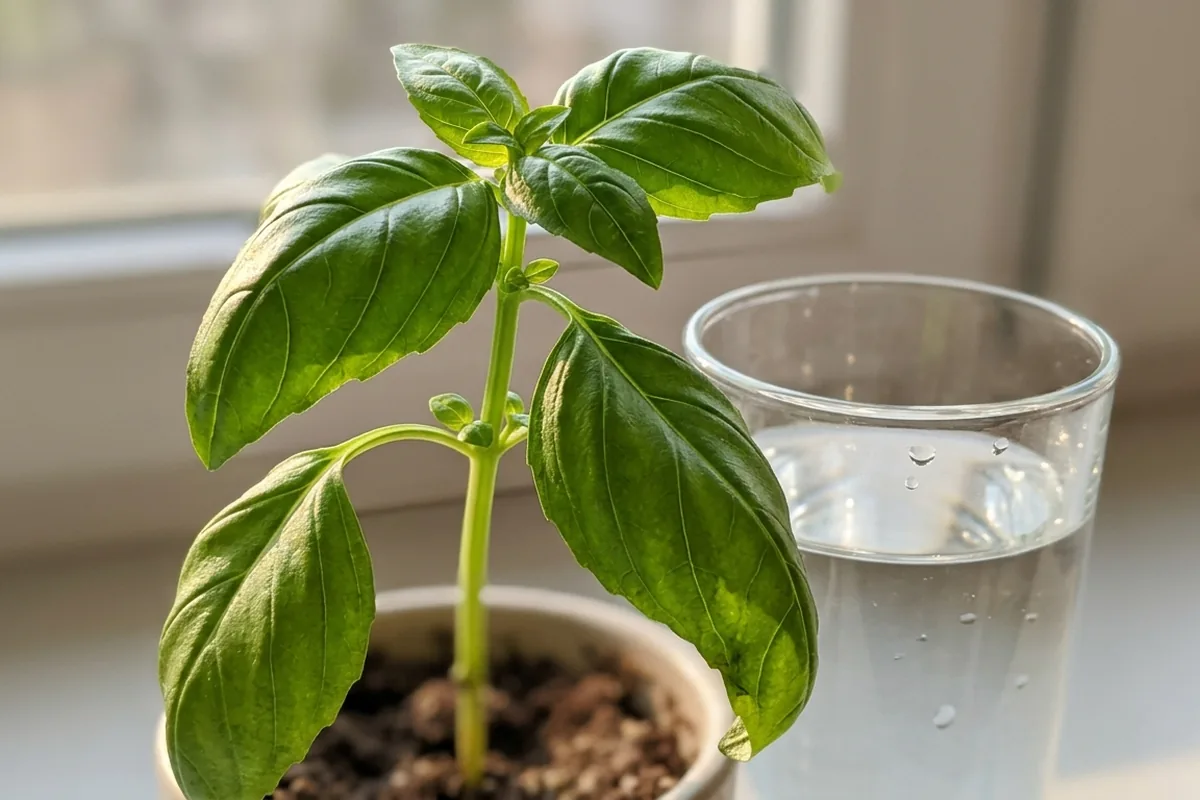
The problem usually shows as basil that looks perky in the morning, then droops and flops by late afternoon on a bright kitchen windowsill. Sometimes the leaves curl and crisp at the edges, even though you’re watering often.
The quick changes that stop the wilting
Basil loves warmth and light, but full, hot sun through glass plus dry indoor air will make it lose water faster than the roots can supply it.
Start with three simple tweaks:
- Move the pot slightly back from the glass so it still gets bright light, but not the fiercest midday sun focused through the window. Even 20–30 cm can make a difference.
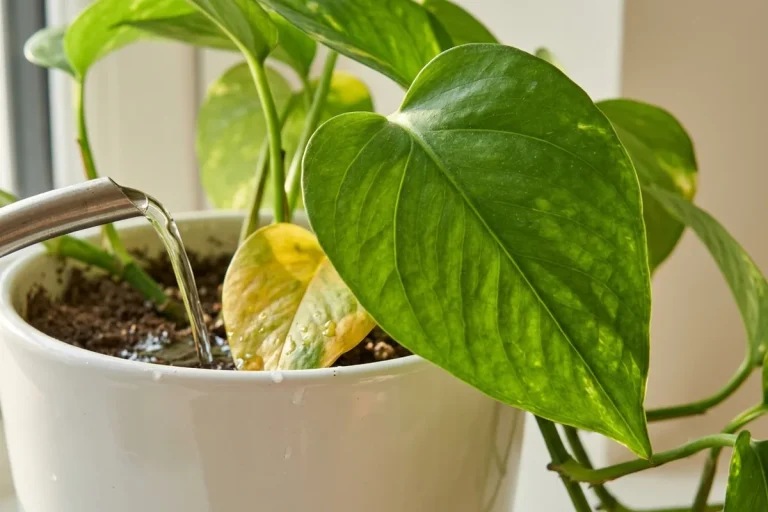
- Water thoroughly, then wait. Water until it runs out of the drainage holes, then let the pot drain fully. If the saucer is still holding water the next morning, tip it away and water less next time.
- Check the compost below the surface. Push a finger 3–4 cm down. If it feels cool and damp, do not water yet, even if the top looks dry. This is the point where many people water again too soon.
If the plant perks up again in the evening or overnight, it’s usually heat and water stress combined, not an instant disaster.
Pot, roots and kitchen conditions
Supermarket basil is often overcrowded in one small pot, which dries quickly on a sunny sill.
Check these points:
- If the pot is packed with stems and roots circling the bottom, split the clump into 2–3 smaller pots with fresh peat‑free compost.
- Choose a heavier, non‑metal pot; thin plastic can overheat and dry very fast on a bright sill above a radiator.
- Keep basil away from direct blasts of hot air from an oven, hob or kettle, and from cold draughts around window frames.
If you lift the pot and it still feels surprisingly heavy, wait. Wilting plus heavy, wet compost can mean the roots are struggling for air rather than short of water.
Daily care rhythm that keeps basil upright
Aim for even moisture and gentle sun, not extremes.
- Let the top couple of centimetres dry before you water again.
- In very bright, hot weather, give a light morning mist around (not on) the leaves to lift humidity, but avoid keeping foliage wet late in the day to reduce the risk of fungal problems.
- Pinch out the top pair of leaves regularly to encourage bushier growth and stop the plant going tall, thin and floppy.
- If leaves are yellowing from the bottom and growth is weak, feed lightly with a dilute liquid herb feed every 2–3 weeks in the growing season, following the label.
If your windowsill is scorching in summer, consider giving basil bright, indirect light instead – for example, behind a sheer blind or on a nearby worktop – and grow a tougher herb like rosemary on the actual sill.
Once you’ve balanced light, watering and pot size, basil usually settles quickly. Watch how fast the compost dries over a few days and adjust from there; one careful check with your finger will tell you far more than the colour of the surface.
Reader note
The Flower Expert is an independent gardening publication. Your support helps us keep creating practical plant care guides for everyday UK readers.
This article was created with the assistance of AI and reviewed by an editor. It is intended as general gardening information, not personalised professional advice.
If you still have a question, or if something looks unclear or inaccurate, you can contact us through our contact form.
If you found this article helpful, please consider sharing it on social media or leaving a comment below with your own experience. It helps other readers too.