
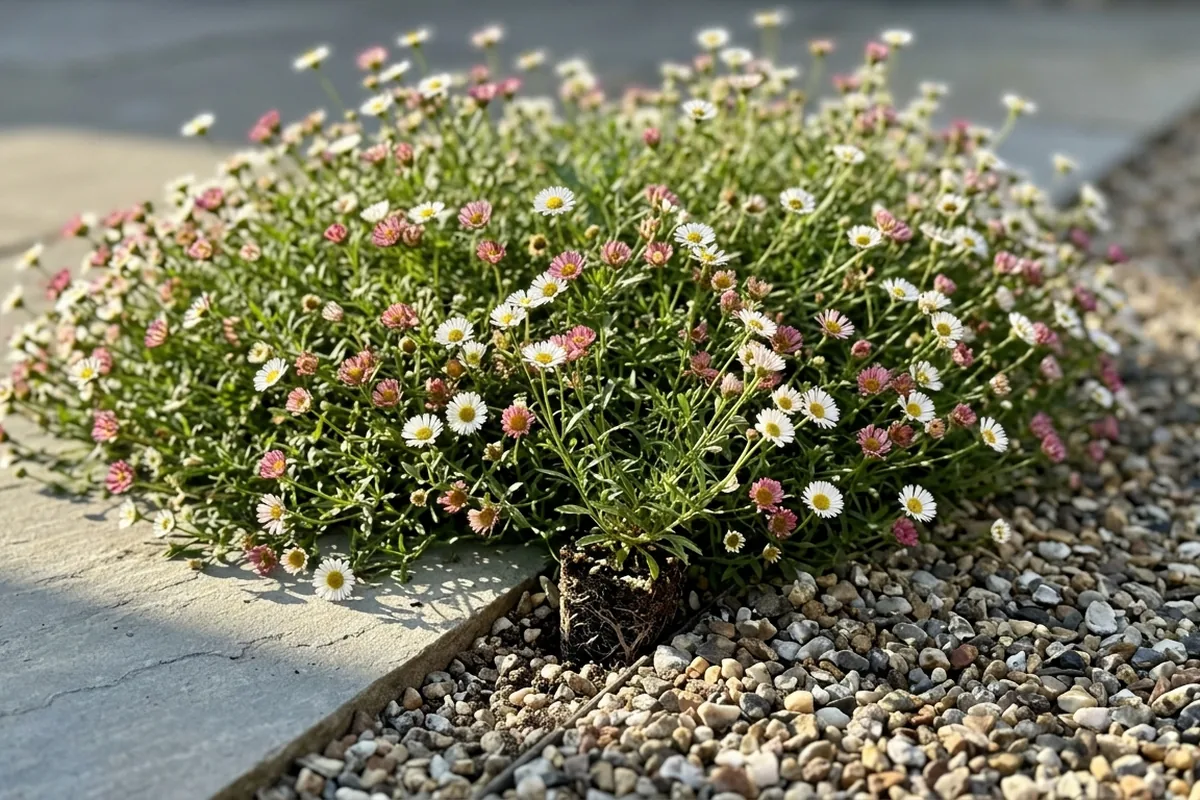
Erigeron karvinskianus (Mexican fleabane) is the little daisy that appears to grow out of stone itself – between paving slabs, from old walls and along gravel edges. If you’re looking at a bare patio, a stark retaining wall or a flat, grey path and wishing it looked softer and more lived‑in, this is the plant you’re after.
Where and how to plant for that ‘self-seeded’ look
Choose a spot that is sunny or lightly shaded and reasonably well-drained. It copes with poor, stony ground but dislikes sitting in cold, wet compost all winter.
For patios and paving:
- Between slabs: Brush out any moss and loose debris. Scrape a little of the sand or soil from the gap to make a pocket about 3–4 cm deep. Push in a small plug plant or rooted cutting, then firm in with a gritty compost mix. Water once to settle. If you lift the slab edge and it all feels soggy underneath, improve drainage with a handful of grit before planting.
- Along edges: Plant at the outer edge of paving where rain naturally runs off. Space roughly 20–30 cm apart; it will knit together over a couple of seasons.
For walls:
Look for gaps in mortar or pockets of old soil where moisture collects but water can drain away.
- Tuck small plants or seedlings into crevices, using a mix of garden soil and grit pressed in around the roots.
- Water gently so you don’t wash the compost straight back out. A small watering can with a fine rose is easier than a hose here.
For gravel paths:
- Rake back the gravel to reveal the soil or hardcore underneath.
- Make a shallow hole and add a little compost if the base is very hard.
- Plant slightly deeper than you would in a border so the crown is just level with the gravel, then pull the gravel back loosely around the plant.
A quick finger check into the planting pocket is more useful than the look of the surface – gravel often looks dry even when the soil beneath is still damp.
Choosing plants and compost that suit tough spots
Use small plants – plugs or 9 cm pots establish far better than big, lush plants, which can sulk when pushed into mean gaps.
A simple mix works well:
- 2 parts peat-free multi-purpose compost
- 1 part sharp sand or horticultural grit
This makes a free-draining, lean mix that encourages the plant to root out into cracks and crevices rather than sitting in a wet lump. Avoid rich, moisture-retentive composts here; they can stay cold and wet around the crown, especially after a damp spring.
Water after planting, then wait. Let the top few centimetres dry before watering again. This is the point where many people water too soon, especially in cool weather, and the roots never go looking for moisture deeper down.
Helping it spread, flower and stay in bounds
Once settled, Erigeron usually self-seeds gently into nearby cracks and gravel.
To encourage that:
- Allow some flowers to fade and form fluffy seedheads.
- Do not deadhead too neatly; just tidy the messiest stems.
- Avoid heavy mulches – seeds need contact with bare soil, sand or dusty mortar.
If it’s not spreading:
- Check it’s getting enough light; in deep shade it will hang on but not romp.
- In very tidy, swept areas, deliberately leave a few fine crumbs of soil or sand in joints for seed to catch.
If it’s spreading too much:
- Simply pull out unwanted seedlings; they come up easily from gravel or loose mortar.
- Shear back hard in late summer to keep it low and dense. It often responds with fresh foliage and more flowers.
In most UK gardens you won’t need to feed it at all. In a pot or very starved spot, a light feed with a general fertiliser in spring can help, but keep it modest. Too much feed can make it leafy and floppy rather than a neat dome of daisies.
Once you’ve planted a few small clumps and given them a season to settle, they usually take over the job of softening your hard surfaces themselves. Start with one corner of a patio or a short run of wall, watch how it behaves there, and then repeat what works.
Reader note
The Flower Expert is an independent gardening publication. Your support helps us keep creating practical plant care guides for everyday UK readers.
This article was created with the assistance of AI and reviewed by an editor. It is intended as general gardening information, not personalised professional advice.
If you still have a question, or if something looks unclear or inaccurate, you can contact us through our contact form.
If you found this article helpful, please consider sharing it on social media or leaving a comment below with your own experience. It helps other readers too.