
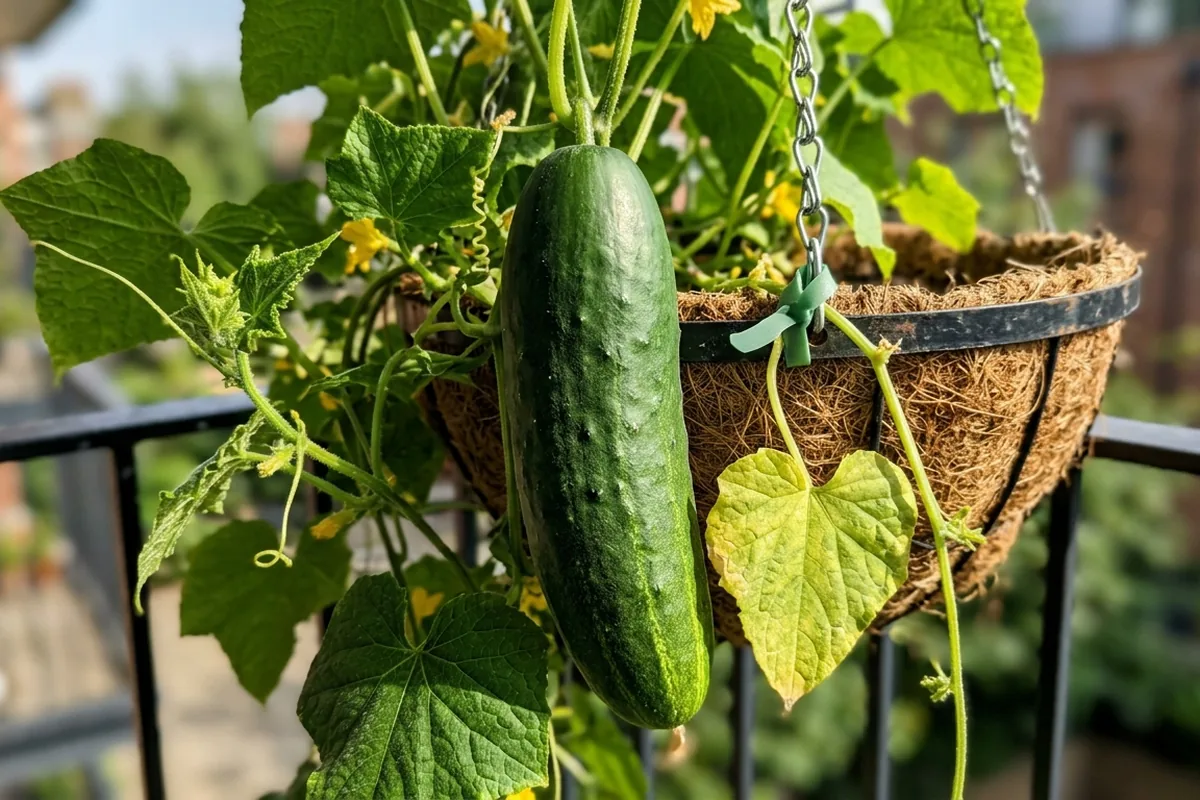
Hanging basket cucumbers are ideal when you’ve only got a patio or balcony but still want a proper summer crop. If you’re looking up at a sunny wall or railing and wondering if it could be covered in dangling mini cucumbers, you’re in the right place.
The simple set-up for balcony cucumbers
Choose compact, trailing varieties bred for containers – look for names like ‘Mini’, ‘Snack’, ‘Patio’ or ‘Bush’ on the seed packet or label. These cope better in baskets than long greenhouse types.
Use a large, sturdy basket: at least 35–40 cm wide, lined and with several drainage holes. Shallow, decorative baskets dry out too fast and are where many people struggle.
Fill with a good peat-free multipurpose compost mixed with about a third peat-free soil-based compost if you can; it holds moisture more evenly. Add slow‑release fertiliser granules as the bag suggests.
Plant one cucumber per basket. It looks mean at first, but two plants in a basket usually end up competing for water and both sulk.
Hang or stand the basket where it gets at least 6 hours of sun, sheltered from the worst wind. A bright south or west-facing wall is ideal; a very exposed high balcony may need a more sheltered corner.
If nights are still cold when you buy or raise plants, keep the basket on the ground against a wall, or bring it into a porch, and only hang it up once nights are reliably above about 10°C.
Watering, feeding and training so they actually crop
Cucumbers are thirsty, especially in baskets. Before you water again, lift the basket slightly: if it still feels surprisingly heavy, wait. In warm weather you may be watering once a day; in cooler spells, every few days.
Water until you see moisture just appear from the drainage holes, then empty any saucer underneath so roots aren’t sitting in water the next morning.
From the first tiny fruits forming, feed once a week with a high‑potash liquid tomato feed, following the label. Pale leaves and lots of flowers but few fruits often mean they’re hungry.
Let the stems trail down naturally, but give them support so they don’t snap in the wind – a simple chain, wire, or a bamboo cane angled down into a pot below works well. If a stem kinks sharply after wind or rain, gently reposition and support it rather than forcing it straight.
Pinch out the very tip of each main stem once it’s 6–7 leaves long. This encourages side shoots, where many of the cucumbers will form.
If compost looks dry on top but feels cool and damp a few centimetres down, do not rush to water – overwatering in baskets can cause yellowing leaves and poor roots just as easily as drought.
Flowers, fruits and common balcony niggles
Most modern balcony cucumbers are all-female or self-fertile, so you don’t usually need to hand‑pollinate. If you see small fruits turning yellow and dropping, check:
- Watering: very dry compost one day, then a soaking the next, often causes fruit to abort. Aim for steady moisture.
- Feed: plants in full swing need regular feeding or fruits stay small and bitter.
- Cold nights: a sudden chilly night on an exposed balcony can set them back. If this is happening on your plant, try taking the basket down and putting it on the floor against a wall overnight.
Watch for powdery mildew – a white, dusty coating on older leaves in late summer, especially after a dry spell. Improve air flow, water the compost not the leaves, and remove the worst-affected leaves.
Harvest cucumbers when they’re firm, glossy and a sensible size for the variety. Do not wait for them to become huge; overgrown fruits make the plant slow down. A quick daily look and snip keeps the plant productive.
If you’re unsure where to start, pick up a labelled “patio cucumber” plant from a garden centre, one large basket and a bag of compost. With steady watering and a weekly feed, you can have crisp cucumbers hanging at arm’s reach all summer.
Reader note
The Flower Expert is an independent gardening publication. Your support helps us keep creating practical plant care guides for everyday UK readers.
This article was created with the assistance of AI and reviewed by an editor. It is intended as general gardening information, not personalised professional advice.
If you still have a question, or if something looks unclear or inaccurate, you can contact us through our contact form.
If you found this article helpful, please consider sharing it on social media or leaving a comment below with your own experience. It helps other readers too.