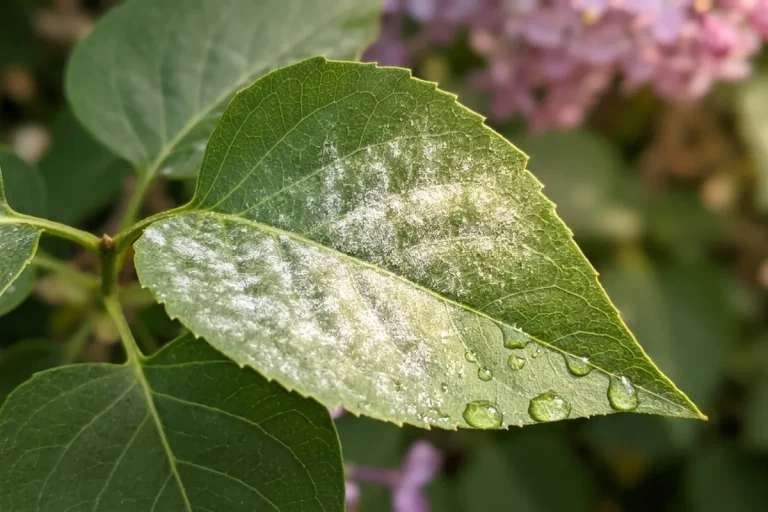

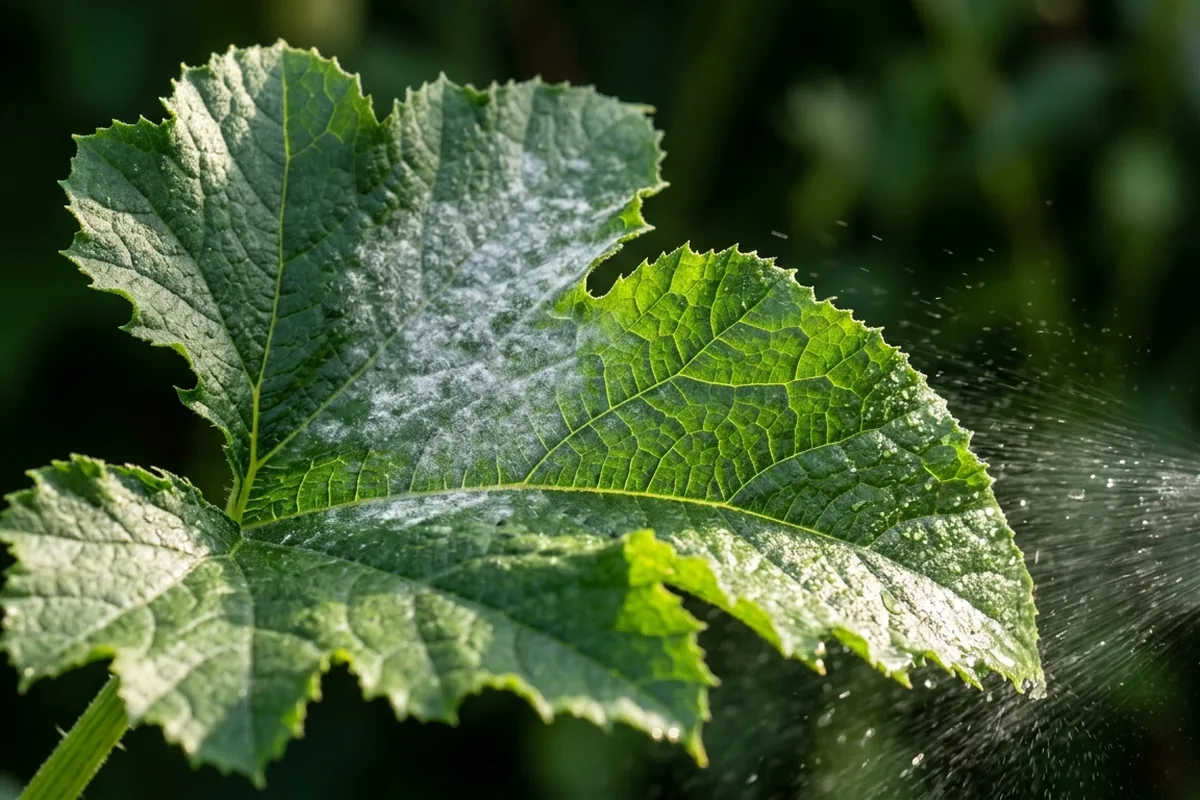
Powdery mildew usually starts quietly: a white, dusty coating on rose leaves, courgette foliage or sweet peas that looks as if someone’s shaken flour over them. If this is happening on your plants, the aim is to slow it down and stop it spreading rather than chase every single spot.
Immediate steps to stop it spreading
Act as soon as you see it. The earlier you step in, the easier it is to limit.
- Remove badly affected leaves and shoots
Snip off the worst bits into a bucket, not onto the soil. Bag them and put them in the household rubbish, not the compost heap, where spores can survive.
- Thin crowded growth
On roses, sweet peas, dahlias and climbers, lightly open up the plant so air can move through. On veg such as courgettes and cucumbers, remove a few of the lowest, shadiest leaves. If the foliage dries quickly after rain or watering, mildew struggles.
- Water the soil, not the leaves
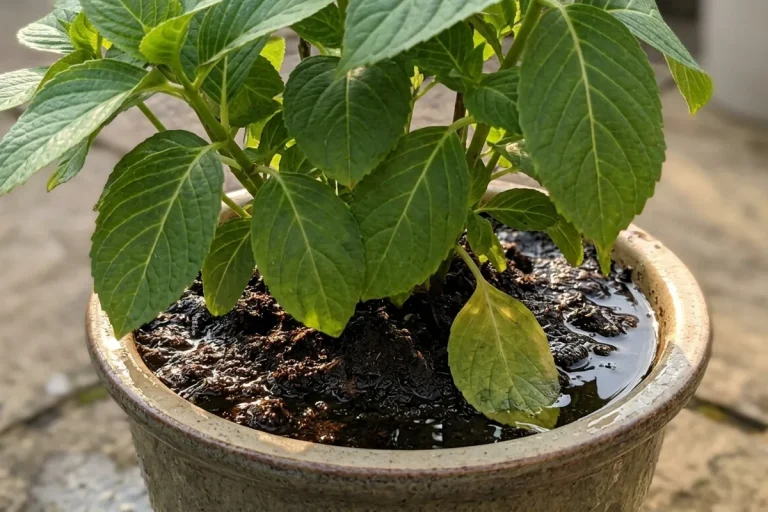
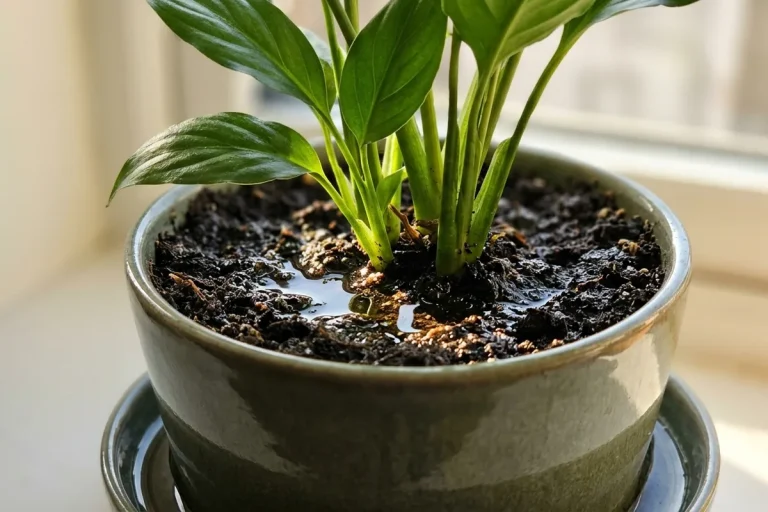
Mildew thrives when plants are stressed and the top growth is dry. Water at the base early in the day so leaves dry before evening. If the top of the compost looks dry but the soil underneath is still damp, wait.
- Feed gently, not heavily
Avoid high-nitrogen feeds that push out lots of soft, mildew-prone growth. Use a balanced fertiliser and do not overdo it, especially in late summer.
- Use a suitable fungicide if needed
If the problem is severe or on prized plants, you can use a garden fungicide labelled for powdery mildew. Always follow the label and mind harvest intervals on edible crops.
Why your flowers and veg keep getting powdery mildew
Powdery mildew spores are almost always around; they take hold when conditions suit them and plants are under mild stress. Common triggers:
- Dry roots, dry air – containers on a sunny patio, hanging baskets and greenhouse plants often swing between very dry and very wet.
- Crowded, still foliage – tightly packed borders, sweet peas on narrow wigwams, or greenhouse cucumbers with no ventilation.
- Shade and cool nights – damp spring or late-summer evenings with poor airflow.
- Thirsty, hungry plants – roses or veg in poor, thin soil, or in small pots where compost dries quickly.
The useful clue is not one leaf, but the pattern across the plant: if older leaves are worst and newer ones are cleaner after you improve care, you’re going in the right direction.
Longer-term ways to reduce mildew every year
For beds, borders, allotments and pots, a few steady changes help more than constant spraying.
Improve the growing conditions:
- Add garden compost or well-rotted manure to borders to hold moisture.
- Mulch around roses, dahlias, peas and beans to keep roots cool and evenly moist.
- On patios and balconies, use larger pots with good-quality peat-free compost so they don’t dry out so fast.
Improve air and light:
Keep a bit of space between plants, especially along fences and walls where air can be trapped. In a greenhouse or polytunnel, crack vents and doors whenever weather allows so leaves don’t sit in still, humid air.
Choose and manage plants:
Look for mildew-resistant varieties of roses, peas, courgettes and cucumbers when you replant. Avoid cramming too many plants into one growbag or trough; three tomatoes or two courgettes per growbag is usually plenty.
Before you water again, check below the surface. Compost that looks dry on top can be surprisingly wet a couple of centimetres down, and over-wet roots can stress plants just as much as dry ones.
A bit of powdery mildew is almost inevitable in a UK summer, but it doesn’t have to take over. Tidy the worst, improve air and watering, and keep an eye on new growth. Your next small step is to walk round today, secateurs in hand, and quietly remove the leaves that are beyond saving.
Reader note
The Flower Expert is an independent gardening publication. Your support helps us keep creating practical plant care guides for everyday UK readers.
This article was created with the assistance of AI and reviewed by an editor. It is intended as general gardening information, not personalised professional advice.
If you still have a question, or if something looks unclear or inaccurate, you can contact us through our contact form.
If you found this article helpful, please consider sharing it on social media or leaving a comment below with your own experience. It helps other readers too.