
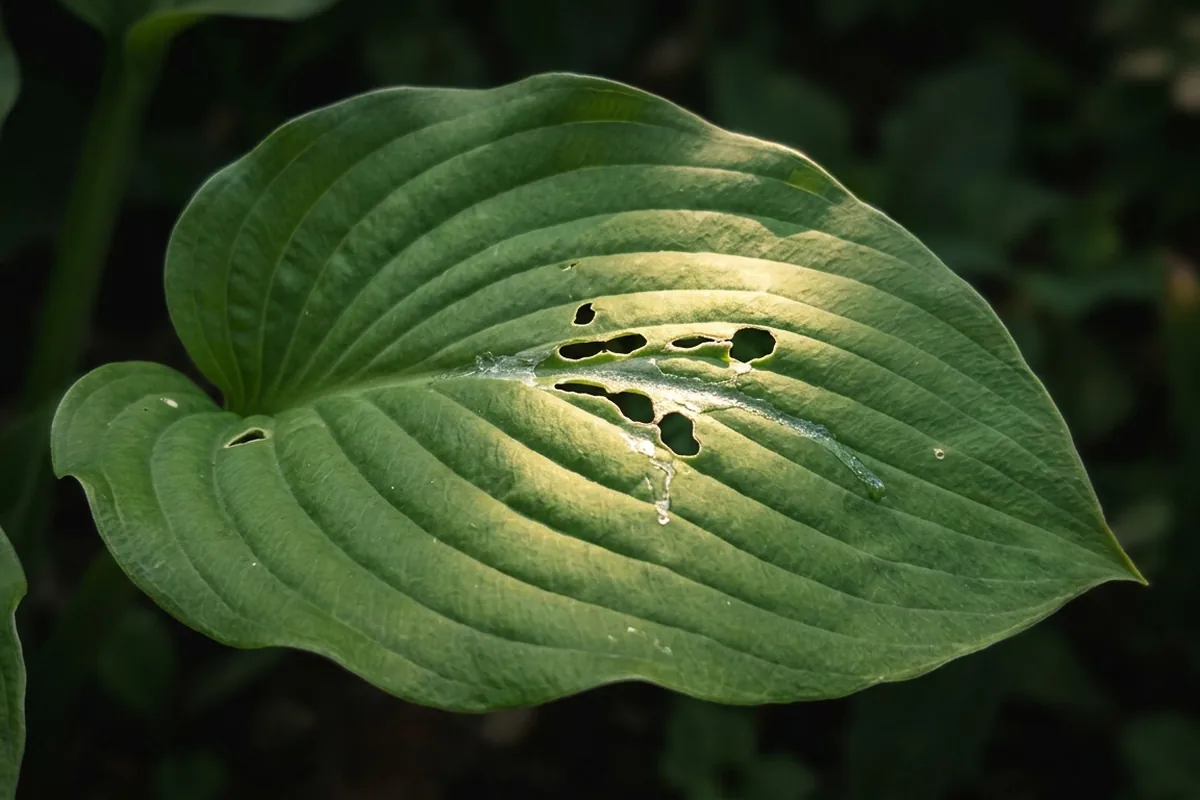
The first sign is usually not the slug itself, but the damage it leaves behind: shredded new leaves, neat holes in hostas, or seedlings vanishing overnight. If you come out in the morning to find a row of lettuce reduced to stumps, slugs are very often involved.
How to recognise slug damage quickly
Fresh slug damage tends to look soft, wet and slightly ragged, especially on tender growth. You may see:
- Irregular holes in leaves, often starting at the edges. Hostas, delphiniums, dahlias and young brassicas are classic targets.
- Missing seedlings, bitten off at soil level so only a tiny stump remains.
- Chewed petals and buds, especially on marigolds, primulas and young sweet peas.
- Silvery slime trails on paving, pots, low leaves or the rim of containers – often clearer early in the morning or after rain.
The useful clue is not one leaf, but the pattern across the plant. Slugs usually go for the softest parts: new shoots, young leaves, tender stems. Older, tougher foliage is often left alone.
If the damage is appearing overnight, and looks worse after damp, mild weather, slugs or snails are strong suspects.
Checks to tell slugs from other pests
Before you blame slugs, a couple of quick checks help you avoid treating the wrong problem.
- Look at the timing: Slug damage appears overnight. If leaves are vanishing during the day, pigeons, rabbits or caterpillars may be involved.
- Check the edges of holes: Slugs leave soft, ragged, moist edges. Caterpillars often leave neater arcs and tiny black droppings nearby.
- Search at the right time: Go out with a torch after dark or just before sunrise. Lift pots, check under stones, and look in the damp crevices of a low wall. You’ll often find them tucked under the rim of a patio pot or in dense groundcover.
- Inspect the soil surface: Gently move mulch or leaves. Slugs like to hide where the soil stays cool and damp, especially in a shaded border.
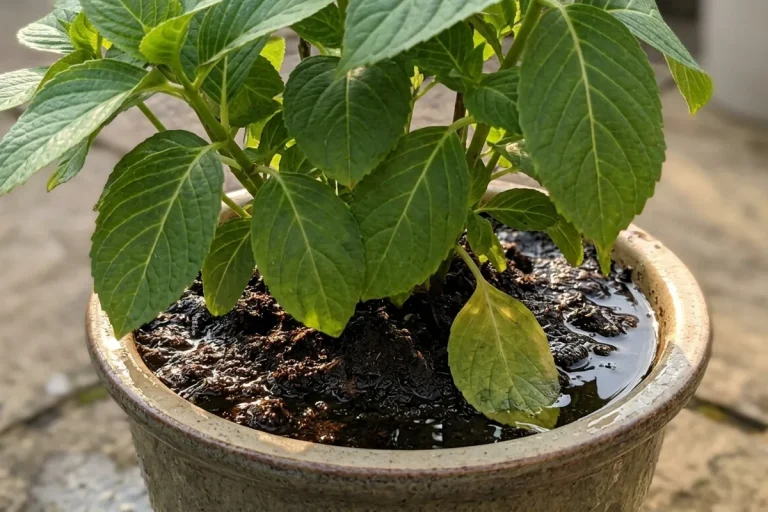
If you lift a pot and it feels unexpectedly heavy and wet underneath, that cool, damp base is exactly where slugs like to sit during the day.
What to do as soon as you spot early damage
Once you’re sure slugs are involved, act while the damage is light. Waiting a week can be the difference between a nibbled leaf and a bed of vanished seedlings.
- Protect the most vulnerable plants first. Newly planted lettuce, hostas, lupins, dahlias and young annuals need priority. Use physical barriers such as collars cut from plastic bottles, copper tape on pots, or wool pellets around single plants (always follow the product label).
- Reduce daytime hiding places. Clear rotting leaves, excess weeds and debris where slugs can shelter. Do not strip borders bare, but remove obvious damp piles, especially near prized plants.
- Change watering habits. Water in the morning, not late evening. A wet border at dusk is a slug buffet. Aim water at the soil, not all over the foliage.
- Hand-pick at key times. On mild, damp evenings or after rain, collect slugs from paths, pots and around vulnerable plants. A quick patrol with a torch two or three evenings in a row can make a real difference.
- Use pellets only if needed and with care. If you choose slug pellets, pick a product labelled wildlife-friendly and follow the instructions exactly. Avoid scattering more than recommended and keep away from children and pets.
If the leaves look worse after every “fix”, stop changing several things at once. Go back to basics: confirm it’s slugs, see where they are hiding, then focus on protecting your key plants rather than trying to clear every slug from the garden.
A few small checks, done early, usually mean you keep your borders and veg patch intact, even in a damp spring. Tonight, simply walk the garden once after dark and see who is really doing the nibbling.
Reader note
The Flower Expert is an independent gardening publication. Your support helps us keep creating practical plant care guides for everyday UK readers.
This article was created with the assistance of AI and reviewed by an editor. It is intended as general gardening information, not personalised professional advice.
If you still have a question, or if something looks unclear or inaccurate, you can contact us through our contact form.
If you found this article helpful, please consider sharing it on social media or leaving a comment below with your own experience. It helps other readers too.