
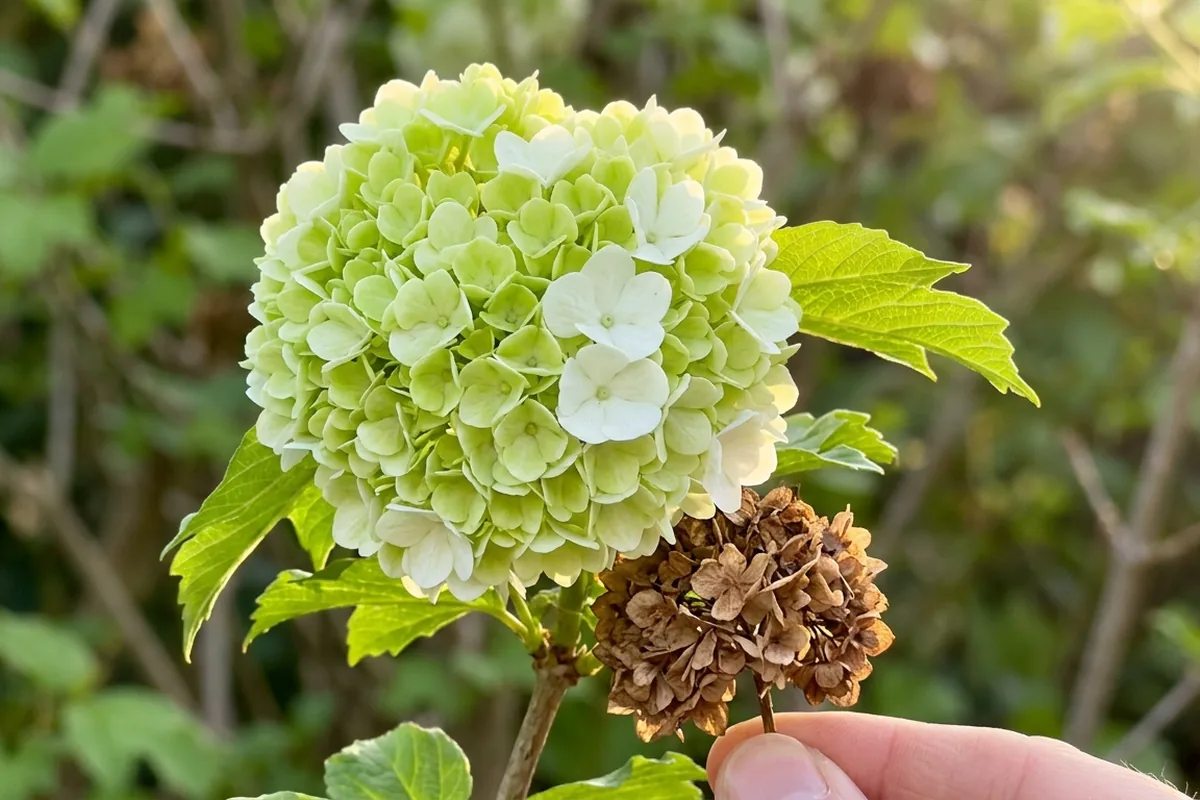
For those big frothy flowers in late spring, viburnum snowball shrubs are hard to beat. If you’re looking at a bare corner now and imagining it covered in white or lime-green “snowballs”, you’re in the right place.
The right place and planting routine
Snowball viburnums (often Viburnum opulus ‘Roseum’ or V. plicatum varieties) like sun or light shade, and moist but well-drained soil. In most UK gardens they’re fairly forgiving, as long as the ground doesn’t sit waterlogged.
- Choose a spot with at least half a day of light. Dense shade means fewer flowers.
- Give each shrub space – about 1.5–2m wide – so the branching shape can develop.
- Improve heavy clay with garden compost or well-rotted manure to help drainage.
- Plant level with the surrounding soil, not deeper. If the rootball sits in a dip, water will pool.
Plant in autumn or early spring, when the soil is workable but not frozen. Water in well, then check the soil weekly for the first season. If you lift the soil near the roots and it’s still cool and damp, wait before watering again.
A mulch of compost or leaf mould in spring helps hold moisture and feeds the plant slowly. Keep mulch a few centimetres away from the main stems so they don’t sit damp.
How to encourage strong spring flower displays
For generous snowballs, you need healthy growth and last year’s wood.
- Light, regular pruning: After flowering, cut out one or two of the oldest stems at the base to keep the shrub young. Avoid hard pruning in winter – that’s when you’d remove the wood that should flower next spring.
- Water in dry spells: In a dry summer, deep water every week or so, especially for the first 2–3 years. A quick hose over the leaves does little; let water soak in around the base.
- Feed lightly: In March or April, use a balanced shrub fertiliser if your soil is poor. Follow the packet, and don’t overdo it – too much feed can push leafy growth at the expense of flowers.
- Watch for late frost: Fat buds can be browned by a sharp late frost. If your shrub is young and small, a fleece on frosty nights can help protect the developing display.
If your viburnum is leafy but has few or no flowers, look at the pattern: heavy winter pruning, deep shade, or drought the previous summer are usual culprits.
Ongoing care: shape, pests and keeping it tidy
Snowball viburnums are generally low-maintenance. A few small checks keep them looking good:
- Shape: If a stem is leaning after wind or heavy rain, tie it loosely to a cane for the season rather than chopping it off. This keeps the framework for next year’s flowers.
- Soil moisture: In borders they usually cope well, but a shrub in a large patio pot will dry out faster. Before you water, push a finger 3–4cm into the compost – if it’s still damp and cool, wait.
- Pests and problems: Viburnums can get aphids or viburnum beetle, which show as distorted leaves or tattered foliage. For light infestations, squash or wash off; for worse damage, look for a suitable control and follow the label carefully.
With a good planting spot, modest pruning after flowering and steady moisture, viburnum snowball shrubs usually repay you with armfuls of blossom. The next useful step is simple: pick the sunniest, not-too-dry corner you have, improve the soil once, and get a young shrub in this season so it can settle before next spring’s show.
Reader note
The Flower Expert is an independent gardening publication. Your support helps us keep creating practical plant care guides for everyday UK readers.
This article was created with the assistance of AI and reviewed by an editor. It is intended as general gardening information, not personalised professional advice.
If you still have a question, or if something looks unclear or inaccurate, you can contact us through our contact form.
If you found this article helpful, please consider sharing it on social media or leaving a comment below with your own experience. It helps other readers too.