
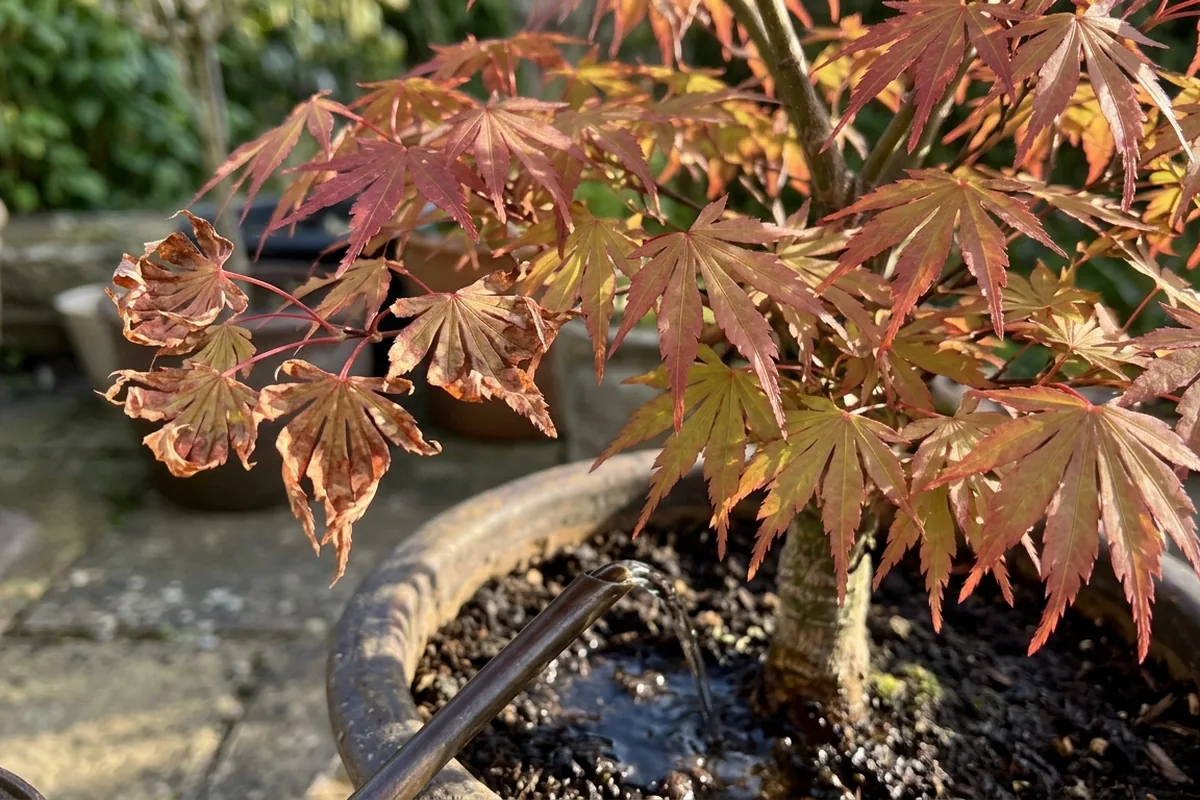
Hot, windy spells are brutal on Japanese maples in pots. Leaves crisp at the edges, whole branches scorch on the sunny side, and a gusty day can undo years of patient shaping. If your maple’s leaves are browning, curling or shredding while the rest of the garden looks fine, the combination of heat, wind and a confined rootball is usually to blame.
The essentials: shade, shelter, water – in that order
For potted acers in a UK heatwave, position matters more than products.
- Move the pot out of full sun. Aim for dappled shade or morning sun only. A bright, east-facing wall, a spot behind taller shrubs, or under high tree cover works well. Avoid hot, south-facing patios with reflected heat from paving.
- Give shelter from wind. Wind strips moisture from those thin leaves faster than roots can replace it. Tuck the pot into a corner, behind a screen, or inside a balcony rail. Even moving it 1–2 metres can make a difference.
- Water deeply, not constantly. In hot, windy weather, check daily but only water when the top 3–4 cm of compost is dry. A quick finger check tells you more than the surface. If you lift the pot and it still feels heavy, wait.
- Soak until water runs from drainage holes, then stop and empty any saucer after 15–20 minutes. A saucer still full the next morning is a warning sign of overwatering, not care.
This is the point where many people water again too soon. Compost that looks dry on top can still be cool and damp underneath.
Protecting roots and leaves from scorch
Japanese maples hate their roots getting hot.
Wrap or shade the pot itself if it sits on a baking patio – a second, slightly larger outer pot, a wooden crate, or simply pulling it into the shadow of a wall all help. Dark plastic pots heat up fastest; if yours is in one, consider slipping it into a larger, pale outer container.
On very fierce days:
- Avoid midday watering of foliage. Water the compost, not the leaves, to reduce scorch and fungal risk.
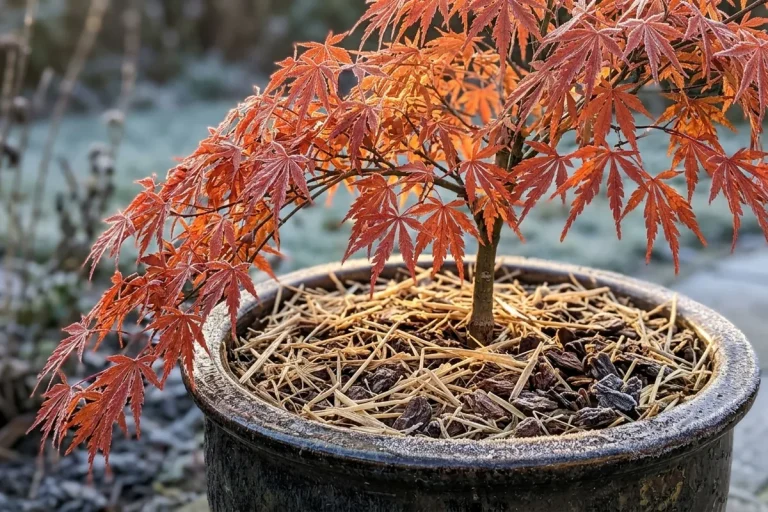
- Mulch the surface with fine bark, leafmould or composted wood chip to slow evaporation and keep roots cooler.
- If leaves are already crisping at the tips, do not rush to prune. Leave them as shade for the remaining healthy foliage; tidy only when the weather breaks.
If the leaves look worse after every “fix”, stop changing several things at once. Go back to: light shade, shelter, and a steady watering rhythm.
Feeding, pot size and when to intervene
In hot, windy weather, do not repot unless the plant is in real trouble. Disturbing the roots adds stress. Instead:
- Check that drainage holes are clear and the compost isn’t compacted like concrete.
- If roots are circling tightly at the base and drying out very fast, slip the plant into a slightly larger pot in early spring or once the heat has passed.
Feeding is secondary. A light feed in spring with a slow-release, balanced fertiliser is usually enough. During a heatwave, skip liquid feed altogether; thirsty, stressed roots are easily scorched by extra salts.
If you’re unsure, compare several leaves: uniform brown tips on the exposed side usually mean wind and sun scorch; patchy browning with very dry compost points to underwatering; limp leaves with wet compost suggest you need to hold back the hose.
With a bit of shade, shelter and calmer watering, most potted Japanese maples recover surprisingly well once the weather turns. Your next step today: move the pot to a shadier, more sheltered spot, then check the compost properly before you water again.
Reader note
The Flower Expert is an independent gardening publication. Your support helps us keep creating practical plant care guides for everyday UK readers.
This article was created with the assistance of AI and reviewed by an editor. It is intended as general gardening information, not personalised professional advice.
If you still have a question, or if something looks unclear or inaccurate, you can contact us through our contact form.
If you found this article helpful, please consider sharing it on social media or leaving a comment below with your own experience. It helps other readers too.