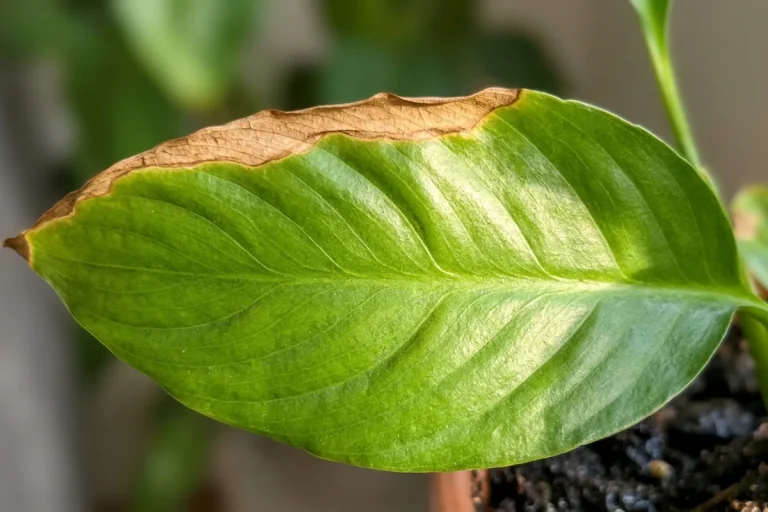

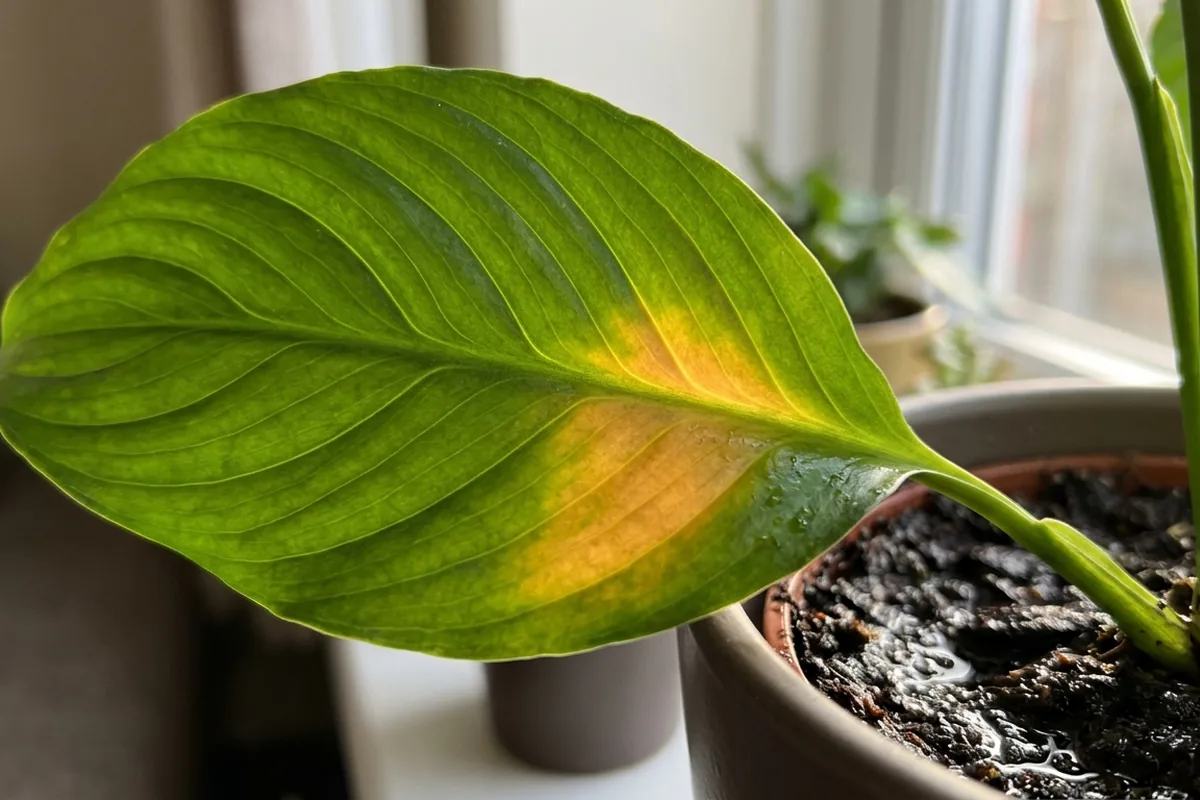
Yellowing leaves on a houseplant that you know you’ve watered can feel maddening. The compost may even look dry on top, yet the plant is still fading, one leaf at a time. This is usually not about how often you water, but what is happening around the roots.
What yellow leaves are really telling you
Most houseplants yellow their leaves when roots cannot do their job properly. That can happen for opposite reasons:
- Too wet for too long: roots sit in soggy compost, short of oxygen, and start to rot.
- Too dry below the surface: the top looks damp from a recent watering, but deeper down is bone dry.
- Low light: in a dark corner, the plant cannot use the water you give it.
- Sudden temperature changes: cold draughts or hot radiators stress the plant.
If this is happening on your plant, look at the pattern.
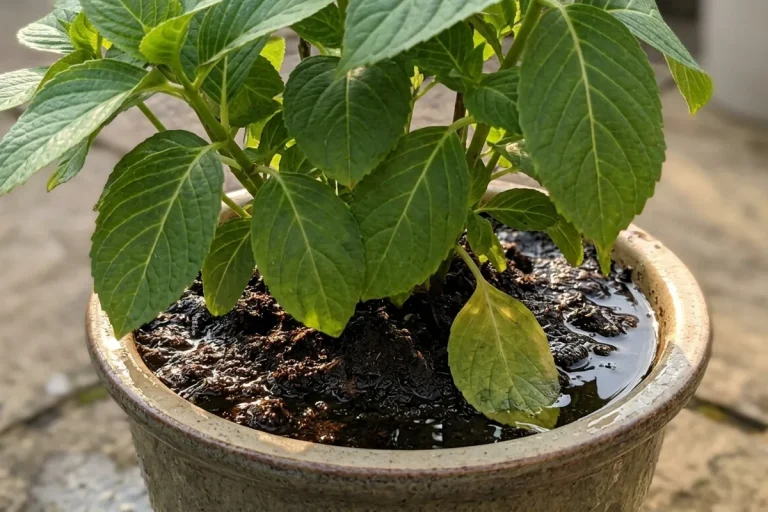
Older, lower leaves yellowing first, while new growth looks fine, often points to natural ageing or slightly low light. Random yellow leaves across the plant, especially with soft, droopy stems and compost that feels wet, usually means overwatering or poor drainage.
A quick check: lift the pot. If the top looks dry but the pot still feels surprisingly heavy, wait. This is the point where many people water again too soon.
The check to make before watering again
Before you reach for the watering can, do three simple checks:
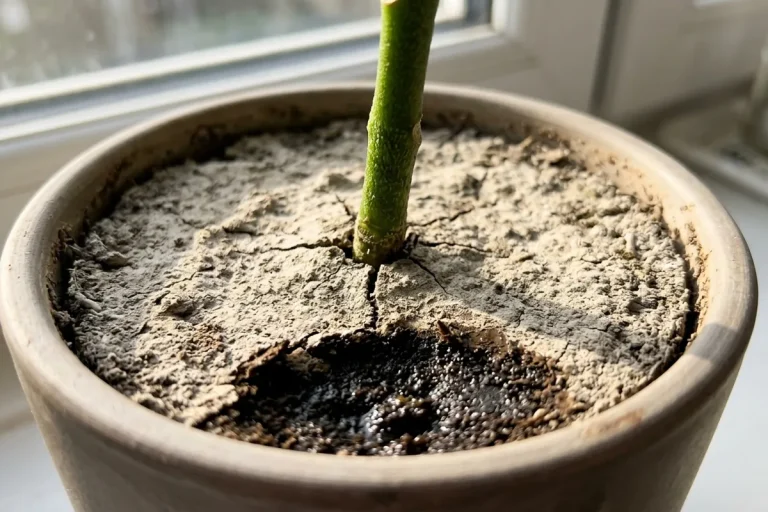
- Compost moisture: push a finger 3–4 cm down.
- Cold and wet: do not water.
- Dry and crumbly: water thoroughly, then let it drain.
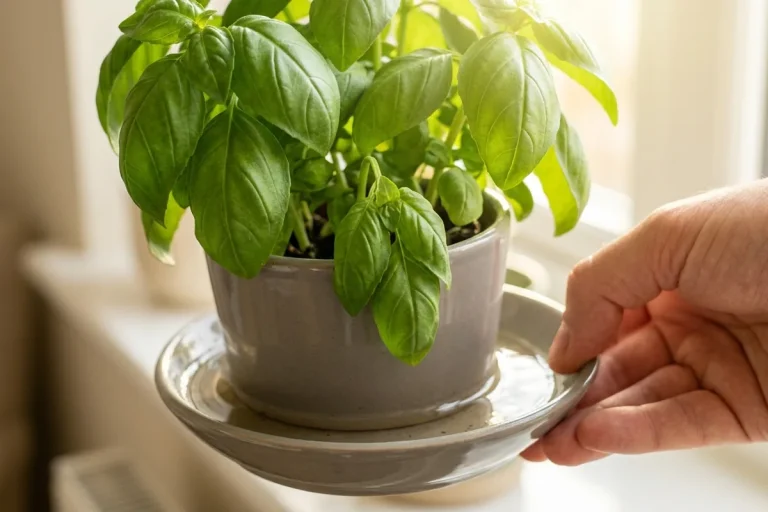
- Drainage holes and saucer: if there’s water sitting in the saucer the next morning, roots have been soaked for too long.
- Light and position: a plant on a dim hallway shelf will use water far more slowly than one on a bright but not hot windowsill.
If the compost is consistently wet and there’s a faint sour smell, roots may be rotting. Gently slide the plant from its pot: brown, mushy roots confirm it. Healthy roots are usually firm and pale.
How to help a plant with yellow leaves
Once you know what the roots are sitting in, you can adjust:
- If it’s too wet:
- Tip out any water from the saucer or outer pot.
- Move the plant to a brighter spot out of direct midday sun to help it dry.
- Next time, water less often, but water so excess runs from the drainage holes, then empty the saucer.
- If it’s too dry:
- Stand the pot in a bowl of water for 10–20 minutes so the compost rehydrates from below.
- Let it drain very well before putting it back.
- If roots are rotting badly:
- Trim off the worst mushy roots with clean scissors.
- Repot into fresh, free-draining houseplant compost, making sure there are clear drainage holes.
Avoid feeding a stressed plant heavily; a weak liquid feed at half strength is enough once you see new, healthy leaves forming again. The RHS has simple guidance on houseplant feeding if you’re unsure.
Yellow leaves already damaged will not turn green again, so remove them once they are fully yellow. The useful clue is not one leaf, but the trend over the next few weeks.
If you adjust watering to what the compost is doing, rather than the calendar, most houseplants slowly steady themselves. Your next step: check one plant today with a finger test and a pot lift before you water it.
Reader note
The Flower Expert is an independent gardening publication. Your support helps us keep creating practical plant care guides for everyday UK readers.
This article was created with the assistance of AI and reviewed by an editor. It is intended as general gardening information, not personalised professional advice.
If you still have a question, or if something looks unclear or inaccurate, you can contact us through our contact form.
If you found this article helpful, please consider sharing it on social media or leaving a comment below with your own experience. It helps other readers too.